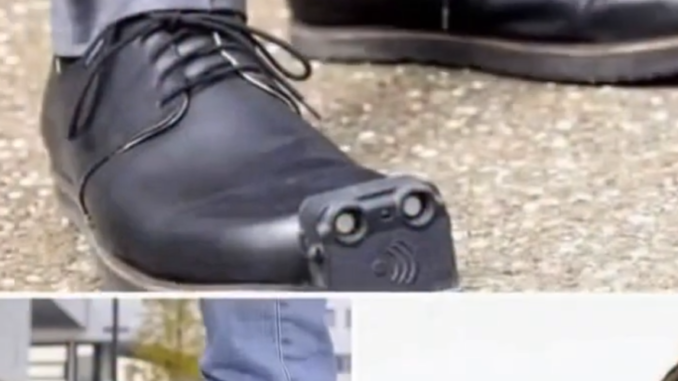
At first glance, InnoMake shoes look much like an ordinary pair of sneakers. There are no dramatic robotic components or futuristic structures that immediately reveal what makes them different. Hidden within the footwear, however, is technology designed to help people with visual impairments navigate their surroundings with greater awareness and confidence.
Developed by Austrian company Tec-Innovation in cooperation with Graz University of Technology, InnoMake uses sensors incorporated into the footwear to detect obstacles that may be difficult for a visually impaired person to notice while walking. The concept takes familiar technology and places it somewhere surprisingly practical: directly on the user’s feet.
The system includes a small ultrasonic sensor positioned near the front of the shoe. Its basic principle is similar to the parking sensors found in many modern vehicles. Those systems detect objects near a car and warn the driver as the distance decreases. InnoMake applies a comparable idea to walking.
As the wearer moves forward, the sensor monitors the area ahead for potential obstacles. When an object is detected within the system’s operating range, the wearer can receive a warning through vibration or an acoustic signal. The alerts provide another layer of environmental information, helping the user recognize that something may be blocking the path.
The closer an obstacle becomes, the more useful that immediate feedback can be. Instead of relying exclusively on visual information, the wearer receives a physical or audible indication that something is ahead. This can provide additional support when navigating unfamiliar spaces or environments containing objects that might otherwise be difficult to detect.
The goal behind InnoMake isn’t simply to create an impressive piece of wearable technology. Its larger purpose is to support independence in everyday life.
For people with visual impairments, navigating public spaces can involve challenges that sighted people rarely think about. Temporary construction, objects left on sidewalks, furniture, signs, barriers, and unexpected changes in familiar routes can create additional difficulties. Technology capable of detecting nearby obstacles may therefore provide useful supplementary information while someone moves through these environments.
The idea was shaped by real experiences rather than technology alone. Markus Raffer, who is visually impaired, played an important role in developing the concept. His personal understanding of mobility challenges helped influence the creation of a system intended to address practical situations encountered in daily life.
That user-centered approach is particularly important with assistive technology. A device can be technically sophisticated but still fail if it is uncomfortable, complicated, or impractical to use every day. By integrating the sensors into footwear, the developers sought to make the technology something that could naturally accompany the user rather than becoming another bulky device that must constantly be carried.
One of the system’s interesting features is flexibility.
Users have been able to choose complete footwear incorporating the technology, while the sensor system has also been designed so that it can be attached to compatible shoes. That approach can allow people to use the technology without necessarily abandoning footwear they already find comfortable.
Comfort may sound like a minor detail compared with obstacle detection, but it matters enormously for something designed to be worn while walking. Assistive technology becomes far more useful when it fits naturally into everyday routines instead of requiring users to completely change how they dress or move.
Researchers and developers have also explored ways of expanding what smart footwear could eventually understand about its surroundings. Ultrasonic sensors can detect the presence and distance of obstacles, but they cannot necessarily explain exactly what those objects are.
That is where more advanced technologies could potentially become valuable.
Camera-based recognition and artificial intelligence could eventually help mobility systems distinguish between different types of obstacles or provide richer information about the environment. Instead of merely warning that something is ahead, future systems might potentially help identify what the object is or provide additional contextual guidance.
Developing those capabilities brings challenges of its own. Any wearable assistive system needs to balance accuracy, battery life, comfort, reliability, privacy, cost, and ease of use. A device intended to support someone’s mobility must also perform consistently enough that users understand both what it can do and where its limitations remain.
Smart shoes are therefore best viewed as an additional mobility tool rather than a magical replacement for established aids or personal navigation skills. Different users have different needs, and technologies like InnoMake can potentially complement other methods people already use to navigate safely.
What makes the project especially interesting is the simplicity of the underlying idea: take a technology people already understand from automobiles and redesign it around the human body.
A sensor that helps a driver avoid a parking obstacle can, with thoughtful engineering, become a sensor that helps someone detect an object while walking.
That transformation demonstrates the broader potential of assistive technology. Innovation doesn’t always require inventing something completely unfamiliar. Sometimes it comes from looking at an existing solution and asking who else could benefit if it were redesigned for a different purpose.
InnoMake shows how something as ordinary as footwear can become part of a larger effort to improve accessibility. Beneath the familiar appearance of a shoe lies an attempt to provide users with another source of information about the world immediately ahead of them.
Rather than replacing human ability, the technology is designed to support it. And as sensors, wearable electronics, cameras, and artificial intelligence continue developing, concepts like these offer a glimpse of a future where everyday objects can quietly provide additional assistance—helping more people move through the world with greater confidence, awareness, and independence.