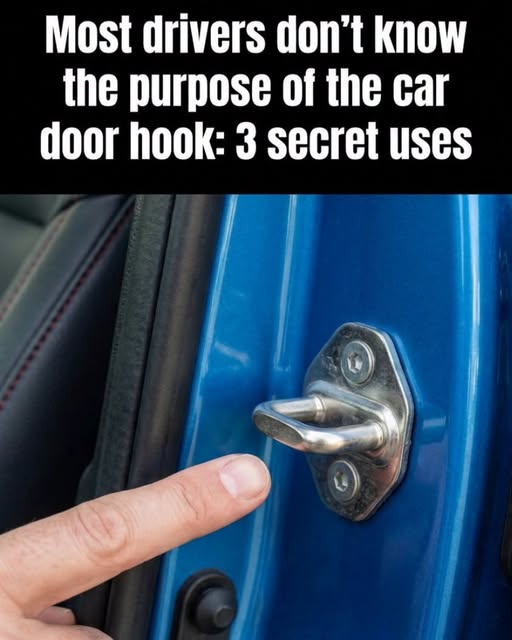
You’ve probably slammed your elbow into it at least once and wondered why it even needed to exist. That cold little metal loop or pin sitting on the door frame can seem completely pointless, even slightly hostile when you discover it the hard way. Most drivers barely notice it, yet that small piece of metal plays a far more important role than its size suggests. It is not simply there for the door latch to grab onto. It is part of the system that helps keep your vehicle’s door securely connected to the body, especially when the forces of a crash are trying to pull everything apart. What looks like an annoying piece of hardware is quietly helping hold the cabin together when everything else is under tremendous stress.
That small metal loop or pin in your door frame is commonly called a **door striker**, and it is much more than a simple latch target. It acts as a structural anchor between the door and the vehicle’s body. When you close the door, the latch mechanism inside the door grabs onto the striker and locks the door into position. Once engaged, the striker helps transfer forces between the door and the body of the vehicle rather than allowing the door to move freely. This connection is especially important because a vehicle is designed as a system, with different structural components working together to manage energy during a collision.
In a serious crash, the door is not supposed to behave like a loose panel attached to the side of the car. The latch and striker help keep it secured to the body so the passenger compartment can maintain its structural integrity. During certain side impacts or rollovers, maintaining the connection between the door and the vehicle can be critical. A properly functioning door and latch system can help keep occupants inside the protected passenger compartment and prevent the door from opening unexpectedly. It is one of many small engineering details that contribute to the larger safety structure surrounding the people inside the vehicle.
That is why the striker has to be extremely strong and precisely positioned. Engineers do not simply place it wherever the door happens to close. Its location, shape, material, and connection to the vehicle structure are all designed to work with the latch mechanism. When the door shuts, everything needs to line up correctly. The latch has to engage securely, the door needs to sit in the correct position, and the surrounding structure needs to handle the forces transferred through that connection.
In everyday driving, the striker is working even when you never think about it. It helps keep the door properly aligned with the vehicle body, allowing the weather seals around the door to compress correctly. That helps keep rain, dust, wind, and outside noise from entering the cabin. If the striker becomes misaligned or the latch system develops a problem, you may notice that the door requires more force to close, sits unevenly, or produces rattling and buzzing noises while driving. What once seemed like a simple piece of metal suddenly becomes very noticeable when it stops doing its job properly.
Its strength has also inspired people to find clever secondary uses for it. In some vehicles, aftermarket accessories can use the striker area to provide temporary steps, mobility handles, or other forms of assistance. These products can be useful when they are specifically designed and rated for the vehicle and application. But that does not mean the striker should automatically be treated as a universal attachment point. The fact that it is strong enough to help secure a vehicle door does not mean every accessory or load is safe to attach to it.
That is especially important because the striker is part of a carefully engineered safety system. Hanging heavy objects from it, using it as a gym bar, attaching homemade equipment, or forcing something into the latch area could interfere with the door mechanism or damage components that are essential for proper operation. Even something that appears harmless could prevent the latch from engaging correctly or place unexpected stress on the surrounding structure. A component designed to work under specific conditions should not be treated as though it were indestructible.
The best thing a driver can do is surprisingly simple: treat it gently. Keep the latch and striker area reasonably clean, avoid hitting or bending the metal, and pay attention if the door suddenly starts behaving differently. If the door becomes difficult to close, refuses to latch properly, rattles excessively, or appears misaligned, it is worth having the mechanism inspected rather than simply forcing it shut. A door that does not latch correctly is not just an annoyance; it can become a safety concern.
So the next time you open your car door and notice that little metal loop or pin, take a second to look at it differently. It may be one of the least impressive-looking parts of the vehicle, but it performs a job that matters every time you close the door. You do not notice it when everything is working correctly because that is exactly how good engineering is supposed to feel—quiet, dependable, and almost invisible.
That tiny piece of metal helps keep the door connected to the body, keeps the cabin sealed during ordinary driving, and contributes to the vehicle’s ability to protect its occupants during a serious collision. It was never designed to be a clothes hanger, a makeshift gym bar, or a place to experiment with heavy loads. Treat it as the safety component it is, keep it functioning properly, and let it continue doing its job without fanfare—protecting you every time you get behind the wheel.