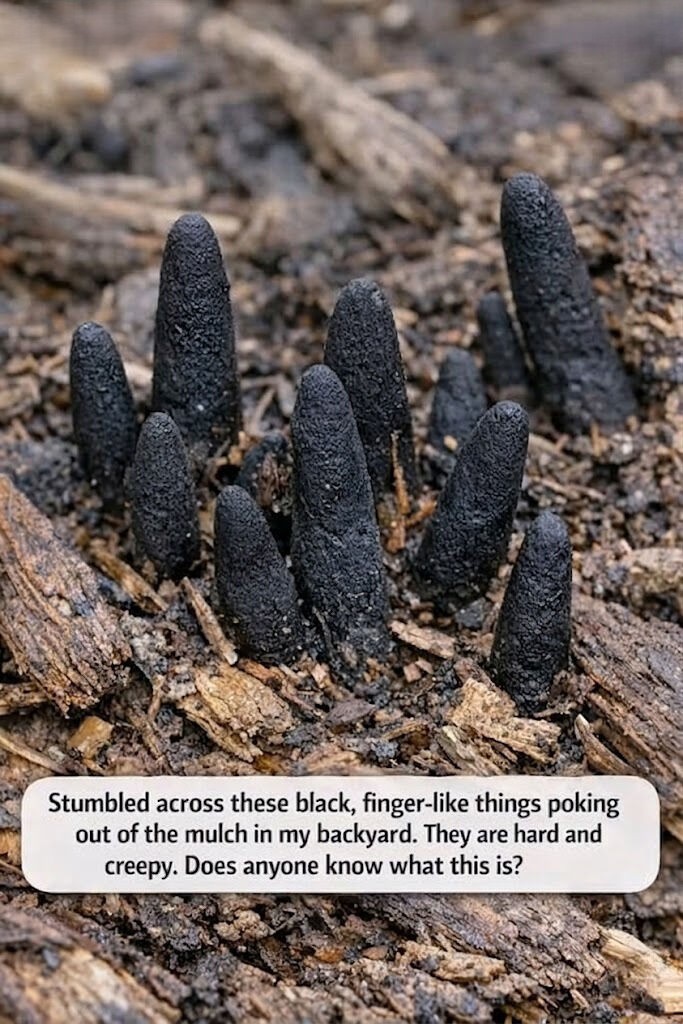
Any homeowner would shudder if they stumbled upon a group of black, skeletal protrusions that protruded directly out of the fresh mulch in their backyard. These eerie constructions instantly turn a serene garden bed into a scene from a horror film, resembling the rotting, frozen fingers of a buried body coming upward from the underworld. People are naturally alarmed when they find these stiff, charcoal-colored growths. They wonder if their soil has been contaminated, if there is a sinister secret hidden in their yard, or if the strange invaders are a direct threat to kids, pets, and landscaping.
The eerie botanical ghost that haunts your garden walkway is actually a very special and intriguing creature, aptly named Dead Mans Fingers. This strange organism, scientifically known as Xylaria polymorpha, is actually a saprobic fungus that specialized in eating dead and decomposing organic debris rather than a plant. These growths are a perfectly normal and surprisingly ubiquitous part of both healthy forest floors and suburban garden ecosystems, despite the fact that the simple sight of a cluster of them can be extremely distressing.
These growths’ unnerving physical progress is the only explanation for why they immediately arouse such a sensation of fear. Dead Mans Fingers’ fruiting bodies are astonishingly innocent when they first emerge from the ground in the spring; they frequently mimic ordinary mushrooms and are soft, pale blue or powdery white stubs. However, the fungus goes through a spectacular and hideous metamorphosis as it ages throughout the summer and enters fall. The outside eventually turns a rich, velvety brownish-black or charcoal hue and dries out to take on a rough, wrinkled, and wood-like texture. They can grow up to four inches tall and usually form densely packed clusters of three to five stalks. The resultant silhouette is an eerie, anatomically realistic replica of a weathered, decaying human hand scraping its way out of the ground.
Analyzing the materials used to plant your property will help you understand why this particular fungus chose your backyard as its breeding site. Dead Mans Fingers are saprobic creatures, meaning that the presence of decaying wood is essential to their survival since it feeds them with the complex carbohydrates, cellulose, and lignin they require for nourishment. The fungus’s underground mycelium network thrives in flower beds that are densely packed with hardwood mulch, rotting wood chips, buried roots, or decaying tree stumps. The ideal conditions for the zombie-like fruiting structures to burst through the surface are created when you combine this plentiful food source with a high concentration of ground moisture, steady shade, and limited ventilation.
Fortunately, Dead Mans Fingers are entirely harmless despite their horrifying appearance and macabre moniker. Because it doesn’t produce harmful gases into the air or irritate skin when touched, this fungus offers no threat to people or domestic pets. Because of its extremely rough, woody interior and absolutely unpleasant, bitter taste, it is universally regarded as inedible. As a result, even inquisitive dogs or outdoor cats would typically sniff the growth and leave without trying to eat it.
From a horticultural standpoint, finding Dead Mans Fingers on your property really indicates that your soil ecology is operating as nature intended. This benign species only eats dead organic matter, in contrast to predatory fungi that actively target and parasitize living plants. The fungus serves an essential, indispensable function in the cycling of nutrients by vigorously breaking down the stiff fibrous components of dead tree roots, rotting wood chips, and aged mulch. In the end, it helps your living flowers, shrubs, and trees flourish by actively transforming worthless woody debris into rich, healthy, and nutrient-dense organic matter that feeds the surrounding soil.
If the sight of decaying zombie limbs adorning your immaculate front lawn is just too upsetting for you, it’s easy and quick to get rid of them. To avoid any small soil irritants, homeowners can simply put on a pair of robust gardening gloves, firmly hold the base of the fungal fingers, and carefully peel them out of the ground. Digging a little below the surface is essential to find and remove the particular piece of decomposing wood or buried root that the fungus was using as its main food source in order to prevent them from sprouting back in the same spot right away. After being removed, the specimens can be safely disposed of in a typical yard trash container or thrown deep into a compost bin to complete their decomposition process out of sight.
Managing the environment to make it much less conducive to fungal development is the long-term option for property owners who are determined to keep these eerie underground hands from ever returning to their flower beds. Turning and replenishing your mulch on a regular basis keeps moisture from being trapped in layers that are stagnant and suffocating. You may significantly lower the ambient humidity that fungus need to grow by adjusting your automatic lawn irrigation schedules so that the soil has enough time to dry out between waterings and by cutting low-hanging tree branches so that direct sunlight can bake the garden floor. Alternatively, you can totally replace conventional hardwood mulch with non-biodegradable alternative landscaping materials like crushed gravel, clean pine needles, river stones, or cedar chips.
In the end, finding something as incredibly strange as Dead Mans Fingers in your own garden doesn’t have to cause constant fear or anxiety. Rather, it is an enthralling, up-close invitation to delve into the extraordinarily intricate and enigmatic realm of mycology. Long before people started mowing lawns, these odd creatures were silently handling the garbage of the planet and revitalizing the soil. You can learn to appreciate the hidden biological miracles taking place right beneath your feet by changing your perspective from one of fear to one of curiosity. You’ll come to see that even the most unsettling discoveries in our yards are frequently just nature’s subtle way of keeping the world alive.