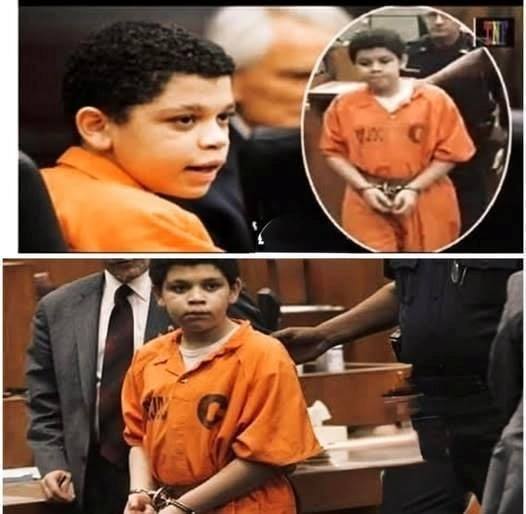
On the international scene, the United States is among the countries with the highest incarceration rates, a startling and depressing distinction. There is a much darker and more covert reality simmering within the American legal system, despite the fact that data about adult incarceration are often discussed in the corridors of Congress and on the evening news. At least 79 children under the age of 14 are presently serving life sentences without the chance of parole in a country that takes pride in the principles of liberty and the possibility of personal redemption. Before they have even reached the middle of their eighth-grade year, the law has declared these kids to be beyond rescuing.
Human rights groups like Human Rights Watch and the Equal Justice Initiative have painstakingly chronicled this horrifying number, which has shocked the world. It makes one think deeply and uneasily about the moral limits of criminal punishment and the unique vulnerabilities of young offenders. The question of whether a legal system can legitimately assert that a 12 or 13-year-old has the cognitive maturity to comprehend the lifetime consequences of their actions, or whether the state is failing in its obligation to rehabilitate the most vulnerable members of society, has taken precedence over the crimes committed.
These 79 sentences have a variety of tragic backstories, many of which started long before a crime was ever committed. Seldom do you come upon a “super-predator” when you dig through these court documents. Rather, children are emerging from situations characterized by generational neglect, acute poverty, and systemic racism. Long before they became defendants, many of these young people had experienced sexual assault or domestic violence. In certain cases, the kids were accused of killing someone during failed robberies in which they weren’t even the main participants. In other cases, they were found guilty under “felony murder” laws, which held them legally accountable for a death that happened during a crime in which they took part, even if they never had a weapon or meant for anybody to be harmed.
One of the most eerie and representative instances of this institutional inflexibility is still the story of Lionel Tate. After a 6-year-old daughter died, 12-year-old Lionel was taken into custody. The defense contended that the tragedy happened during a mock professional wrestling bout and was caused by a child’s incapacity to discern between the physical weakness of a younger child and the staged violence on television. Lionel was first given a life sentence without the possibility of release despite his advanced age and lack of premeditation. The case sparked a national dialogue, even though his sentence was ultimately appealed and reversed following a significant public uproar. It revealed the horrifying ease with which the legal system in the United States may change from considering a child as a youngster in need of protection to treating an adult who needs to be permanently removed from society.
It is nearly impossible to measure the psychological effects of a life sentence without the possibility of parole on a child. The human brain, especially the prefrontal cortex, which is in charge of impulse control and decision-making, does not fully mature until a person is in their mid-twenties, as neuroscientists have repeatedly noted. The legal system essentially overlooks the biological realities of adolescence when it sentences a 13-year-old to death in jail. It rejects the very potential for development that characterizes the human experience by assuming that a child’s character is set in stone and cannot be altered. These kids are sent to adult maximum-security facilities, where they frequently endure severe assaults, extended periods of solitary confinement, and a complete absence of services for education or rehabilitation.
Critics from throughout the world have been outspoken in their denunciation, pointing out that the United States is essentially the only country willing to sentence young children to life in jail. The majority of affluent countries see juvenile justice from a perspective of restoration as opposed to retaliation. They are based on the idea that children have a special capacity for change since they are particularly vulnerable to harmful influences. However, late 20th-century “tough on crime” policies in the United States established a pipeline that views children as the carceral state’s disposable assets. In particular, the legal “adultification” of Black and Brown youngsters has resulted in a significant discrepancy in the recipients of these severe sentences, underscoring the systemic racism that underlies the data.
Housing these people for the rest of their natural life comes at a huge financial expense, but it is nothing compared to the moral cost. These “juvenile lifers” grow into elderly prisoners who have never experienced a day of adult freedom as the decades go by. They need end-of-life services and specialized medical treatment, which are paid for by taxpayers who may not even be aware that their state is still punishing a 70-year-old man for a mistake he made in the seventh grade.
There has been a sluggish and regional reform effort in recent years. In a number of decisions, including Miller v. Alabama, the Supreme Court ruled that mandatory life sentences without the possibility of parole for minors are unconstitutional. These decisions, however, sometimes leave important gaps, enabling judges to still inflict the punishment if they determine that the youngster is “permanently incorrigible.” Instead of a uniform humanitarian code, this subjective criteria places the fate of children in the hands of individual judicial biases.
The American dream is silently obscured by the tales of the 79 children who are still caught in this legal limbo. Every day they are incarcerated is evidence of a system that prioritized retaliation over vision. For these people, the “land of the free” is a collection of concrete walls and steel bars that they entered before they were old enough to vote, drive, or even shave. The battle to have their cases reviewed is not just a battle for 79 people; it is a struggle for the integrity of a legal system that must choose whether or not it believes in a child’s capacity for transformation.
The cycle of poverty, crime, and jail will continue to take the youngest among us unless the United States fixes the systemic flaws that send a 12-year-old to court. We need to consider whether we can live in a society that abandons its children before they have a chance to mature. Those who want real justice can no longer ignore the scream of these 79 lives’ silence. 79 youngsters stare through reinforced glass as the sun sets on yet another day in the most jailed country in the world, waiting for a nation to remember that they were once just children who should have been given the opportunity to grow from their mistakes rather than be buried by them.