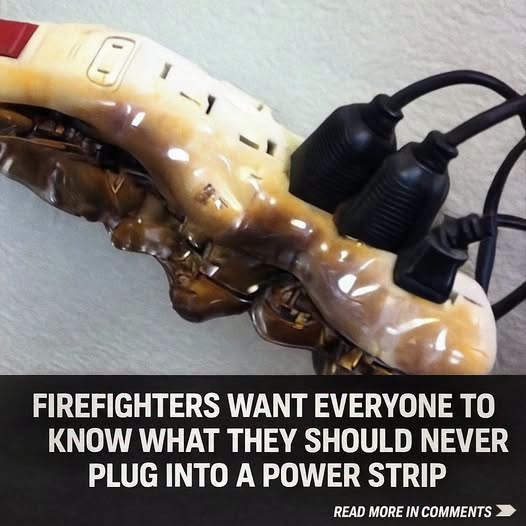
As freezing temperatures settle in and winter weather tightens its grip, countless families pull portable space heaters out of closets, garages, and storage rooms in search of quick relief from the cold. While these compact appliances can make a room feel warm and inviting within minutes, fire safety officials continue to warn that one common mistake can turn that comfort into a devastating disaster. Every winter, many homeowners unknowingly plug space heaters into extension cords or power strips, unaware that doing so can create a serious fire hazard. What seems like a harmless shortcut can overload electrical equipment, increasing the risk of overheating and, in the worst cases, causing a house fire.
Fire departments and emergency response agencies across the country routinely remind the public that portable heaters require far more electrical power than most everyday household devices. Unlike televisions, lamps, or phone chargers, space heaters draw a high amount of continuous current to produce heat. Many standard extension cords and power strips are not designed to safely handle that sustained electrical demand. When overloaded, their internal wiring can become dangerously hot, damaging insulation, melting plastic components, and potentially creating sparks capable of igniting nearby combustible materials such as curtains, carpets, or upholstered furniture.
Emergency responders have investigated numerous residential fires where improper use of a space heater played a significant role. In one incident, a homeowner connected a portable heater to a multi-outlet power strip positioned beside a living room sofa. The strip became overloaded, overheated, and eventually failed, allowing the fire to spread rapidly through nearby furnishings before firefighters could arrive. Incidents like this serve as a powerful reminder that convenience should never come before electrical safety, especially when using high-powered heating equipment.
According to information from the Consumer Product Safety Commission, portable space heaters are associated with roughly 1,200 residential fires in the United States each year. While not every fire is caused by extension cords or power strips, safety experts emphasize that many heater-related incidents can be prevented by following basic operating guidelines. One of the most important recommendations is to plug portable space heaters directly into a properly grounded wall outlet. Extension cords and power strips should generally be avoided unless the heater’s manufacturer specifically states that a particular heavy-duty cord is safe to use. It’s also important not to operate other high-power appliances from the same outlet or electrical circuit whenever possible, as doing so may increase the electrical load.
Electrical safety is only part of the equation. Where a heater is placed inside the home is equally important. Because portable heaters generate significant heat during normal operation, safety organizations recommend maintaining at least three feet of clear space between the heater and any flammable materials. Blankets, bedding, clothing, paper products, curtains, furniture, and similar household items should never be allowed to come into contact with the appliance. Even a moment of accidental contact with combustible materials can dramatically increase the risk of a fire.
Choosing the right surface for a portable heater also plays a major role in preventing accidents. These appliances should always be positioned on a firm, level, stable, and non-flammable surface where they are unlikely to tip over. Placing a heater on thick carpeting, bedding, or other soft materials can reduce airflow around the unit and may interfere with its normal operation. An unstable location can also increase the chance of the heater falling over, potentially placing its hot surfaces against combustible materials despite built-in safety features.
Another habit that fire officials consistently warn against is leaving a portable heater operating while sleeping or whenever no one is present to monitor it. Many residential fires begin because heaters are left running overnight or while occupants briefly leave the room, assuming they will return in just a few minutes. Continuous supervision allows people to notice warning signs—such as unusual odors, overheating, strange noises, or electrical problems—and shut the heater off before a dangerous situation develops. Turning the unit off whenever you leave the room or go to bed is one of the simplest and most effective safety precautions.
Regular maintenance is another important step in reducing risk throughout the winter months. Dust, lint, and pet hair can gradually collect inside air vents and around heating elements, affecting the heater’s performance and creating additional hazards if left unchecked. Before each heating season, inspect the appliance carefully for damaged cords, cracked plugs, loose connections, or any visible signs of wear. If a heater appears damaged or does not operate properly, it should be repaired according to the manufacturer’s instructions or replaced rather than continued in service.
Winter should be a season filled with warmth, comfort, and time spent safely with family and friends—not one overshadowed by preventable emergencies. By using portable space heaters responsibly, following the manufacturer’s instructions, plugging them directly into appropriate wall outlets, maintaining proper clearances, and practicing good electrical safety, homeowners can significantly reduce the risk of fire. A few simple precautions today can help protect both lives and property, ensuring that the comfort of staying warm never comes at the cost of household safety.