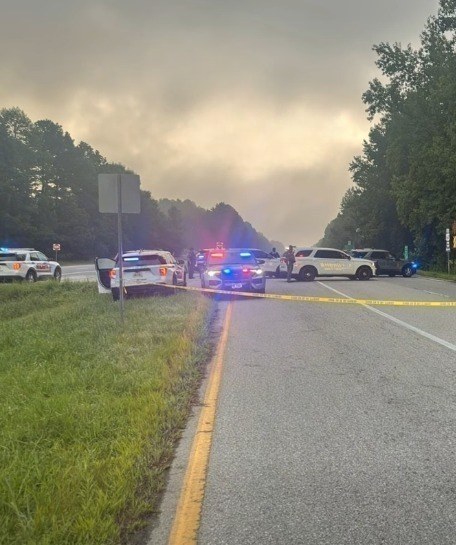
The serene ambiance of a large Michigan hospital was violently disrupted by gunshots shortly after morning, transforming a facility dedicated to saving lives into a scene of terror, uncertainty, and despair. What should have been a typical Thursday morning abruptly descended into mayhem at Corewell Health Beaumont Troy Hospital, located north of Detroit, where the terrifying incident took place. At around 7:08 a.m., patients were getting ready for appointments and procedures, nurses were starting their shifts, doctors were arriving for rounds, and families were navigating the medical campus when everything suddenly changed. The hospital parking garage, which is usually busy with early morning traffic, became the scene of a grave emergency when an active shooter situation broke out inside. In order to secure the expansive property and safeguard everyone within, police and hospital security teams launched a major response in response to the abrupt outbreak of violence, which necessitated rapid lockdown measures.
Unsettling details surfaced as investigators gradually put together what had happened, adding yet another level of horror to the tragedy. Authorities verified that the suspect was a hospital employee rather than an outsider. Serious questions concerning workplace safety, internal tensions, and whether warning indications may have gone ignored prior to the incident have been raised by the news that the shooter was employed by the institution. Early investigations indicate that the gunman specifically targeted a 25-year-old coworker who was employed at the medical center. The precise reason for the attack has not been made public by authorities, but detectives are still looking into the two men’s relationship and potential causes of the violent altercation. Before authorities were able to contain the situation, the suspect reportedly approached the victim within the parking structure and fired two rounds, injuring him in the arm.
The hospital’s emergency response systems were engaged right away in the frantic moments that followed the shooting. The injured worker was taken to the hospital’s emergency room, which is only a short distance away, in a matter of minutes because the incident occurred so near to the medical institution. His life was probably saved in large part by the close proximity. Despite the severity of the injuries, emergency doctors and trauma personnel responded with exceptional professionalism and speed, stabilizing the patient, stopping the bleeding, and providing emergency medical care. The young man was classified in stable condition and is anticipated to survive his injuries, according to medical officials later that day. The emotional trauma of being purposefully attacked by a coworker in such an unexpected context is likely to leave profound psychological wounds for both the sufferer and those close to him, even while his physical recovery seems optimistic.
Fear quickly swept around the hospital grounds as medical personnel attended to the injured worker. In an attempt to contain the threat and stop additional violence, security personnel and local police departments rushed quickly to lock down the entire property, shutting entrances and exits. Uncertainty engulfed the premises as staff, patients, and guests were told to stay put. As rumors spread about the shooter’s whereabouts and if there were more victims, nurses and doctors locked doors, darkened rooms, and told everyone to stay hidden. As many nervously awaited updates and wondered if the threat had actually passed, the atmosphere inside the hospital grew tense and terrifying. Thankfully, law police responded promptly and effectively. The man was apprehended by police without further gunshots or injuries after they found him on hospital property. Although the emotional toll of an active shooter incident inside a hospital is still significant, their quick action stopped what might have developed into an even more terrible catastrophe.
The event has again rekindled worries about security in healthcare settings, particularly in high-stress workplaces where burnout and mental stress are already common problems. Although hospitals are enormous public buildings with particular safety problems, they are also frequently perceived as sanctuaries of compassion, healing, and sanctuary. One of the most important hospitals in the Detroit area, Corewell Health Beaumont Troy Hospital, has already started a thorough evaluation of its present emergency protocols and security measures. In order to effectively respond to potential threats, officials are likely to look into measures to bolster staff screening procedures, enhance monitoring, increase security patrols, and modernize communication systems. The incident serves as a heartbreaking reminder that healthcare professionals deal with challenging medical situations on a daily basis in addition to the growing risk of violence from patients, guests, and now even coworkers.
Investigators and hospital administrators are working closely together to figure out how the suspect was able to get a firearm into the parking garage. Concerns regarding safety in employee parking garages have been raised by numerous employees, particularly in the early morning hours when fewer people are there. Employees reported feeling vulnerable during shift changes since some parts of the garages were remote and inadequately supervised. In response, hospital administration is apparently thinking of implementing a number of new security measures, such as more patrols, more security cameras, and more stringent personnel identification processes, all of which are intended to enhance safety and accountability across the campus.
The Corewell Health Beaumont Troy community is trying to return to normal while authorities continue to look into the suspect’s past and try to figure out why the crime occurred. Even yet, the horrific recollection of that Thursday morning is still ingrained in the memories of those who witnessed it personally. First responders’ bravery, the medical staff’s professionalism, and the trauma teams’ composed efficiency in treating the sufferer have all been commended as instances of exceptional fortitude in the face of unfathomable terror. Hospital administrators are still dedicated to reestablishing a feeling of security so staff members may carry out their vital duties of providing patient care throughout the Detroit area. In order to ensure that the hospital can continue to be a place of healing rather than becoming permanently overshadowed by violence and fear, a large portion of the focus in the coming weeks will be on providing counseling services, emotional support, and mental health resources for staff members traumatized by the shooting.