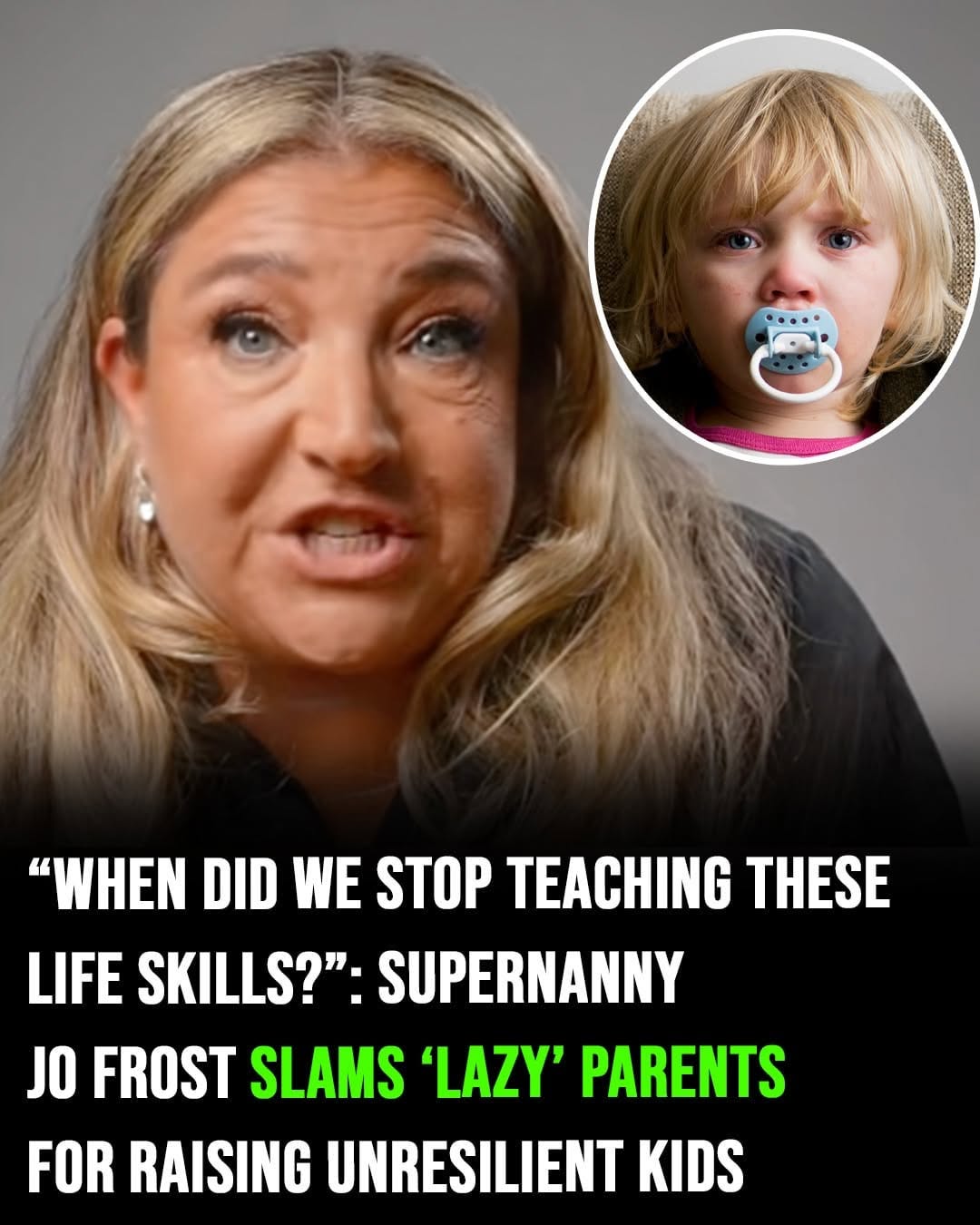
Modern parents are about to hear a message they may not want to hear. Jo Frost, known worldwide as the original “Supernanny,” has issued a blunt warning that goes far beyond concerns about screen time. According to Frost, many children today are struggling with basic independence—not because they lack ability, but because adults are unintentionally doing too much for them. Her message has sparked intense debate among parents who are beginning to question whether constant assistance is helping their children or quietly holding them back.
For years, parenting advice has focused heavily on safety, emotional support, and protection. While those priorities remain important, Frost argues that many families have drifted into a pattern of over-helping. Small tasks that children are perfectly capable of learning—putting on shoes, brushing teeth, packing school bags, cleaning up toys, or walking short distances—are often completed by parents in the interest of saving time. The result, she says, is a generation that may feel loved but lacks confidence in its own abilities.
Her criticism is not directed at parents who care too much. In fact, Frost believes the problem comes from good intentions. Busy schedules, demanding jobs, and the pressures of modern life make it tempting to step in and do everything ourselves. It is often faster to tie a child’s shoes than to spend ten minutes teaching them. It is easier to push a stroller than wait for little legs to walk. It is simpler to solve every problem than to let children struggle through frustration. Yet every shortcut removes an opportunity for growth.
One of Frost’s biggest concerns is that children are losing valuable chances to develop resilience. Confidence does not appear automatically with age. It is built through repetition, mistakes, and practice. When children learn to complete small tasks independently, they gain proof that they are capable. That confidence then carries into larger challenges at school, in friendships, and eventually in adulthood. Without those experiences, even simple responsibilities can feel overwhelming.
The issue extends beyond practical skills. Frost argues that independence is closely tied to emotional development. Children who are allowed to try, fail, and try again learn patience, persistence, and problem-solving. They discover that frustration is not dangerous and that mistakes are part of learning. When adults constantly intervene, children may begin to believe they cannot handle difficulties on their own. Over time, that belief can become a serious obstacle to self-confidence.
Many parents recognize the pattern because it often starts innocently. A child struggles to zip a jacket, so a parent helps. The next day, the parent helps again. Soon the child stops trying altogether because someone else always takes over. Similar patterns occur with homework, chores, personal hygiene, and everyday responsibilities. What begins as assistance can quietly become dependence if children are never encouraged to take ownership of the task themselves.
Frost also highlights the role of technology and convenience in modern family life. While digital devices and time-saving tools can be helpful, they sometimes replace experiences that once taught responsibility. Children may spend less time exploring independently, solving problems face-to-face, or learning practical life skills. The result is not laziness, she argues, but a lack of opportunity to practice independence in meaningful ways.
Her solution is not strict discipline or unrealistic expectations. Instead, she encourages parents to slow down and embrace the messy process of teaching. Allow children extra time to dress themselves. Let them help prepare meals. Encourage them to tidy their rooms, organize their belongings, and contribute to family responsibilities. These moments may require patience, but they build skills that last a lifetime.
The lesson behind Frost’s warning is both simple and challenging. Children become capable by being allowed to practice capability. They learn responsibility by being trusted with responsibility. They develop confidence by accomplishing things themselves rather than watching others do everything for them. Parents do not need to be perfect, but they do need to create opportunities for growth, even when doing so takes more time and effort.
Ultimately, Frost’s message is not an attack on modern parenting—it is a reminder of what children truly need. Love is essential, but so is independence. Protection matters, but so does preparation. The goal is not to raise children who never struggle; it is to raise children who know they can overcome struggles when they arrive. And according to Frost, that journey begins with the small everyday lessons many families are unintentionally skipping.