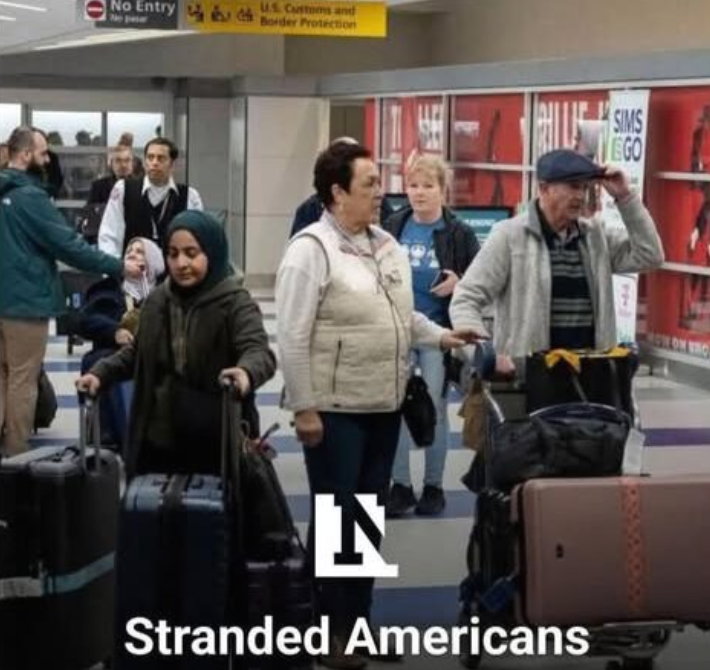
The dream of a globally connected world, where information, travel, and commerce flow seamlessly across borders, has collided harshly with the stark realities of modern warfare. By March 2026, thousands of Americans and other foreign nationals found themselves trapped in a perilous limbo across the Middle East, just a week after coordinated U.S.-Israeli strikes on Iranian targets ignited a broader regional conflict that has now engulfed over a dozen neighboring countries. What began as a highly specific military operation quickly spiraled into a humanitarian crisis of unprecedented proportions, leaving travelers and expatriates to navigate a collapsing network of closed airports, canceled flights, disrupted communications, and a growing perception of abandonment by their own government. The fragile illusion of safety, once promised by globalized infrastructure, now lay in ruins.
The stories emerging from the affected regions are unified by one haunting pattern: a glaring disparity in national response. While the U.S. government issued escalating advisories, frequently urging its citizens to “shelter in place” or attempt to secure their own commercial escape routes, other countries reacted with decisiveness and coordination. Nations such as Poland, Australia, and France had already dispatched military transport aircraft and chartered civilian flights to evacuate their citizens from the escalating war zones. Watching these operations unfold, many stranded Americans were left feeling a bitter mixture of frustration, fear, and existential disquiet, as their own government’s actions seemed slow, inadequate, or noncommittal in comparison.
The logistical nightmare began almost immediately after the initial strikes. Key regional transit hubs—Dubai, Doha, and Istanbul, which serve as major crossroads of global travel—saw flight boards light up in red, indicating widespread cancellations as civilian airspace was shut down to ensure safety. Thousands of Americans rushed to airports only to find terminals locked, check-in counters unmanned, and security personnel overwhelmed by a sudden influx of panicked travelers. Unlike earlier conflicts, when commercial flight availability could provide at least a semblance of escape, the 2026 crisis demonstrated a total systemic breakdown of regional air transport, leaving many citizens stranded with no practical options for evacuation.
Accounts from cities such as Amman, Beirut, and Kuwait City describe an even more disturbing failure: the breakdown of communication and consular support. The U.S. State Department’s Smart Traveler Enrollment Program (STEP), designed to provide alerts and guidance, was inundated with requests, often delivering vague messages that offered little in the way of actionable advice. Citizens were informed that government-led evacuation operations were unlikely, leaving them to navigate complex international borders, military checkpoints, and escalating regional instability largely on their own. This perceived neglect has amplified feelings of vulnerability and abandonment, reinforcing the notion that strategic military interests may be prioritized over the safety of individual citizens.
In stark contrast, Australia’s swift deployment of Royal Australian Air Force (RAAF) transport planes to Cyprus and Jordan has become a benchmark for effective citizen protection, demonstrating how smaller nations can act decisively to safeguard their populations. French military flights have likewise evacuated hundreds of citizens, focusing on vulnerable groups such as the elderly and families with young children. This stark “evacuation gap” has only deepened the frustration of stranded Americans, fostering a growing belief that the sheer size of the U.S. military is underutilized when it comes to directly protecting citizens abroad. Many wonder why allies with fewer resources seem better prepared to extract their people from harm than the world’s foremost superpower.
The psychological impact of being trapped in an active war zone is profound and compounded by the rapid expansion of the conflict. What initially involved three primary actors has now spilled into nearly every capital city in the Middle East. The ever-present hum of drones, the threat of missile strikes, and the occasional illumination of city skylines by anti-aircraft fire have transformed what were once luxurious expatriate enclaves into de facto fortresses. In Istanbul, Americans report surreal scenes: watching their urban skyline intermittently lit by tracer fire while simultaneously receiving notifications that their rebooked flights had been canceled indefinitely. The duality of living under constant threat while attempting to navigate a modern transportation system now in collapse has produced an atmosphere of extreme stress and disorientation.
This crisis also underscores a fundamental evolution in how modern states perceive their duty of care toward citizens abroad. For nations like Poland or Australia, with smaller populations abroad and focused logistical capacities, the rapid extraction of citizens is achievable and visibly demonstrates state competence and compassion. For the United States, which has hundreds of thousands of citizens scattered across the Middle East for work, study, or leisure, organizing a comparable evacuation is not only logistically daunting but fraught with political risk. The result is a “lottery of birth,” where nationality and government organization play an outsized role in determining an individual’s likelihood of safety in a high-risk zone.
Complicating matters further is the shift in guidance from diplomatic assistance to self-reliance. Travelers report being advised to assemble “go-bags,” plan overland routes to supposedly safer borders like Saudi Arabia or Mediterranean coastal points, and ration resources for uncertain durations. Yet these instructions often clash with on-the-ground realities: fuel shortages, congested roads clogged with refugees, and militarized checkpoints make such self-directed plans nearly impossible. This disconnect between official guidance and practical survival options has exacerbated anxiety and the perception of governmental inaction.
Socioeconomic status has introduced another layer of inequality in the crisis experience. Wealthier expatriates and corporate employees, often sheltered in secure compounds with private resources, can mitigate risk and access evacuation options. In contrast, ordinary tourists, students, and mid-tier professionals often face the stark reality of limited mobility, minimal resources, and dangerously congested urban centers. The closure of the Strait of Hormuz, combined with spiking oil prices, has intensified the logistical difficulties, making even short-distance travel a costly gamble with unpredictable consequences.
As the conflict enters its second week, the window for a safe and organized evacuation continues to narrow. Aerial bombardments and the pervasive threat of anti-aircraft fire have rendered civilian flights—humanitarian or commercial alike—extremely perilous. Consequently, the U.S. military remains the sole entity capable of conducting large-scale, coordinated extractions, yet the administration has hesitated, wary of escalating tensions or endangering personnel. This stalemate has transformed the plight of stranded Americans into an urgent humanitarian and political dilemma, drawing criticism from both the public and policymakers at home.
For those fortunate enough to escape, the journey has often been harrowing. “Gray-market” transport—private buses, small vessels, and chartered flights—cost thousands of dollars and carried immense personal risk. For those remaining, the empty skies and the absence of commercial aircraft have become constant symbols of isolation and vulnerability. The growing frustration is no longer a private sentiment; it is shaping domestic political discourse, with families demanding accountability and questioning the ability of the U.S. government to protect its citizens abroad.
Ultimately, the 2026 Middle East stranded citizen crisis is a stark lesson in the limitations of state power and the vulnerabilities inherent in globalized conflict zones. It highlights how individual safety is often subordinated to broader strategic priorities and exposes the weaknesses in even the most technologically advanced nations when confronted with fast-moving, multi-national warfare. As allies celebrate the safe return of their nationals, the deafening silence of empty U.S. evacuation tarmacs stands as a somber reminder of the human cost of bureaucratic inertia and strategic caution. For Americans still stranded amidst the chaos, each passing day compounds uncertainty, and each empty sky is a poignant testament to the complex intersection of modern warfare, international diplomacy, and the precariousness of individual survival.