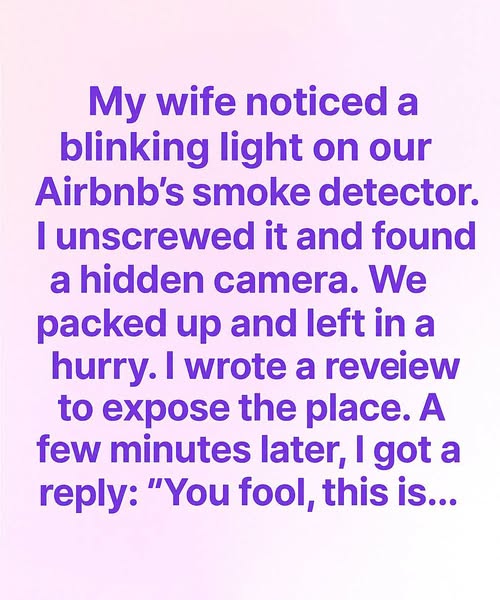
What seemed like an ordinary vacation changed in an instant. One second, we were settling into what looked like a comfortable rental, and the next, a single unsettling detail made us question everything around us. The room suddenly felt different—as if every smile, every conversation, and every private moment had unfolded on a stage we never knew existed. An uneasy feeling grew stronger until I finally climbed onto the bed, reached toward the smoke detector, and carefully opened it. Hidden inside was a tiny camera lens. In that moment, the entire trip became something else entirely.
Although we eventually packed our belongings and left the property, it never truly felt like we escaped that room. Physically, we drove away and continued our lives, but mentally we remained frozen in that moment, staring at the small lens concealed inside the ceiling fixture. The realization was overwhelming. For who knows how long, we had unpacked our bags, changed clothes, laughed together, argued over small things, and slept peacefully, believing we were completely alone while an unseen device may have been silently recording our lives.
The discovery shattered our sense of security in a way we never expected. It wasn’t simply about one hidden object—it was the feeling that our trust had been violated without our knowledge. Looking back, every ordinary moment inside that room suddenly felt different, colored by the possibility that our privacy had never truly existed from the moment we arrived.
When we contacted the rental platform, we hoped for immediate answers and decisive action. Instead, we felt overwhelmed by automated responses, standard policy explanations, and assurances that an investigation would take place. To us, the evidence seemed undeniable and deeply personal. Yet the replies we received felt distant and procedural, leaving us with the impression that the seriousness of the situation had become buried beneath formal processes and generic messages.
Since then, the experience has permanently changed the way we enter unfamiliar places. Every hotel room, vacation rental, and even guest bedroom now receives careful scrutiny before we begin to relax. We instinctively inspect smoke detectors, alarm clocks, charging adapters, and other household devices, looking for anything that seems unusual. What once took only a few minutes to settle into now begins with careful observation and caution.
Friends and family often reassure us that we’re probably being overly cautious, suggesting that such incidents are uncommon. We understand why they say that, and we wish we could see it the same way. But they weren’t standing beside us when that hidden lens was discovered. They didn’t experience the sudden realization that a space we believed was private may not have been private at all.
That single moment fundamentally changed the way we think about personal privacy. Before, it was something we rarely questioned. Now, it feels like something that must be actively protected wherever we go. We still travel, stay in hotels, and rent vacation homes, but we do so with a level of awareness we never had before. Sometimes, all it takes is one unexpected discovery to transform a basic expectation of privacy into something that no longer feels guaranteed, but instead something that must be earned through vigilance and trust.