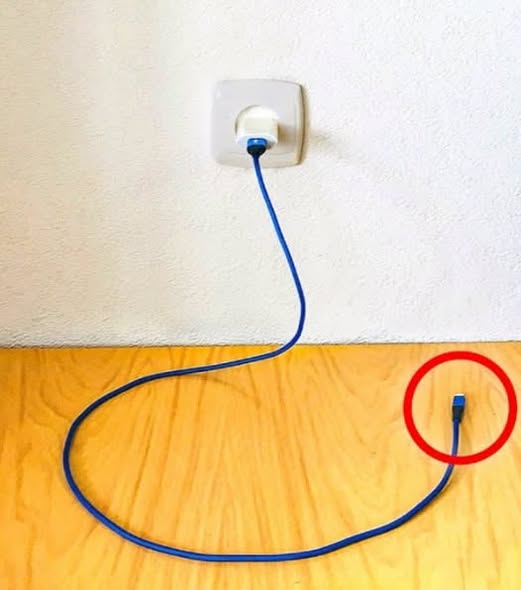
Dangers don’t always explode into your life. Sometimes they hum quietly from the outlet you forgot about, blending into the background until the smallest mistake turns them into something far more serious. That “empty” charger sitting against the wall may look completely harmless, but inside, its components are working, heating, aging, and slowly wearing down hour after hour. Materials can dry out, insulation can weaken, and tiny electrical faults can develop without giving you any obvious warning. Then one surge, one damaged connection, one accidental tug, or one tiny hand or curious paw at exactly the wrong moment can turn an ordinary plug into a source of smoke, sparks, or fire.
Leaving chargers permanently plugged in feels like nothing. It becomes part of the room, something you stop noticing after a while. But even when no phone, tablet, or other device is connected, many adapters can continue drawing a small amount of electricity and producing heat. That constant exposure can contribute to the gradual aging of internal components. Over time, insulation may become brittle, solder joints can weaken, and small defects can become bigger electrical problems. A power surge can make matters worse, especially when the charger is old, damaged, poorly made, or not designed to meet proper safety standards.
Then there are the everyday accidents that are easy to overlook. Children may pull on dangling cords out of curiosity. Pets can chew through cables that are still connected to the wall. Someone rushing out the door may yank a charger loose by the wire instead of gripping the plug. Repeated bending, pulling, twisting, and overheating may not cause an immediate problem, but each incident can add another layer of wear and damage. A loose outlet can create another weak point, allowing a seemingly ordinary charger to become unexpectedly dangerous.
The safest solution is also one of the simplest: unplug chargers when you are finished using them, especially when they are damaged, unusually hot, making strange noises, or showing signs of wear. Replace suspicious or poorly made adapters instead of continuing to use them, and keep electrical outlets clear, dry, and free from unnecessary clutter. Check cords occasionally for cuts, exposed wires, discoloration, or melted sections, and never ignore warning signs simply because a charger still appears to work.
It takes only a few seconds to pull a charger from the wall. That tiny habit may seem unnecessary when everything appears normal, but preventing a problem is far easier than dealing with the consequences after something goes wrong. Sometimes safety isn’t about responding to a dramatic warning. It’s about noticing the quiet risks before they have a chance to become something much worse.