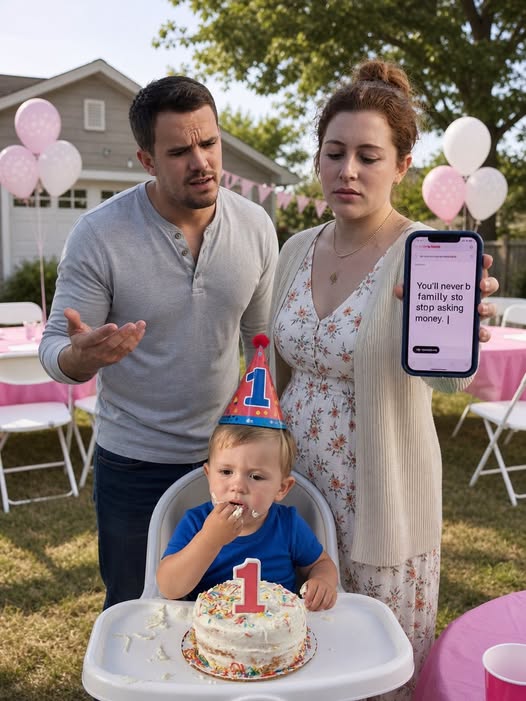
My mother disowned my son in a single text, and the air left the room. No screaming, no scene, just a quiet, surgical decision: I was done auditioning for a family that treated me like collateral. While balloons swayed on the fence and a cake sweated in the heat, I opened my laptop and began to document everything. For years, I had convinced myself that keeping the peace was worth the cost, but that message finally made me see how much I had already sacrificed.
The letter I mailed wasn’t an invitation to reconcile; it was a ledger. Every “favor” they’d demanded became a line item, every secret bailout a number on a page that finally told the truth: I had been their safety net, not their child. I wrote down dates, payments, promises, and conversations I had spent years trying to forget. Seeing everything together was painful, but it also gave me something I had never had before—clarity.
Cutting legal ties wasn’t revenge. It was self-defense. I moved my life, piece by piece, out of their reach—documents, accounts, property—until the only thing left they could lay claim to was a story that no longer matched the facts. I stopped explaining every decision and stopped asking for permission to protect the life I was building for my son.
At first, they assumed I would eventually come back. They were used to apologies, second chances, and me quietly repairing whatever they had broken. When I didn’t, the messages became more frequent. Some were angry. Others tried guilt. A few sounded almost affectionate, as though nothing had happened. But I had finally learned to recognize the difference between love and the fear of losing control.
Then the deeper fraud surfaced—missing inheritance, forged narratives, and a grandfather they’d turned into a ghost. The story they had told for years began falling apart when records, dates, and documents contradicted it. What I had once accepted as family history suddenly looked very different when I examined the evidence for myself.
Their power collapsed under its own weight. With lawyers, records, and witnesses, the myth of the “ungrateful daughter” gave way to a paper trail of exploitation. People who had once believed their version of events began asking questions. The more carefully everything was documented, the harder it became to dismiss what had happened as a misunderstanding or family disagreement.
I didn’t win in some cinematic showdown. There was no dramatic confrontation where everyone finally admitted they were wrong. There was simply a series of decisions. One account closed. One document moved. One boundary established. One conversation ended when it became disrespectful. Slowly, the life they had controlled became a life they could no longer reach.
The hardest part wasn’t walking away from them. It was accepting that I had spent so many years trying to earn a place in a family that should never have made me audition for belonging. I had confused obligation with love and guilt with loyalty. Protecting my son forced me to recognize that I couldn’t teach him self-respect while continuing to accept treatment that destroyed my own.
My son’s next birthday was quiet and full: every chair taken by people who chose us, not people I had to beg to stay. There were no tense conversations, no waiting for someone to arrive, and no wondering whether a celebration would become another family argument. There was laughter, cake, and the simple comfort of knowing everyone in that room genuinely wanted to be there.
For the first time, I understood that family isn’t always defined by blood. Sometimes it is defined by who shows up, who protects you, who respects your boundaries, and who loves your child without conditions. I didn’t destroy my family. I stopped allowing them to destroy me.
And when I closed the laptop that night, the documents were still there, the records were still there, and the past could not be rewritten. But neither could my future. That belonged to me and my son now.