Residents Were Amazed by a Dazzling Light Over Ikaria, Greece — Here’s What It Might Have Been
A mysterious-looking image of a brilliant light above a Greek island has captured the internet’s attention, prompting questions about what people are seeing in the sky. But could there be a scientific explanation behind the extraordinary appearance?
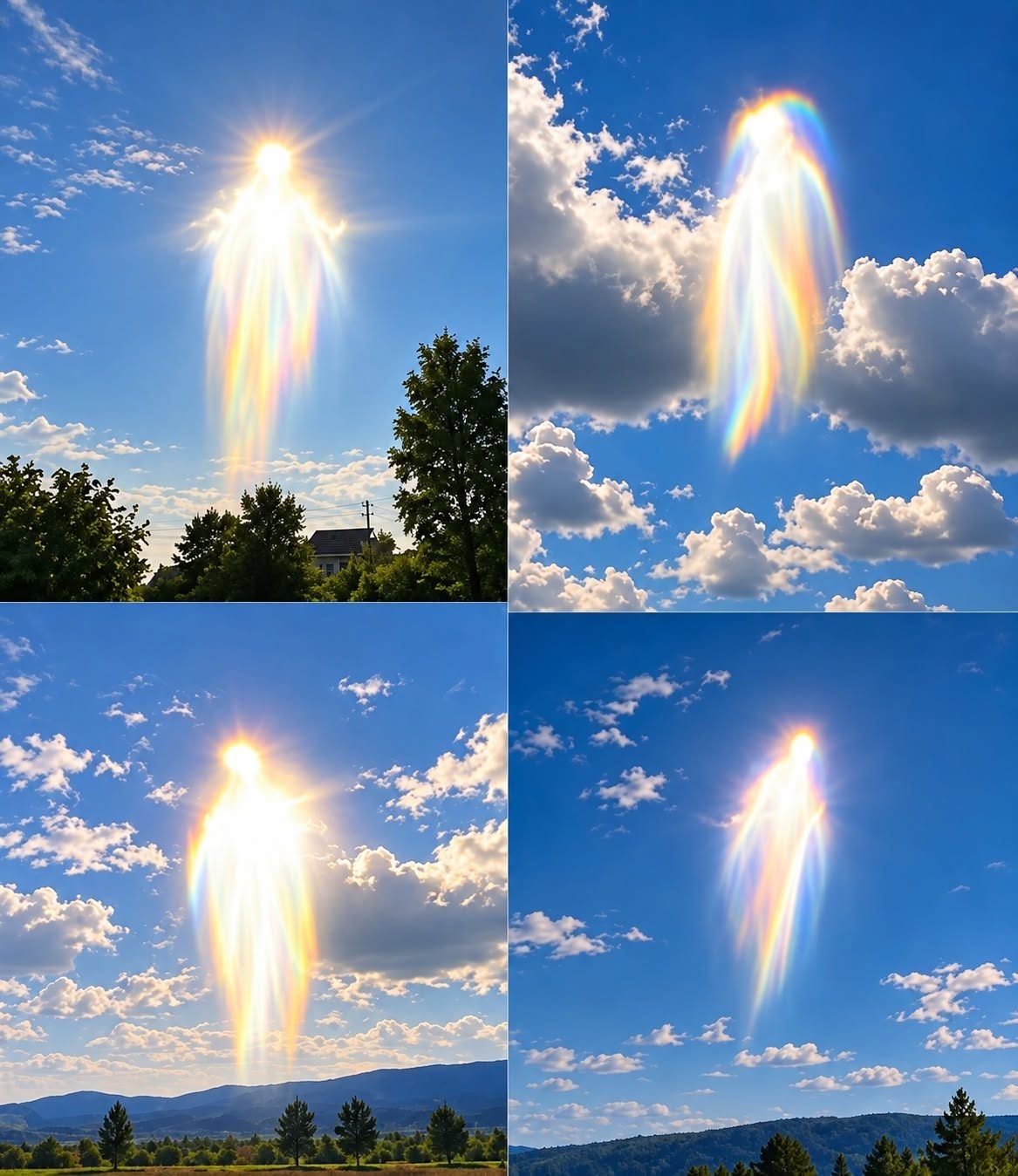
IKARIA, GREECE — Images claiming to show a dazzling, unusual light over the Greek island of Ikaria began circulating widely on social media in July 2024. The striking visuals sparked curiosity, debate, and a wave of speculation, with some online users suggesting that the unusual shape resembled a religious figure or an otherworldly presence.
For many viewers, the images appeared almost surreal. A bright, luminous shape seemed to stand out against the sky, creating an impression that was difficult to explain at first glance. As the pictures spread across different platforms, people began offering their own interpretations of what the phenomenon might represent.
Some viewers described the appearance as beautiful and mysterious. Others wondered whether it could have been caused by a rare atmospheric event, an unusual interaction between sunlight and clouds, or even digital image manipulation.
However, despite the dramatic claims accompanying the images, there is an important detail to keep in mind: the pictures have not been reliably verified as evidence of an actual unusual event over Ikaria.
What Could Have Created Such an Unusual Appearance?
There are several possible explanations for bright or strangely shaped features in the sky. Atmospheric optics, reflections, cloud formations, camera effects, and digital editing can sometimes produce images that look extraordinary.
One possibility is an optical phenomenon involving sunlight and clouds. Under certain conditions, light can scatter through tiny water droplets or ice crystals, producing bright patches, halos, and unusual colors. Depending on the angle of the light and the position of the observer, these effects can create shapes that appear almost three-dimensional.
Another possibility is pareidolia, a well-known psychological phenomenon in which the human brain recognizes familiar patterns in ambiguous images. People may see faces, human figures, angels, or other recognizable forms in clouds and irregular light patterns, even when those shapes have no such structure.
Photography can also influence what an image looks like. Exposure settings, lens reflections, image processing, and editing may change the brightness, colors, or apparent shape of a light source.
In this particular case, however, there is not enough verified evidence to identify one of these explanations as the definitive cause.
Why Did the Images Attract So Much Attention?
The combination of an unusual image and an uncertain explanation is often enough to make a story spread rapidly online.
When people encounter something that appears unfamiliar, they naturally look for context. Some turn to scientific explanations, while others interpret the same image through their religious or cultural beliefs.
Ikaria itself has a rich cultural identity and is associated with the ancient Greek myth of Icarus. That connection may add to the island’s fascination for audiences, although it does not establish any connection between the myth and the circulating images.
As the pictures gained attention, comments ranged from expressions of wonder to skepticism. Some users interpreted the shapes as spiritual signs, while others questioned whether the images were authentic or had been digitally created.
Neither an enthusiastic reaction nor a skeptical comment can, on its own, establish what produced the image.
Could It Have Been a Sign From Above?
Some social media users interpreted the unusual appearance in religious terms, describing it as resembling a sacred figure or an angel. Such interpretations reflect individual beliefs and personal reactions to the imagery.
Science, however, requires a different kind of evidence. To establish the origin of a phenomenon, investigators would need reliable information about where and when the image was taken, the original photograph or video, independent observations, and any available meteorological or astronomical data.
Without that information, it would be premature to describe the image as a miracle, an unexplained atmospheric event, or proof of something supernatural.
The Most Important Question Remains
The images associated with Ikaria demonstrate how quickly an unusual visual can capture public attention and inspire competing explanations.
Yet the most responsible conclusion is also the simplest: the origin of the circulating images has not been conclusively established. There is currently insufficient verified evidence to say exactly what they depict or whether they document a real event over the island.
Until the original material and its circumstances can be independently verified, the mystery should remain an open question rather than being presented as a confirmed extraordinary occurrence.
What do you think these images show — a natural optical effect, a photographic illusion, or something created digitally?
Share your thoughts in the comments, but remember that an extraordinary image is not necessarily proof of an extraordinary event.
Editor’s note: This article discusses images circulated online in July 2024. Their authenticity and the circumstances in which they were produced have not been independently established.