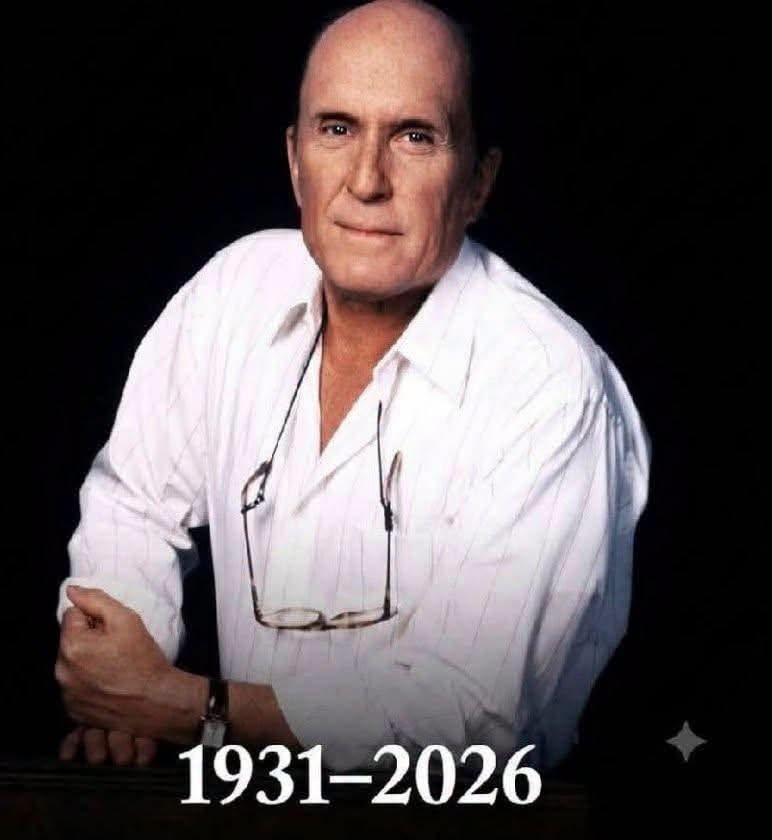
Remembering Robert Duvall: Celebrating the Life and Legacy of an Oscar-Winning Hollywood Icon
Hollywood has lost one of its most respected acting legends. Robert Duvall, the Academy Award-winning star whose unforgettable performances helped shape generations of American cinema, died on February 15, 2026, at the age of 95. His passing marks the end of an extraordinary chapter in film history, but his remarkable body of work will continue to inspire audiences for years to come.
For more than six decades, Robert Duvall captivated audiences with performances that felt authentic, powerful, and deeply human. He was never an actor who needed to dominate every scene with grand gestures or dramatic speeches. Instead, he possessed a rare ability to communicate entire worlds of emotion through a glance, a pause, or a few carefully chosen words.
From crime dramas and war films to Westerns and intimate character studies, Duvall demonstrated a versatility that few performers could match.
His death was announced by his wife, Luciana Duvall, who shared the sad news with the public. According to reports, he passed away peacefully at his home in Middleburg, Virginia, surrounded by love and comfort. No cause of death was publicly specified in the announcement.
A Career That Helped Define Hollywood
Born on January 5, 1931, in San Diego, California, Robert Selden Duvall grew up in a Navy family. His father was a career naval officer, and his upbringing helped shape the discipline and determination that would later become hallmarks of his professional life.
Duvall initially explored different paths before committing himself to acting. After serving in the United States Army, he moved to New York City to study drama and develop his craft.
There, he trained under respected acting teacher Sanford Meisner and formed connections with fellow aspiring performers, including Dustin Hoffman and Gene Hackman.
The early years were not glamorous. Like many young actors, Duvall worked to establish himself, taking theater roles and appearing in television productions before opportunities in film began to grow.
His breakthrough came with his portrayal of Boo Radley in the 1962 film To Kill a Mockingbird. Although the character had very little dialogue, Duvall created a memorable presence that demonstrated his extraordinary ability to communicate emotion without relying on words.
It was an early indication of the remarkable career that lay ahead.
The Role That Made Him a Hollywood Legend
For many movie lovers, Robert Duvall will forever be associated with The Godfather.
In Francis Ford Coppola’s celebrated 1972 film, Duvall portrayed Tom Hagen, the calm, intelligent, and trusted adviser to the Corleone crime family.
His performance stood out because of its restraint. Surrounded by characters known for their volatility and ambition, Tom Hagen often became the quiet center of the story.
Duvall returned to the role in The Godfather Part II, further cementing his place in cinematic history.
His ability to portray intelligence, loyalty, and moral complexity made the character unforgettable.
Yet Duvall’s career was never limited to one famous role.
In 1979, he delivered another iconic performance as Lieutenant Colonel Bill Kilgore in Apocalypse Now. The character’s eccentric confidence and unsettling view of warfare produced some of the film’s most memorable moments.
The role demonstrated another side of Duvall’s talent: his ability to portray a man who could be charismatic, frightening, humorous, and deeply disturbing all at once.
These performances helped establish him as one of the most versatile actors of his generation.
The Oscar That Recognized His Extraordinary Talent
Although he had already earned considerable respect in Hollywood, Duvall reached another career milestone with the 1983 film Tender Mercies.
He played Mac Sledge, a troubled country singer attempting to rebuild his life after years of personal and professional struggles.
It was a quiet, deeply emotional performance that relied on subtle expressions rather than dramatic spectacle.
Duvall’s portrayal earned him the Academy Award for Best Actor at the 1984 Oscars.
The role showcased his remarkable ability to find humanity in imperfect characters. Mac Sledge was neither a conventional hero nor a simple victim. He was a man confronting regret, searching for redemption, and learning how to live differently.
Duvall brought extraordinary sincerity to the part.
Throughout his career, he received seven Academy Award nominations, a testament to the respect he commanded among filmmakers, fellow actors, and critics.
A Master of More Than One Genre
One of the most remarkable aspects of Duvall’s career was his refusal to be confined to a single type of character.
He could portray a military officer with commanding authority, a troubled father struggling with his family, a lawman shaped by experience, or a man attempting to find peace after a lifetime of mistakes.
In The Great Santini, he portrayed a demanding Marine pilot whose rigid personality created conflict within his family.
In the television miniseries Lonesome Dove, he became Augustus “Gus” McCrae, a charismatic former Texas Ranger whose humor, courage, and complicated understanding of life made him a beloved character.
He also earned recognition for The Apostle, a film he wrote, directed, and starred in. His portrayal of a charismatic but deeply flawed preacher demonstrated his willingness to explore difficult subjects and morally complicated people.
His later work included The Judge, in which he played an aging judge facing personal and family conflicts. The performance earned him another Academy Award nomination, showing that his abilities remained formidable well into his eighties.
Duvall’s career was proof that great acting is not about playing the same character repeatedly. It is about discovering what makes each person unique.
A Private Man Behind the Fame
Despite his extraordinary success, Duvall often appeared more interested in the craft of acting than in the machinery of celebrity.
He was known for immersing himself in his roles, studying the people and environments that could help him create believable characters.
His interests also extended beyond Hollywood.
He loved Westerns, horses, and tango dancing, and he spent significant time in Argentina as well as at his Virginia home.
In 2004, he married Argentine actress and filmmaker Luciana Pedraza, who remained his wife until his death.
Their relationship was an important part of his later life, and she announced his passing with a heartfelt tribute.
For those who knew him through his films, the news marked the loss of a familiar and enduring presence. For those closest to him, it meant saying goodbye to a husband, friend, and companion whose life extended far beyond the screen.
Hollywood Pays Tribute to a Legend
Following the announcement of his death, tributes came from actors, filmmakers, and admirers who recognized the extraordinary influence he had on American cinema.
His longtime collaborators remembered a performer who brought commitment and authenticity to every project.
His fellow actors recognized the example he had set through his dedication to the craft.
And movie lovers around the world revisited the films that had made him a household name.
Duvall’s influence cannot be measured by awards alone. He helped demonstrate that supporting roles could be every bit as compelling as leading ones, and that a character did not need to be likable to be unforgettable.
He brought complexity to the screen, making audiences look more closely at the people they might otherwise have dismissed.
That is one of the defining qualities of a truly great actor.
A Legacy That Will Never Fade
Robert Duvall’s passing at 95 marks the end of a remarkable life, but it does not mark the end of his presence in cinema.
His films remain available to new generations of viewers, each of whom can discover something different in his performances.
Some will remember Tom Hagen’s measured intelligence in The Godfather. Others will remember Colonel Kilgore’s unforgettable presence in Apocalypse Now. Many will find the deepest emotional connection in Tender Mercies, where Duvall portrayed a man trying to make peace with his past.
Whatever role audiences remember most, his performances share one extraordinary quality: they feel real.
He understood that people are rarely simple. They carry contradictions, regrets, ambitions, and private struggles that cannot always be explained.
Through his work, Duvall gave those complexities a human face.
Robert Duvall was more than an Oscar-winning actor. He was a storyteller whose performances helped define an era, a craftsman who treated every role with seriousness, and an artist whose influence will continue long after the final credits have rolled.
He may have taken his final bow, but the characters he brought to life will remain with us.
And whenever audiences return to those unforgettable films, Robert Duvall will be there once again—quietly commanding the screen, reminding us why great acting never truly grows old.