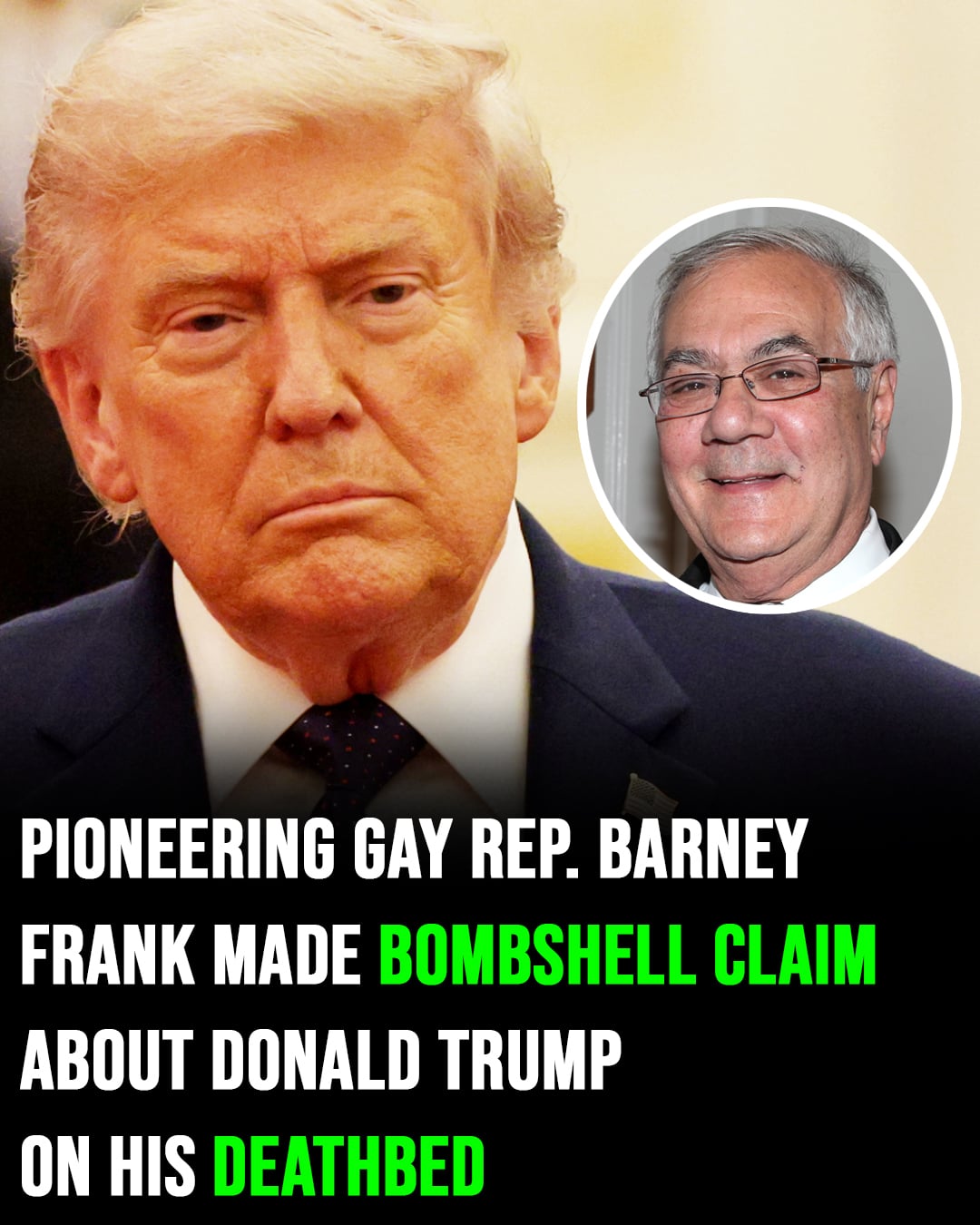
Barney Frank never built his reputation on politeness or carefully softened opinions. For decades, he became known as one of the sharpest, bluntest, and most intellectually combative figures in American politics — a lawmaker who rarely hid what he believed, even when it made people uncomfortable. And according to accounts from his later years, that directness did not fade as his health declined. If anything, it became even more distilled.
In the final stage of his life, Frank reportedly carried one lingering frustration above all others: the fear that he would not live long enough to witness the political collapse of Donald Trump.
It was a striking sentiment, not only because of its intensity, but because it revealed how personally and politically alarming Frank believed the Trump era to be. This was not casual partisan disagreement. Frank viewed Trump as a uniquely dangerous political force — someone he believed thrived not on governance or policy vision, but on anger itself.
Even while facing hospice care and declining health, Frank reportedly continued speaking about politics with the same sharp edge that defined his decades in Congress. Friends and interviewers described a man unwilling to retreat into vague reflection or sentimental neutrality simply because he was nearing the end of life. He remained intellectually engaged, opinionated, and deeply troubled by the direction he believed American politics had taken.
That consistency felt deeply connected to who Barney Frank always was.
For much of his career, Frank occupied historic ground in American public life. As one of the first openly gay members of Congress — and later the first to come out while serving — he represented a generation of politicians who forced institutions to confront realities they had long tried to ignore. At a time when being openly gay in national politics carried enormous professional and personal risk, Frank refused invisibility. That alone permanently secured his place in political history.
But his influence stretched beyond symbolism.
Frank also became central to debates surrounding financial regulation, especially after the 2008 economic crisis. The Great Recession transformed him into one of the architects behind major Wall Street reforms, including the Dodd-Frank Act aimed at tightening oversight of the financial system. Supporters saw him as fiercely intelligent and policy-driven. Critics often viewed him as abrasive and ideologically rigid. Yet even opponents rarely accused him of lacking conviction.
That same conviction shaped his view of Trump.
Frank reportedly described Trump as an “idiot savant,” arguing that Trump possessed one undeniable political skill: the ability to identify public resentment and weaponize it effectively. In Frank’s view, however, that talent did not translate into constructive leadership. He believed Trump excelled at channeling grievance but struggled to offer coherent solutions beyond conflict itself.
Whether discussing immigration, foreign policy, or democratic norms, Frank saw a presidency fueled more by emotional escalation than long-term governance. To him, Trump represented not merely a political rival, but a symptom of something darker happening inside American culture — a growing appetite for outrage over substance, performance over policy, identity warfare over institutional stability.
That perspective explains why his final frustration carried such emotional weight.
Frank did not simply want to outlive a politician he disliked personally. He wanted to witness what he believed would eventually happen to a movement built heavily around anger, division, and personality-driven power. In his mind, history would ultimately expose those forces as unsustainable.
But time, of course, does not negotiate with political hopes.
And perhaps that is what makes his final reflections feel poignant even to people who disagreed with him politically. Near the end of life, people often strip away strategic language and speak more plainly about what truly mattered to them. For Frank, politics was never abstract theater. He believed ideas shaped real lives, protected vulnerable people, and determined the moral direction of institutions.
So even in decline, he remained engaged in the struggle.
His final message, at least emotionally, seemed less about personal hatred than about warning. Frank feared what happens when democracies become consumed by grievance without accountability. He worried about leaders who thrive on conflict itself because conflict keeps followers emotionally activated. And he believed the consequences of that style of politics would continue long after individual personalities eventually fade.
Whether people view Barney Frank as visionary, polarizing, brilliant, combative, or all of those things at once, one truth remains undeniable:
he did not retreat quietly from his beliefs simply because death approached.
He faced the end the same way he faced Congress for decades — direct, unsentimental, and unwilling to pretend he thought less than he actually did.