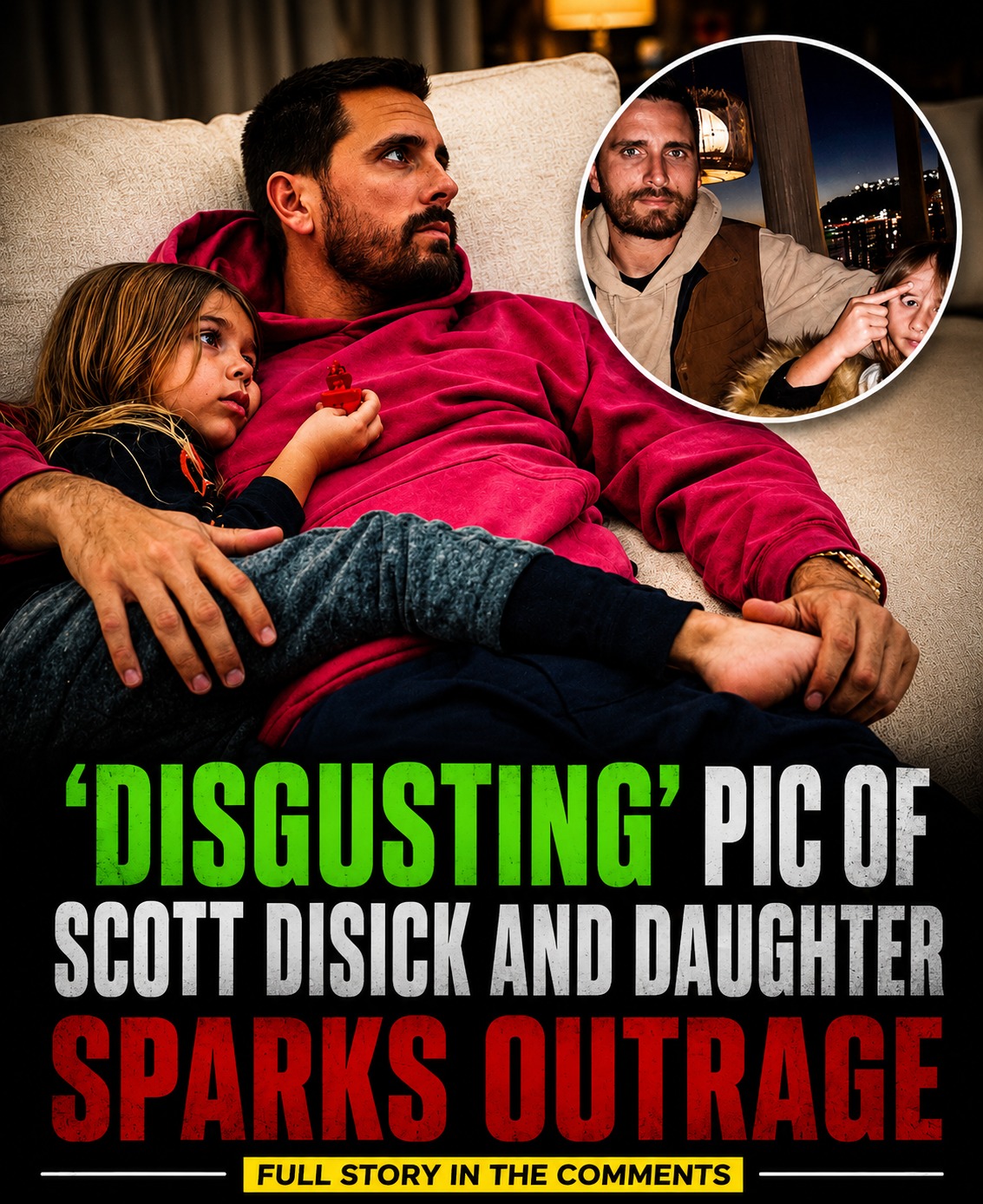
A single photo was all it took to ignite the internet.
Scott Disick smiled casually for the camera while sitting beside his daughter, Penelope Disick, during what appeared to be an ordinary meal at an Asian restaurant. But within hours of the image appearing online, outrage spread across social media with explosive speed. Millions focused not on Scott’s grin or the restaurant setting, but on Penelope’s expression — a gesture many viewers immediately recognized as painfully familiar.
Words like “racist,” “ignorant,” and “bad parenting” flooded comment sections almost instantly.
What may have started as a harmless father–daughter snapshot quickly transformed into a much larger conversation about race, privilege, parenting, and the lasting power of stereotypes. In the photo, Penelope appeared to tug at the corners of her eyes while chopsticks rested on the table in front of them. For many East Asian viewers, the gesture carried heavy historical baggage. What some defenders dismissed as “just a silly face” was interpreted by others as the same “slant-eye” mockery that generations of Asian people have endured in schools, media, and public life.
That emotional context is what made the backlash so intense.
For many Asian viewers online, the image wasn’t simply about a child making a goofy expression. It reopened memories of being mocked as children, stereotyped by classmates, or reduced to caricatures based on physical appearance. The gesture has long been associated with racist taunting in many parts of the world, making the photo feel deeply uncomfortable regardless of intent.
Soon the debate spread far beyond the image itself.
Some critics blamed Scott Disick and Kourtney Kardashian directly, arguing that enormous wealth and fame come with responsibility. They insisted privileged families should be teaching children cultural awareness early, especially when their lives are constantly visible to millions online. To many people, the controversy became another example of celebrities appearing disconnected from experiences ordinary minorities face regularly.
Others defended Penelope immediately.
Supporters argued that she is still a child who likely did not understand the cultural meaning attached to the expression. Many people accused the internet of projecting adult intentions onto a young girl simply making a random face for a photo. Some felt the outrage itself became excessive, turning a single careless moment into a global public shaming.
That split reaction revealed something important about modern online culture.
People increasingly disagree not only about what actions are offensive, but about how intent should factor into public judgment. One side focused primarily on impact — arguing that harmful stereotypes remain harmful regardless of whether offense was intended. The other side focused on innocence and context, believing accidental behavior should not automatically be treated as malicious.
Yet beneath all the noise, outrage, and defensiveness sat a quieter truth.
Intent does not erase impact.
That reality is often what makes conversations about race and stereotypes so emotionally charged. A person may not mean harm while still unintentionally repeating gestures or behaviors tied to painful histories for others. For many Asian viewers, the discomfort came less from believing a child held racist beliefs and more from seeing how casually old stereotypes can still reappear, even in families with enormous visibility and influence.
The controversy also highlighted the impossible environment celebrity children grow up inside.
Every expression, mistake, or awkward moment becomes public property within minutes. Ordinary childhood behavior that might pass unnoticed in private families suddenly turns into international debate when attached to famous names. Penelope’s photo became not just an image, but a symbol onto which millions projected larger frustrations about racism, privilege, accountability, and internet outrage culture itself.
And that is why the story spread so quickly.
It touched multiple anxieties at once: fear of casual prejudice, frustration over celebrity privilege, concern about public shaming, and the complicated reality that children absorb behavior from the world around them long before fully understanding its meaning.
In the end, the photo became more than a controversy about one celebrity family.
It became a reminder that even seemingly small gestures carry histories people do not always see immediately. And in an era where every image can circle the globe within seconds, parents — famous or not — are increasingly forced to confront how quickly “harmless” moments can reveal much larger cultural wounds still lingering beneath the surface.