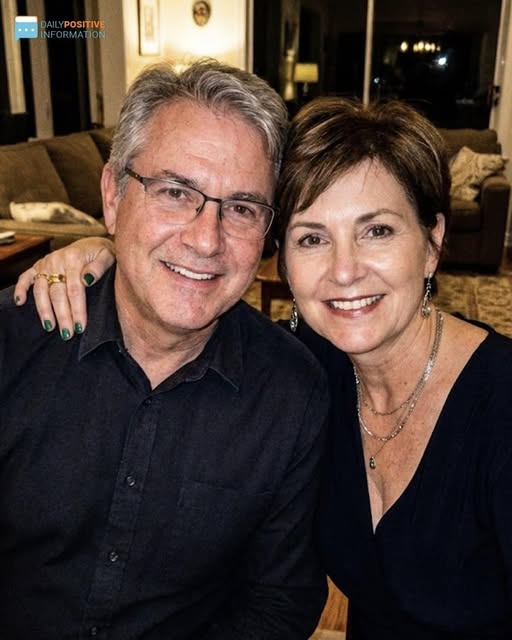
For years—decades, really—Denise and I would lie awake in those quiet moments just before sleep and talk about how we imagined celebrating our fortieth wedding anniversary. Not the kind of celebration people usually expect at a milestone like that. We never wanted a crowded party in a rented hall filled with distant relatives and polite conversations. We didn’t picture a grand vow renewal ceremony surrounded by children and grandchildren, smiling for photos while secretly managing logistics. And we certainly didn’t want a disguised family reunion where we’d spend the entire time organizing, coordinating, and making sure everyone else was comfortable.
No, what we wanted was something entirely different—something that belonged only to us.
We dreamed of a quiet, deeply personal escape. Just the two of us, without noise, without obligations, without the constant pull of being needed. After forty years of marriage, after raising four children, after countless sleepless nights, school events, financial pressures, and years of putting everyone else first, we felt we had earned the right to take something back for ourselves. Not forever. Not selfishly. Just once.
The Dream That Carried Us Through the Years
The idea didn’t come suddenly. It had been growing slowly over time, taking shape in small conversations. Around our thirty-fifth anniversary, one calm Sunday morning when the house was unusually quiet, Denise turned to me and said, “When we reach forty years, let’s do something just for us. Something romantic. Something that reminds us who we were before we became Mom and Dad.”
I agreed immediately. And from that point on, the dream became something we built together, piece by piece.
We chose the rugged coastline of Oregon. Neither of us had ever been there, but every photo we saw felt almost unreal—towering cliffs, endless ocean, quiet beaches stretching for miles. It looked like the kind of place where time slowed down, where you could breathe differently.
We found a small inn near Cannon Beach, family-owned, tucked away from crowds. The room we chose had a fireplace, large windows overlooking the ocean, and the promise of quiet evenings with nothing but the sound of waves. The description mentioned “privacy and tranquility,” and those words stayed with us. They felt like something we hadn’t had in a very long time.
We imagined everything. Walking along the cliffs in silence. Eating dinners without interruption. Sleeping in without alarms. Drinking coffee wrapped in blankets, watching the ocean. Talking—really talking—about life, about the future, about ourselves beyond our roles.
It wasn’t just a trip. It was a return to who we were.
That dream carried us through difficult times. When Denise’s mother was ill and we were overwhelmed with caregiving, we’d remind each other: “Oregon is waiting.” When I was exhausted from work before retirement, Denise would say, “Just think about the ocean.” It became our light at the end of years filled with responsibility.
When Amanda Found Out
Everything changed when our youngest daughter, Amanda, learned about the trip.
At thirty-two, with two young children, she was deep in the chaos of parenting. That evening she came over exhausted, her kids full of energy, her patience worn thin. At first, her interest in our trip sounded innocent—curious, even supportive.
But then came the shift.
“The kids would love Oregon,” she said. “You always talk about family. Why not make this a family trip?”
Denise gently explained that this trip was just for us. A couple’s getaway.
Amanda froze. Then came the disappointment. Then the guilt.
“You’d really go without us? Without the grandkids?”
Her tone changed, becoming emotional, persuasive. She talked about how tired they were, how much they needed help, how meaningful it would be for everyone to go together.
And I saw Denise begin to waver.
Amanda knew exactly how to press those emotional buttons. She always had.
Standing My Ground
That night, I said what needed to be said.
“This trip is about our marriage,” I told her. “We’ve spent decades taking care of everyone else. This one week is for us.”
She challenged me—reminded me of everything we’d taught about family.
And I answered honestly: “Choosing our marriage is choosing family.”
She didn’t accept it, not really. But she dropped it—for a while.
Then the pressure began.
Calls. Messages. Emotional appeals. Even involving her siblings. Slowly, what we had planned began to shift.
A “compromise” was suggested—a family resort in Florida instead of quiet Oregon. Something that sounded reasonable on the surface. Something that slowly turned into a plan we never truly agreed to.
Eventually, worn down, Denise gave in.
And I followed, even though something felt wrong.
When the Truth Became Clear
As the trip approached, the real expectations surfaced.
Requests turned into assumptions. Watching the kids. Handling routines. Giving Amanda and Sean time to relax.
Then came the final request—watching the kids every evening so they could enjoy nightlife.
That’s when it became undeniable.
This wasn’t a family vacation.
It was babysitting. Just in a nicer location.
Our anniversary—the thing we had held onto for years—had been reshaped into something that had nothing to do with us.
The Decision
That night, I couldn’t sleep.
I thought about everything we had sacrificed. Everything we had postponed. Everything we had quietly accepted.
And I realized something simple:
If we didn’t protect this moment, no one else would.
The next morning, I made the decision.
I rebooked Oregon. I canceled Florida.
When Denise came home, I told her.
At first, she was shocked. Then something changed in her expression—relief, maybe even gratitude.
“I didn’t realize how much I needed this,” she said.
Choosing Us
At the airport, I called Amanda.
She was upset. Hurt. Angry.
She called it selfish.
But for the first time in a long time, I didn’t question myself.
“This trip is for our marriage,” I told her. “And I’m not sorry.”
What We Found in Oregon
Oregon gave us everything we had hoped for—and more.
Silence. Space. Connection.
We walked for hours without speaking. We talked without interruption. We rested without guilt.
We remembered who we were.
Not just parents. Not just grandparents.
Us.
What Changed After
When we returned, things were different.
Amanda was quieter. More thoughtful.
Eventually, she admitted something important—she had learned from it. That maybe she needed to prioritize her own marriage too.
And slowly, the dynamic shifted.
Less expectation. More respect.
What I Learned
After forty years, I finally understood something clearly:
Saying no doesn’t make you a bad parent.
It makes you a whole person.
And sometimes, the most important thing you can do for your family…
is to choose your marriage.