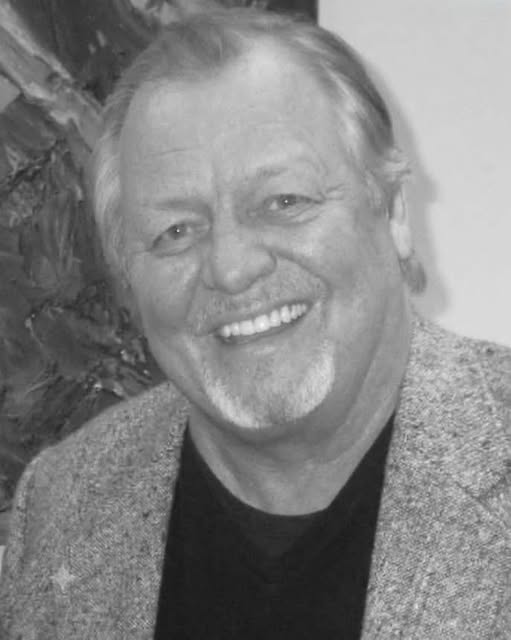
His death felt almost too quiet for a man who had once been recognized in living rooms around the world.
When news broke that David Soul had died at the age of 80 on January 4, 2024, generations of fans were suddenly transported back to another era.
For millions, Soul would always be Detective Kenneth “Hutch” Hutchinson.
Alongside Paul Michael Glaser’s Starsky, he became one half of the unforgettable partnership at the center of *Starsky & Hutch*.
The series became a defining piece of 1970s television.
There were car chases, dangerous criminals, colorful characters, and, of course, the unmistakable red-and-white Ford Gran Torino.
But the relationship between Starsky and Hutch gave the show its heart.
Soul’s Hutch was often the calmer presence—the blond, thoughtful counterweight to Starsky’s more impulsive energy.
Their chemistry helped transform what could have been another police drama into a cultural phenomenon.
Yet Soul never wanted one successful character to define his entire life.
Away from *Starsky & Hutch*, he continued acting across television, film, and theater.
He appeared in projects ranging from *Magnum Force* with Clint Eastwood to the television adaptation of Stephen King’s *Salem’s Lot*.
He also surprised audiences with another talent.
Music.
Soul achieved significant success as a singer, recording hits including “Don’t Give Up on Us,” which reached No. 1 in both the United States and United Kingdom.
For a period, he wasn’t simply a television star.
He was also a chart-topping recording artist.
Later in life, Soul increasingly made Britain his home and eventually became a British citizen while continuing to perform.
He appeared on stage and embraced projects that were far removed from the clean-cut image many viewers associated with Hutch.
That willingness to keep experimenting became an important part of his career.
He wasn’t interested in spending the rest of his life simply recreating his most famous decade.
Behind the public career, however, were also complicated personal chapters, including struggles and controversies that Soul himself addressed during his lifetime.
His story wasn’t perfectly polished.
Few meaningful lives are.
When his wife, Helen Snell, announced his death, she said he had died after what she described as a valiant battle for life, surrounded by his family.
For longtime fans, the announcement carried particular weight.
Another familiar face from television’s past was gone.
But David Soul left behind considerably more than one detective, one television series, or one hit song.
He left behind decades of performances across different stages, screens, and genres.
And perhaps that explains why his death affected so many people who had never met him.
Sometimes we don’t realize how deeply television becomes connected to memory until one of its familiar faces disappears.
Suddenly, we’re remembering the couch we watched from.
The people who watched beside us.
The songs playing during those years.
The version of ourselves that existed back then.
David Soul belonged to those memories for millions.
Hutch may remain frozen forever in reruns, standing beside Starsky and that famous Gran Torino.
But the man behind him spent a lifetime proving that he was always more than the character who made him famous.
And that may be the more fitting way to remember David Soul—not simply as an icon of the 1970s, but as an artist who kept moving long after the world had already decided which version of him it wanted to remember.