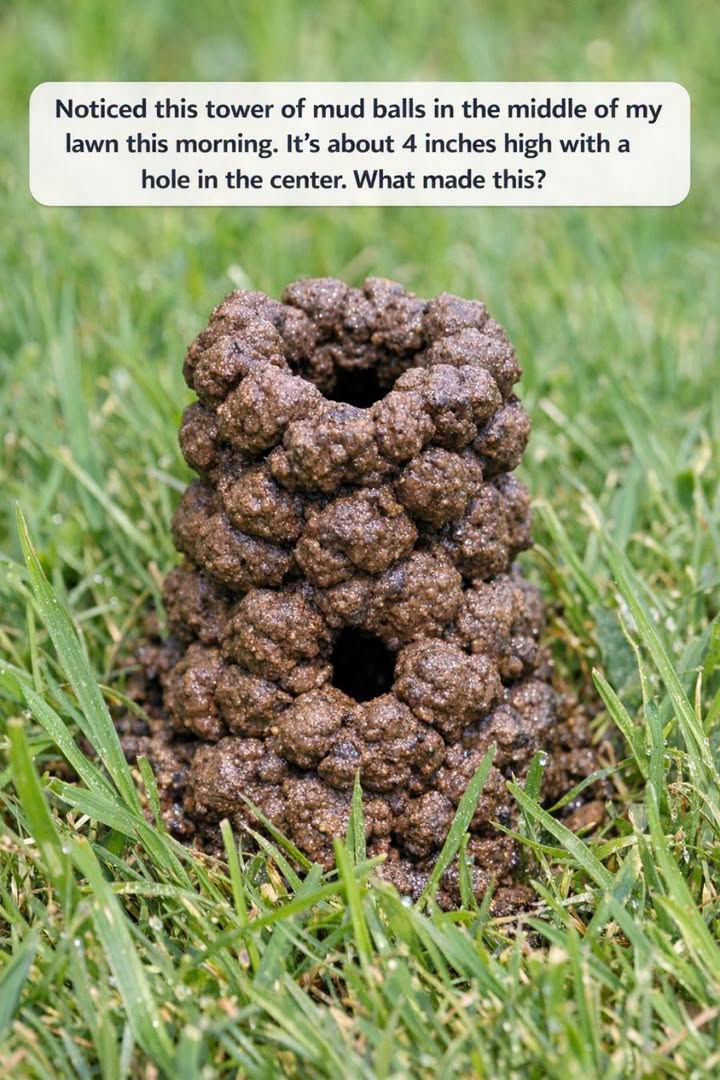
You step outside expecting an ordinary morning, only to notice something strange rising from your lawn. Small towers of packed mud stand upright across the grass, each with a tiny opening at the top, almost as if miniature chimneys had appeared overnight. Yesterday, your yard looked perfectly normal. Today, these curious structures seem to have emerged from nowhere, leaving many homeowners wondering whether insects, moles, or something far more unusual is living beneath their feet. While it’s easy to dismiss them as odd piles of dirt and simply mow them down, these mysterious formations often reveal the hidden activity of one of nature’s most fascinating underground builders.
Those unusual mud chimneys are typically created by **terrestrial crayfish**, freshwater relatives of lobsters that spend much of their lives beneath the ground. Unlike the crayfish commonly found in streams and ponds, these species construct elaborate underground tunnel systems in areas where the soil remains consistently moist. As they dig deeper into the earth, they carry small balls of mud to the surface, carefully stacking them around the entrance of the burrow to create the distinctive chimney-like structures that suddenly appear across lawns, gardens, and fields. Although they may seem unusual, these towers are actually signs of a remarkable engineering process taking place beneath the surface.
Each mud chimney marks the entrance to an underground tunnel that can extend several feet below ground. At the bottom of these burrows, crayfish create moist chambers that provide protection from predators, extreme temperatures, and dry weather. The chimney itself serves more than one purpose. It helps keep rainwater and debris from easily washing into the burrow while also improving airflow, allowing the crayfish to survive in its underground home. Most of the time these animals remain hidden during the day, emerging mainly at night to search for decaying plant material, small insects, and other natural food sources before quietly returning underground before sunrise.
Crayfish often choose residential lawns because they offer exactly the conditions they need to survive. Moist, compact soil, regular rainfall, and abundant organic material create an ideal environment for building stable burrows. Their presence is especially common in areas with naturally high groundwater levels, poor drainage, wetlands, or locations near ponds, streams, and marshes. Although homeowners may be surprised to find these strange chimneys scattered across their property, the crayfish themselves are generally shy and rarely pose any direct threat to people or pets.
In fact, a small number of crayfish burrows can actually provide several environmental benefits. As they dig, crayfish naturally loosen compacted soil, improving aeration and creating pathways that allow water to penetrate more deeply into the ground. Their tunnels can enhance soil structure, support healthy root systems, and contribute to the natural recycling of organic matter. These underground engineers also play an important role in local ecosystems by serving as both predators of small invertebrates and prey for birds, mammals, reptiles, and other wildlife. Their quiet work beneath the surface helps maintain the delicate balance of healthy soil ecosystems that often goes completely unnoticed.
Most homeowners never need to take action when only a few mud chimneys appear. If the structures become unsightly or create minor tripping hazards, they can usually be gently flattened with a rake or by walking over them without causing significant harm to the crayfish below. Improving drainage in persistently wet areas may also discourage additional burrow construction over time by making the habitat less attractive. In situations where crayfish populations become unusually large or begin causing substantial damage to landscaping, consulting a local wildlife or pest management professional can help determine appropriate solutions while minimizing unnecessary harm to native wildlife.
Perhaps the most remarkable aspect of these mysterious mud towers is how they remind us that an entire world exists beneath our feet every day. While we walk across our lawns without giving the ground much thought, countless organisms are quietly shaping the soil, recycling nutrients, and supporting healthy ecosystems through their daily activities. The appearance of a few small chimneys may seem strange at first, but they are often evidence that the land beneath your home is alive and functioning as nature intended. Sometimes the most fascinating discoveries aren’t found in distant forests or exotic landscapes—they emerge quietly in our own backyards, inviting us to appreciate the hidden creatures that share the world with us.