The joy of birth shattered in a single terrifying moment.
One minute, Reazjhana Williams was preparing to meet her baby girl, imagining the first cry, the first touch, the first moments every mother waits months to feel. Then suddenly the room changed. Alarms sounded. Nurses rushed across the floor. Doctors stopped speaking calmly and started moving fast. Somewhere in the chaos came the words no parent ever wants to hear: they were struggling to find the baby’s heartbeat.
What should have been a joyful delivery became an emergency within seconds.
Reazjhana was rushed into an emergency C-section while fear swallowed everything else around her. In those frantic moments, nobody was thinking about perfect birth plans or photographs anymore. The only goal was survival. Save the mother. Save the baby. Move faster than panic.
Then baby Kyanni arrived.
But instead of relief, shock filled the room.
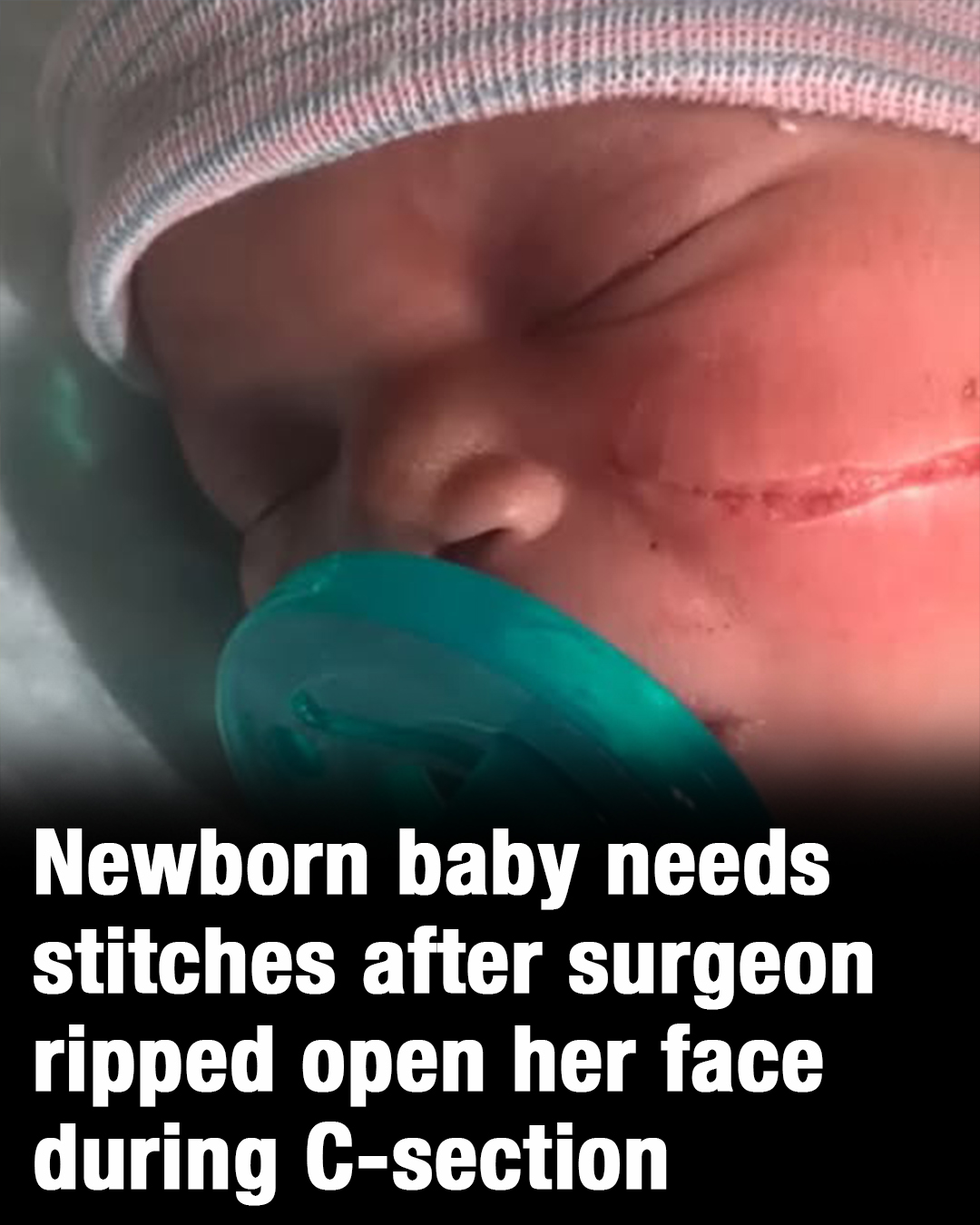
A deep wound stretched across the newborn’s tiny face.
The cut ran along her cheek so severely that a plastic surgeon was immediately brought in before her mother could even properly hold her. Instead of the skin-to-skin moment Reazjhana had dreamed about during her pregnancy, she watched doctors carry her daughter away toward surgery.
The baby needed 13 stitches.
For the family, the emotional impact was devastating. Hospital staff described facial lacerations during emergency C-sections as a “known complication,” something that can happen during rushed procedures when every second matters. But hearing medical explanations did little to soften the reality facing the parents as they looked at their newborn daughter’s injured face.
To them, this was not just a complication.
It was trauma.
The first images of Kyanni shocked people online as the story spread. A newborn baby, only moments old, already carrying visible scars from the very procedure meant to save her life. Many people expressed anger, heartbreak, and confusion over how such a severe injury could happen during childbirth.
At the same time, others pointed out the terrifying circumstances doctors were facing. Emergency C-sections often happen under extreme pressure, especially when fetal distress signals possible loss of oxygen or death. In those moments, surgeons sometimes have only seconds to act, balancing impossible risks in order to save both mother and child.
For Reazjhana, though, none of the medical language erased the emotional reality of what happened.
She expected to hear congratulations.
Instead she heard discussions about stitches, healing, and reconstructive care.
She expected to cradle her daughter peacefully.
Instead she watched a plastic surgeon become one of the first people to hold her baby.
The scar on Kyanni’s face became more than a physical wound. For the family, it symbolized everything frightening and chaotic about those moments in the operating room—the panic, the helplessness, the terrifying uncertainty about whether the baby would survive at all.
But as the story spread online, something else appeared beside the outrage.
Support.
Thousands of strangers responded emotionally to Kyanni’s story. Messages flooded social media from parents, nurses, and people who simply wanted the family to know they were not alone. Donations poured into the GoFundMe created to help with future medical expenses and healing treatments.
Some people shared their own stories of childhood scars and surgeries. Others reminded the family that scars do not define beauty, worth, or future happiness. Slowly, amid the pain and confusion, encouragement began reaching the family from all over the country.
And through all of it, Reazjhana focused on one thing most of all:
Her daughter survived.
That truth mattered even during the heartbreak.
Doctors expect Kyanni’s wound to continue healing over time, though the family knows scars—both emotional and physical—may remain part of the journey ahead. Still, they are determined that her identity will never be reduced to one traumatic beginning.
To them, Kyanni is not “the baby with the scar.”
She is the little girl who fought her way into the world under impossible circumstances.
A child whose very first moments showed strength.
And as the stitches heal and the headlines eventually fade, her family hopes the mark on her face will become something different from tragedy—a reminder not of damage, but of survival.