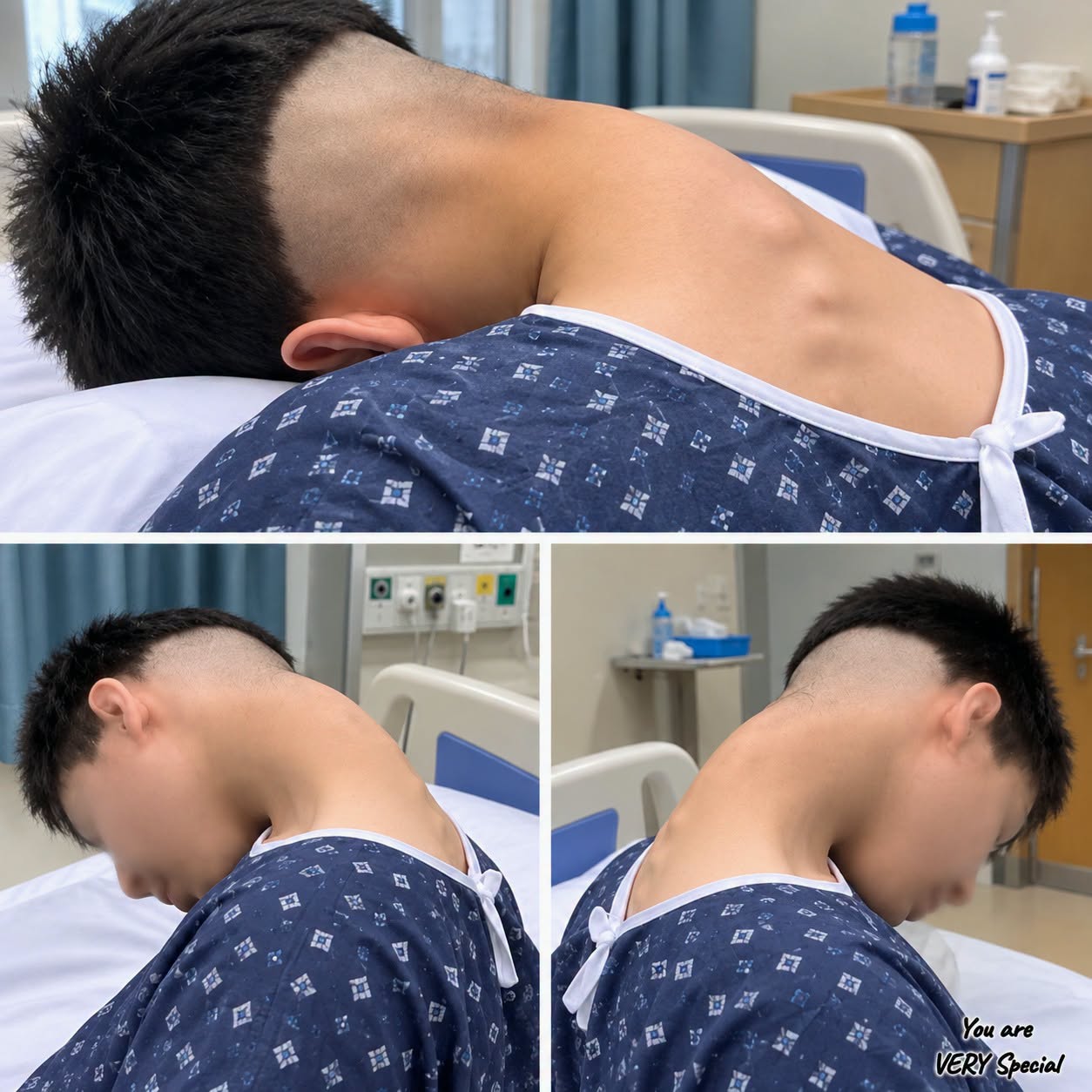
:::writing{variant=”document” id=”31857″ title=”When the Head Can No Longer Stay Upright”} According to the account, the young man was diagnosed with Dropped Head Syndrome, a condition in which weakness of the muscles responsible for supporting the neck makes it difficult to keep the head upright. Instead of maintaining a normal position, the head gradually falls forward, sometimes becoming so difficult to lift that ordinary activities such as walking, reading, eating, or looking ahead can become challenging.
Although the condition is more commonly associated with older adults, it is not exclusively a problem of aging. Younger people can also develop this pattern of weakness, particularly when an underlying neurological or muscular disorder affects the muscles responsible for maintaining the position of the head.
One of the most important points is that the diagnosis itself does not explain why the problem occurred.
There can be several possible causes.
Neurological and neuromuscular conditions are among the possibilities. Disorders such as myasthenia gravis can produce significant muscle weakness, while other neurological or muscular diseases, including ALS, may also be associated with difficulty maintaining head posture. Other causes can exist as well, which is why a proper medical evaluation is essential rather than assuming that one particular explanation is responsible.
The account does not establish what caused this young man’s condition.
That distinction matters.
Poor posture, extensive phone use, or spending long periods looking at a computer screen can contribute to ordinary neck discomfort and muscular strain. However, those everyday habits should not automatically be blamed for a condition involving significant weakness and an inability to hold the head upright.
A serious change in muscle strength requires a different level of attention.
Doctors may begin by performing a detailed neurological and physical examination. They may assess muscle strength, reflexes, coordination, sensation, and the way the head and neck move. Depending on the findings, additional testing may be necessary.
Imaging studies can sometimes help identify structural problems involving the spine, neck, or surrounding tissues. Tests of nerve and muscle function may also be used to determine whether the weakness is related to the nerves, muscles, or the communication between them.
The exact combination of tests depends on the individual’s symptoms and the suspected underlying cause.
For someone experiencing persistent difficulty holding the head upright, medical assessment should not be postponed simply because the person is young.
Age does not rule out significant neurological or muscular disease.
Certain accompanying symptoms can make evaluation even more important. Worsening weakness, numbness, problems with walking, difficulty using the arms or legs, trouble swallowing, or other new neurological changes should be communicated to a healthcare professional promptly. Severe or rapidly worsening symptoms may require urgent assessment.
Treatment is not the same for everyone.
There is no single medication or exercise program that automatically corrects Dropped Head Syndrome because the condition can have different underlying causes. The appropriate treatment depends largely on identifying what is producing the weakness in the first place.
In some cases, targeted medication may be appropriate.
In others, supervised physical therapy can help maintain strength, mobility, posture, and function. A supportive brace may also be considered when appropriate, particularly when the neck requires additional support during daily activities.
The goal is not simply to force the head into a particular position.
Treatment should address the underlying problem while also helping the person remain as safe, comfortable, and functional as possible.
Everyday habits can still play a supportive role in general neck health.
Positioning a phone or computer screen more comfortably, avoiding prolonged periods in one posture, changing positions regularly, and taking movement breaks can reduce ordinary neck strain. These measures may be sensible for anyone who spends substantial time at a desk or looking at a screen.
But they should not be presented as a guaranteed way to prevent a neurological or muscular disorder.
There is an important difference between reducing everyday strain and preventing disease.
The reported experience is therefore a reminder to pay attention to unusual weakness rather than automatically explaining it away as bad posture or excessive screen time.
Neck discomfort is common.
A persistent inability to support the head is different.
When a person’s strength or ability to control movement changes noticeably, the most useful response is not to search for a simple internet explanation. It is to have the symptom properly evaluated and to investigate what may be causing it.
Dropped Head Syndrome describes a physical pattern, not a complete diagnosis of the underlying disease.
Understanding that distinction helps prevent unnecessary fear while also preventing serious symptoms from being dismissed.
The young man’s reported experience ultimately highlights a simple but important lesson: unusual weakness deserves attention, regardless of age. Early evaluation can help clinicians identify possible causes, determine what testing is appropriate, and develop treatment based on the actual condition rather than assumptions.
This information is educational and cannot replace an examination, diagnosis, or individualized medical advice from a qualified healthcare professional. :::