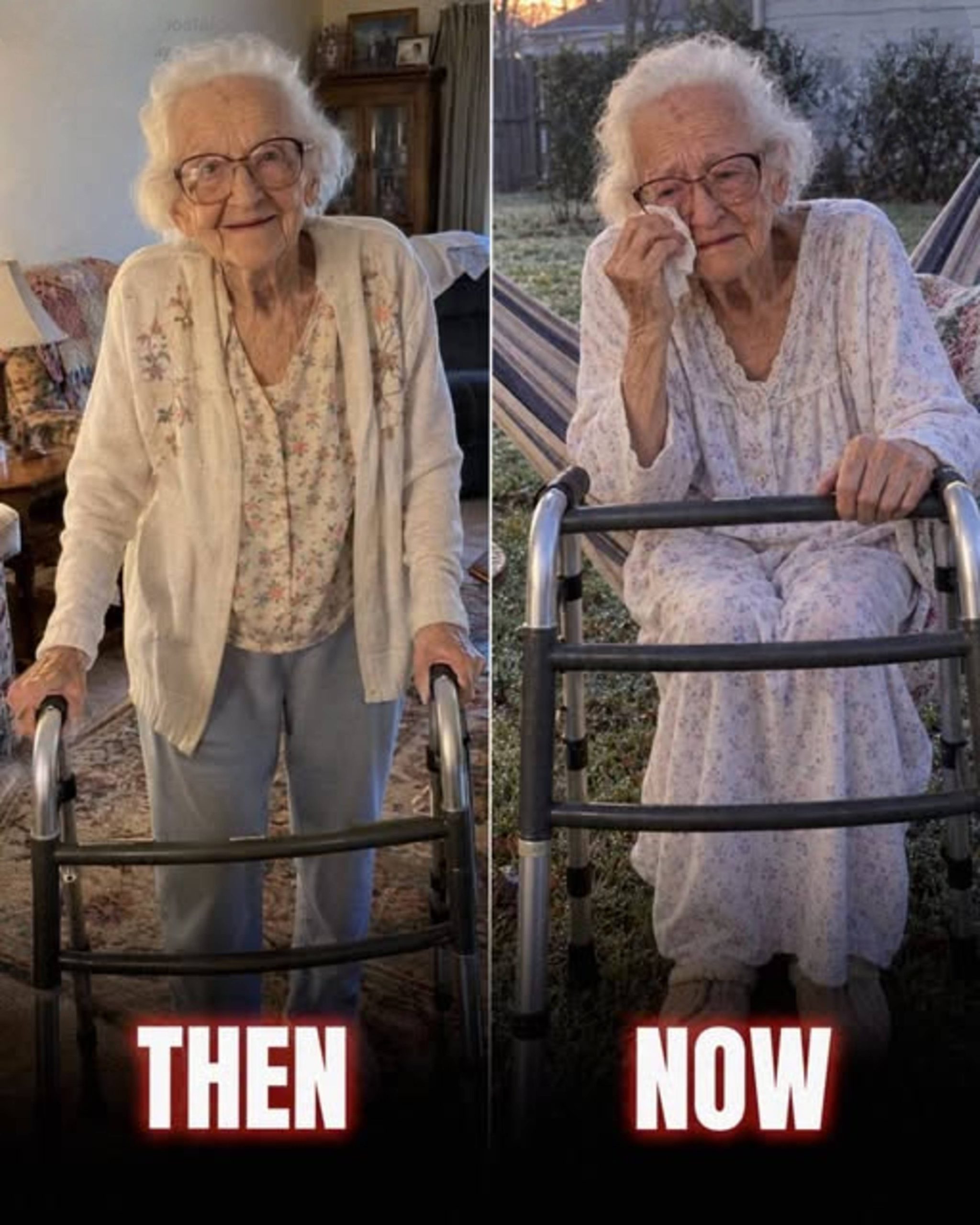
Something about my weekly calls home had been bothering me for months, but I kept convincing myself I was imagining things. Every Sunday, I would hang up with the same uneasy feeling sitting like a stone in my stomach.
Then, one night, I heard my sister say something she never intended me to hear.
And suddenly, waiting another day wasn’t an option.
The highway was almost completely empty at 2 a.m. Streetlights flashed across my windshield in slow, repetitive intervals, and my hands were locked so tightly around the steering wheel that my knuckles ached.
I had been driving for hours.
I barely noticed the road.
I kept hearing her voice over and over, the way a bad song loops endlessly in your head.
*”She’ll never know. Just keep doing what we’re doing.”*
That was what my sister had hissed last Sunday, right before the call abruptly cut off.
She thought I hadn’t caught it.
I had.
And now, every strange detail from the past few months was suddenly rearranging itself in my mind.
My name is Maya, and I’m a manager at a company in North Carolina.
My mom, Adeline, lives two states away in a small yellow house where my younger sister, Vanessa, and I grew up. It is the kind of house that looks almost exactly the same from the outside no matter how many years pass. The same porch. The same windows. The same old tree near the driveway.
Dad, Lucas, died eight months ago.
Heart attack.
No warning.
No goodbye.
One minute he was here, and the next, he wasn’t.
His death changed Mom completely.
After the funeral, she could barely walk. Her knees had been giving her trouble for years, but Dad had always been there to help her stand, carry things, drive her to appointments, and make her laugh when she was frustrated.
When he disappeared from the house, it felt as if the structure holding her life together disappeared with him.
Mom stopped going outside.
She stopped cooking regularly.
She barely answered the door.
And whenever we suggested moving her somewhere safer, she refused.
“I’d rather die on that porch than in some facility,” she told us.
I knew she wasn’t being dramatic.
That porch was where she and Dad had spent countless evenings together.
It was where they drank coffee.
Where they watched thunderstorms.
Where they sat together after dinner.
Asking her to leave it felt, to her, like asking her to leave the last piece of Dad behind.
Vanessa lived about 35 minutes away in a rental.
She was closer to Mom than I was, and when we started talking about how to handle everything, Vanessa immediately offered to move in and take care of her.
“I can do it,” she said.
I hesitated.
My job was demanding. I managed a team, traveled occasionally, and couldn’t simply walk away from everything. I hated that distance made me feel like I was failing my mother.
So I offered money.
It seemed fair.
Even generous.
“$1,000 a week,” I told Vanessa. “For groceries, her pills, appointments, whatever she needs. There’s no mortgage. That should be more than plenty.”
Vanessa’s voice softened immediately.
“Maya, you’re a lifesaver.”
She sounded relieved.
“You just focus on your job. I’ve got Mom.”
I wanted to believe her.
Actually, I needed to believe her.
So I did.
Every Sunday, I called.
Every Sunday, the conversation sounded almost exactly the same.
“How’s Mom?”
“She’s fine, Maya. You worry too much.”
“Did she eat?”
“Yes.”
“Did she take her medication?”
“Of course.”
“Can I talk to her?”
A pause.
“She’s resting.”
Sometimes Vanessa would say Mom was sleeping.
Sometimes she had just taken her medicine.
Sometimes she was having a bad day.
And when Mom did eventually come to the phone, her voice sounded quieter every week.
Softer.
Thinner.
As if someone were slowly turning down a radio dial.
“I’m doing just fine, sweetheart,” she’d whisper.
I would close my eyes and listen carefully.
“Are you sure?”
“I’m sure.”
“Are you eating?”
“Vanessa takes good care of me.”
That sentence should have reassured me.
Instead, it bothered me.
I couldn’t explain why.
Maybe it was the hesitation.
Maybe it was the way Mom sounded tired whenever she said Vanessa’s name.
Maybe it was the fact that our conversations had become so short.
But I kept telling myself I was being paranoid.
I told myself grief had made me suspicious.
I told myself Mom was simply aging.
I told myself Vanessa had earned my trust because she had stepped up when I couldn’t.
And if I’m completely honest, that was the same story I’d been telling myself for twenty years.
Because Vanessa and I had always had a complicated relationship.
When we were teenagers, Grandma got sick.
I was the one who slept on her couch.
I counted her pills.
I cooked meals.
I helped her shower.
I sat beside her when she couldn’t sleep.
I missed school events because someone needed to be there.
Vanessa breezed in during holidays with a smile, carrying flowers or a box of cookies.
She’d sit beside Grandma, make everyone laugh, and then leave before the difficult work began.
And Dad would beam whenever she walked through the door.
“There’s my sunshine!”
He said it every time.
There was my sunshine.
My little sunshine.
Nobody ever called me sunshine.
I was the responsible one.
The reliable one.
The one who remembered appointments.
The one who stayed awake.
The one who did what needed to be done.
Vanessa was the bright one.
The charming one.
The daughter who could walk into a room and make everyone feel good.
I never resented her for it.
At least, that’s what I told myself.
But sometimes, resentment doesn’t announce itself.
It settles quietly into old memories and waits.
Dad’s death brought all of those memories back.
And then came the weekly calls.
At first, I noticed little things.
Mom seemed hungry.
She asked me once if I could send her a specific kind of soup.
When I asked Vanessa about it, she laughed.
“Mom forgets what she asks for.”
Another week, Mom mentioned that she hadn’t been outside in days.
Vanessa said the weather had been terrible.
But I checked.
It had been sunny all week.
Then Mom stopped mentioning things altogether.
That frightened me more than anything.
The Sunday before I left, I called as usual.
Vanessa answered.
We talked for a few minutes.
I asked about Mom.
She said everything was fine.
Then I heard another voice in the background.
Mom.
I couldn’t make out what she said.
Vanessa moved away from the phone.
There was a muffled exchange.
Then Vanessa’s voice changed.
It wasn’t the warm, patient voice she used with me.
It was sharp.
Angry.
And then I heard it.
*”She’ll never know. Just keep doing what we’re doing.”*
My stomach dropped.
“Vanessa?”
Silence.
Then the call ended.
I stared at my phone.
I called back.
No answer.
Again.
Nothing.
For several minutes, I sat completely still.
I tried to rationalize it.
Maybe she was talking about something else.
Maybe I had misunderstood.
Maybe the connection had distorted the words.
Maybe I was exhausted.
But deep down, I knew.
I had heard exactly what I heard.
And for the first time, I stopped asking myself whether I was imagining things.
I started asking myself what I had been refusing to see.
By midnight, I had packed a bag.
By 12:30, I was on the highway.
At 2 a.m., I was still driving.
The road stretched ahead of me, dark and empty.
And with every mile, I thought about Mom.
Her quieter voice.
Her shortened calls.
Her repeated assurances.
*”I’m doing just fine, sweetheart.”*
I suddenly wondered how many times she’d said those words because she wanted to protect me.
How many times had she been sitting beside Vanessa, afraid to tell me something?
How long had she been hiding what was happening?
And what exactly had my sister been doing?
The worst part wasn’t knowing.
It was realizing how much I had trusted Vanessa because trusting her was easier than admitting I might have been wrong.
I had sent her $1,000 every week.
I had assumed Mom was being cared for.
I had told myself that distance didn’t make me a bad daughter because I was paying someone I trusted to be there.
But money doesn’t guarantee care.
And trust doesn’t replace attention.
As the first faint light of morning appeared on the horizon, I tightened my grip on the steering wheel.
I wasn’t going to call ahead.
I wasn’t going to warn Vanessa.
I wasn’t going to give her time to prepare an explanation.
I needed to see Mom.
I needed to see the house.
I needed to know what was happening with my own eyes.
Because whatever secret my sister had been hiding, one thing had become painfully clear:
I had spent months listening to my mother’s voice through a telephone and accepting the story I was being told.
Now I was going home.
And this time, I wasn’t leaving until I knew the truth.