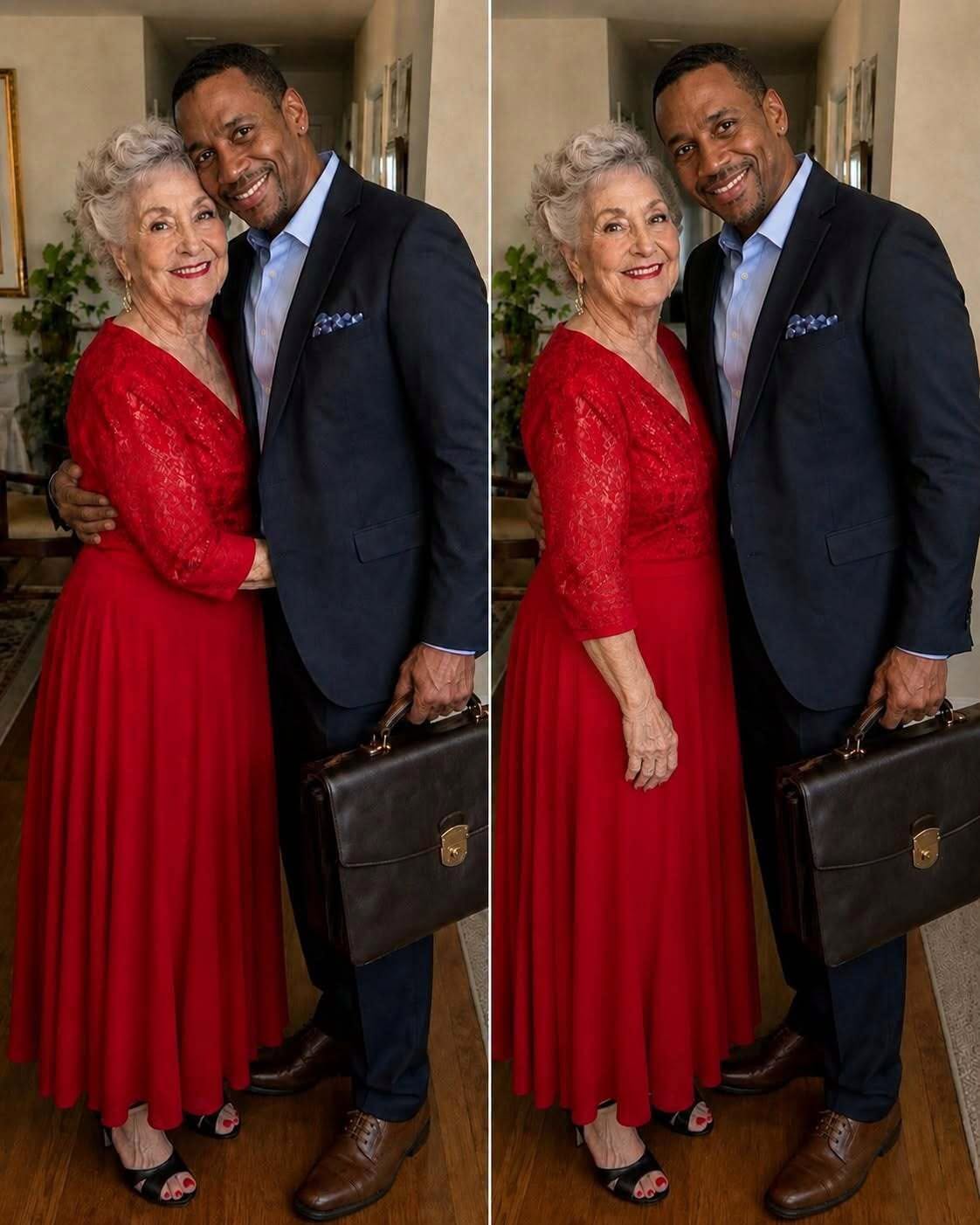
My Mom’s Younger Boyfriend Always Left Before Dessert — Then My Daughter Discovered the Reason
Every Sunday, my mother invited us over for dinner. And every Sunday, without fail, her boyfriend found an excuse to leave before dessert.
At first, I thought it was strange. Then I thought it was rude. But when my eight-year-old daughter finally discovered why he never stayed long enough to enjoy a slice of my mother’s famous chocolate cake, I realized there was something happening in our family that none of us had noticed.
Something that would change the way I saw him forever.
The Man Who Never Stayed
My mother, Linda, was sixty-two when she began dating Mark, a man nearly twenty years younger than her.
After my father died, she’d spent almost five years alone. She rarely went out, stopped attending her weekly book club, and seemed to lose interest in the little things that had once made her happy.
So when she introduced Mark to our family, I wanted to be supportive.
He was forty-four, polite, well-dressed, and always seemed to know exactly what to say. He brought my mother flowers, helped her carry groceries, and called her every evening.
Most importantly, he made her laugh again.
For that reason alone, I decided to give him a chance.
But there was one thing I couldn’t understand.
Every Sunday, my mother prepared an enormous dinner. She made roasted chicken, creamy mashed potatoes, fresh vegetables, and homemade bread. And every Sunday, she finished the meal by bringing out her chocolate cake.
Mark never ate a single bite.
The moment my mother began clearing the plates, he’d glance at his watch.
“Oh, Linda, I’m so sorry,” he’d say. “I completely forgot I have something to take care of.”
Sometimes it was a phone call. Other times, he claimed he had an early appointment or needed to check on something at home.
He always left before dessert.
After the third Sunday, I mentioned it to my husband.
“Doesn’t that seem odd to you?” I asked.
He shrugged.
“Maybe he doesn’t like cake.”
“He doesn’t have to eat it. He could at least stay for coffee.”
My husband smiled.
“Perhaps he’s just not a dessert person.”
I wanted to believe that explanation.
But as the weeks passed, Mark’s habit became impossible to ignore.
And my mother never seemed to notice.
The Question My Daughter Asked
My daughter, Sophie, was eight years old and had the kind of curiosity that made adults nervous.
She noticed everything.
She noticed when someone changed their hairstyle, when a neighbor bought a new car, and when her teacher wore the same earrings two days in a row.
Naturally, she’d noticed Mark’s disappearing act.
One Sunday, while we were helping my mother set the table, Sophie tugged on my sleeve.
“Mom, why does Grandpa Mark always leave before cake?”
I nearly dropped the plates.
“He’s not your grandpa, sweetheart.”
“But Grandma Linda says he’s going to be part of our family.”
I smiled awkwardly.
“He’s probably just busy.”
Sophie considered this for a moment.
“Then why does he look sad every time Grandma cuts the cake?”
I stopped moving.
“What do you mean?”
She shrugged.
“I don’t know. He looks at it, then he looks at Grandma, and then he goes home.”
I glanced toward the kitchen.
Mark was standing beside my mother, helping her arrange the plates. He was smiling at something she had said.
He looked perfectly happy.
I told myself Sophie was imagining things.
Children often noticed details without understanding their meaning.
Still, her question stayed with me throughout dinner.
That evening, just as my mother brought out the cake, Mark stood up.
“Linda, I’m afraid I have to go.”
My mother sighed.
“Again? You haven’t even tried the cake.”
“Next Sunday, I promise.”
He kissed her cheek, thanked everyone for dinner, and walked out.
Sophie watched him through the window until his car disappeared down the street.
Then she turned to me.
“Mom, I think I know why he leaves.”
I laughed nervously.
“Oh, really? Why?”
She leaned closer and whispered something that made the smile disappear from my face.
“He goes to the little house behind Grandma’s garage.”
I stared at her.
“What little house?”
“The one with the blue door. I saw him there last Sunday when I went outside to get my ball.”
My mother had a small storage building behind her garage. It had been there for years, filled with old furniture, gardening tools, and boxes of my father’s belongings.
At least, that’s what I’d always assumed.
“What was he doing there?” I asked.
Sophie shook her head.
“I couldn’t see. But I heard someone crying.”
My stomach tightened.
The Blue Door
The following Saturday, I arrived at my mother’s house earlier than usual.
I told her I wanted to help prepare dinner.
Mark wasn’t there yet.
While my mother chopped vegetables in the kitchen, I walked through the backyard.
The little storage building stood exactly where it always had, partially hidden behind an old apple tree.
The blue paint on its door was peeling.
I had no idea why Sophie believed Mark had been going there, but I wanted to find out.
I approached the building and tried the handle.
Locked.
I knocked.
No answer.
Then I noticed something that made my heart skip a beat.
A small pair of children’s shoes sat beside the door.
They were muddy and worn, with one shoelace hanging loose.
My mother didn’t have any other grandchildren.
And as far as I knew, Mark didn’t have children either.
I returned to the house, trying to act normally.
“Mom,” I said casually, “what’s inside the old storage building?”
She paused while stirring a pot.
“Just old things. Why?”
“Nothing. Sophie mentioned seeing Mark back there.”
For the briefest moment, my mother’s expression changed.
It was so subtle that I might have missed it if I hadn’t been watching her carefully.
Then she smiled.
“Oh, he sometimes helps me organize things.”
I nodded, but something about her answer felt incomplete.
That evening, Mark arrived with a bouquet of yellow roses.
He greeted everyone warmly, helped carry dishes to the table, and spent the entire meal making my daughter laugh.
For the first time, I noticed that Sophie seemed unusually quiet around him.
When dessert came, Mark looked at the cake.
Then he looked toward the backyard.
His smile faded.
He checked his watch.
“Linda, I’m sorry, but I really have to—”
“Wait,” I interrupted.
Everyone turned toward me.
“Before you go, I’d like to ask you something.”
Mark slowly lowered his fork.
“Of course.”
“Why do you always leave before dessert?”
The room went silent.
My mother stared at her plate.
Mark looked at me for several seconds without speaking.
Then he put down his napkin.
“Because there’s something I haven’t told you.”
The Truth Behind the Door
Mark didn’t leave that evening.
Instead, he asked my mother if he could show us something.
We followed him into the backyard.
When he unlocked the blue door, I heard a soft rustling sound from inside.
A small lamp illuminated a narrow room containing a bed, a desk, several boxes, and a collection of children’s books.
And sitting on the bed was a little boy.
He looked about six years old.
His dark hair fell across his forehead, and he held a stuffed rabbit tightly against his chest.
When he saw Mark, he immediately stood up.
“Dad?”
The word hit me like a physical blow.
I turned toward Mark.
“You have a son?”
He nodded, his eyes filling with tears.
“His name is Daniel.”
My mother stepped forward and gently took the boy’s hand.
“Daniel has been staying here for several weeks,” she explained. “His mother is receiving treatment for a serious illness, and Mark has been trying to keep his life as stable as possible.”
I looked around the small room.
“Why didn’t you tell us?”
Mark rubbed his face.
“Because I was ashamed.”
He explained that Daniel’s mother had become seriously ill several months earlier. With no nearby relatives able to help, Mark had been struggling to manage childcare, work, medical appointments, and the uncertainty of what would happen next.
He and my mother had been dating for less than a year.
He was afraid that introducing a child into their relationship would change everything.
“I didn’t want Linda to feel responsible for my problems,” he said. “And I didn’t want your family to think I was using this relationship to find someone to take care of my son.”
My mother shook her head.
“You should have told me.”
“I know.”
His voice broke.
“Every Sunday, when everyone sat down for dessert, Daniel would call me. He was frightened of being alone in a strange place, so I’d come out here to sit with him until he fell asleep.”
I looked at the little boy.
He was watching his father with enormous, trusting eyes.
“Why didn’t you bring him inside?” I asked softly.
Mark looked down.
“Because I didn’t know whether he would be welcome.”
My mother immediately covered her mouth.
“Oh, Mark.”
She reached for his hand.
“He’s a child. Of course he’s welcome.”
Daniel looked uncertainly at the cake my mother was carrying.
“Is that chocolate?”
Sophie, who had been standing beside me in complete silence, suddenly stepped forward.
“It’s the best cake in the whole world,” she announced. “And Grandma always makes too much.”
For the first time that evening, Daniel smiled.
The Dessert That Changed Everything
We brought Daniel inside.
My mother cut him the biggest slice of chocolate cake she’d ever served anyone.
Sophie sat beside him and explained the important rules of Sunday dinner: everyone got whipped cream, nobody was allowed to steal someone else’s strawberries, and seconds were practically guaranteed.
Within minutes, the two children were laughing together.
Mark sat beside my mother, watching them.
He looked exhausted, but the tension that had followed him every Sunday seemed to have finally lifted.
Later, after the children had gone into the living room, I found him standing alone by the kitchen window.
“I’m sorry I judged you,” I told him.
He shook his head.
“You had every reason to wonder what was going on.”
“Why didn’t you just tell us?”
He was quiet for a moment.
“Because when you’ve spent your whole life trying to prove you can handle everything alone, asking for help feels like admitting you’ve failed.”
I understood more than I wanted to admit.
My mother had spent years hiding her loneliness after my father’s death. Mark had spent months hiding his fear about his son.
They had both been trying to protect the people they loved.
And in doing so, they’d made themselves unnecessarily alone.
I put a hand on his shoulder.
“You don’t have to do everything by yourself.”
He nodded, wiping his eyes.
“I think I’m beginning to understand that.”
The Sunday Tradition Became Something New
After that evening, everything changed.
Mark no longer left before dessert.
Daniel began joining us for Sunday dinner, first sitting quietly beside his father and eventually becoming the loudest person at the table.
My mother kept a small collection of children’s books in the living room and bought Daniel a pair of slippers that he insisted on wearing even when it was warm.
Sophie became his closest friend.
And every Sunday, without fail, my mother made her famous chocolate cake.
Months later, when Daniel’s mother was well enough to spend more time with him, Mark still brought his son to dinner whenever possible.
The little boy had become part of our family, not because anyone had planned it, but because there had been room for him all along.
One evening, as we cleared the plates, Sophie leaned toward me.
“See, Mom? I told you there was a reason.”
I smiled.
“Yes, you did.”
She thought for a moment before adding, “I think grown-ups make things harder than they need to be.”
I laughed.
“Sometimes, sweetheart. Sometimes they really do.”
Looking around the table, I realized that the mystery had never really been about dessert.
It had been about fear, pride, and the things people hide when they believe their struggles will make others love them less.
Mark hadn’t been leaving because he disliked my mother’s cooking or because he was ashamed of our family.
He’d been leaving because a frightened little boy needed his father.
And he’d been too afraid to ask whether there was room at our table for both of them.
That night taught me something I’ll never forget: Sometimes, the people who seem to be pulling away are actually carrying a burden they don’t know how to share. And sometimes, all it takes to change everything is one honest conversation—and an extra slice of chocolate cake.
This story is a work of fiction created for inspirational and entertainment purposes.