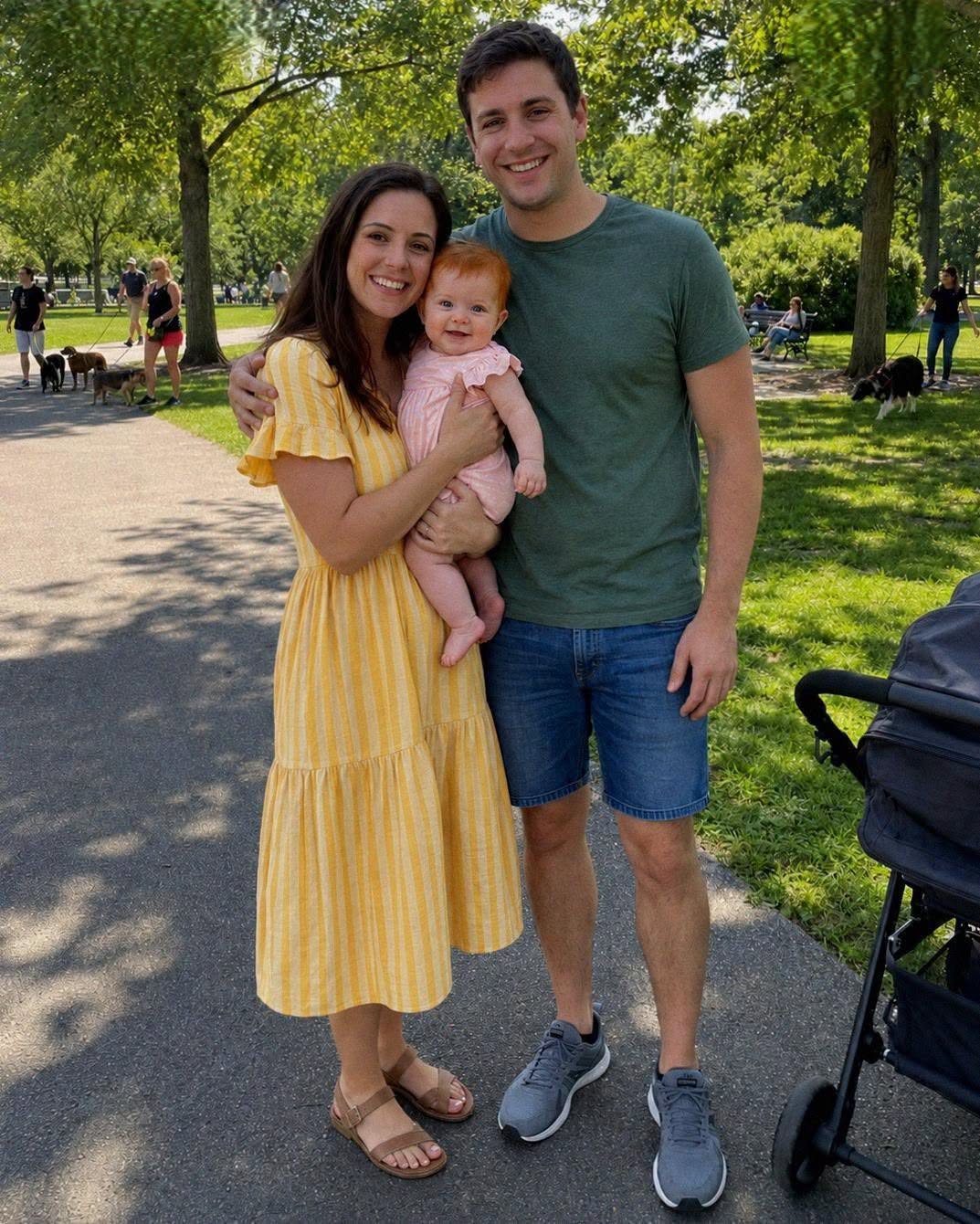
The first time my mother-in-law Gianna saw my newborn daughter Stella’s bright red hair, she did not smile. Bryson and I both have dark hair and brown eyes, while Stella’s eyes were still blue. Gianna treated those ordinary genetic differences as evidence that I had betrayed her son.
Gianna had never liked me. For years she disguised insults as casual observations about my ambition, my home, or what Bryson supposedly deserved. He would apologize afterward and tell me that was simply how his mother behaved. I let that explanation end too many conversations.
After Stella was born, Gianna stopped being subtle. She commented on the baby’s eyes, questioned the red hair, and eventually stopped calling her a granddaughter. She referred to Stella only as “the baby,” creating distance from a child who had done nothing except be born with features Gianna did not expect.
When Stella was six weeks old, Gianna accused me directly. She said she would not allow me to pass another man’s baby off as Bryson’s and demanded a DNA test. I expected my husband to defend me without hesitation.
Instead, Bryson looked at the floor. He said taking the test might end the conflict for everyone. To him, it sounded like a practical way to silence his mother. To me, it meant my husband was asking a laboratory to prove that I had not lied.
I agreed because I knew who Stella’s father was, but I warned them that a result would not make the accusation harmless. The cheek swabs took only minutes. The waiting exposed the damage. Bryson became unusually attentive, washing bottles and taking the early morning feedings, yet every kindness sat beside the fact that he was waiting for proof of my fidelity.
When the envelope arrived, I left it unopened. I did not need it. Bryson read the report twice before whispering that he could not believe it was real. The probability of paternity was greater than 99.99 percent.
He apologized and started to say that he had always known I would not betray him. I stopped him. If he had truly known, we would never have needed the paper. He could regret his choice, but he could not rewrite it while the result was still lying between us.
Bryson called Gianna. When he told her Stella was his daughter, she muttered that “it came back.” Her words revealed that the red hair had not been impossible after all. Gianna knew it existed in the family and had withheld that knowledge while accusing me.
We went to her house and searched old family photographs. The pictures showed the truth Gianna had tried to bury: red hair was part of Bryson’s family history, connected to his father and earlier generations. Stella’s appearance was not evidence of another man. It was an inherited trait Gianna already had reason to recognize.
That discovery made her behavior worse, not better. She had allowed prejudice against me to outweigh information she possessed about her own family. Bryson finally set a firm boundary with his mother. Access to Stella could not continue while Gianna denied her, insulted me, or treated our marriage as something she was entitled to test.
I did not forgive everything because a genetic explanation had been found. The test proved paternity, but it also proved how easily my husband had let another person’s hostility enter our home. Rebuilding trust would require time, accountability, and consistent action from him.
Stella remained the same baby before and after the envelope. Her red hair did not need a courtroom defense. The adults around her did. I wanted her to grow up knowing that family love is not conditional on looking the way someone expects, and that no one earns peace by forcing an innocent person to disprove a cruel accusation.