“Why aren’t you driving the Cadillac I gave you?”
The question stopped me in my tracks.
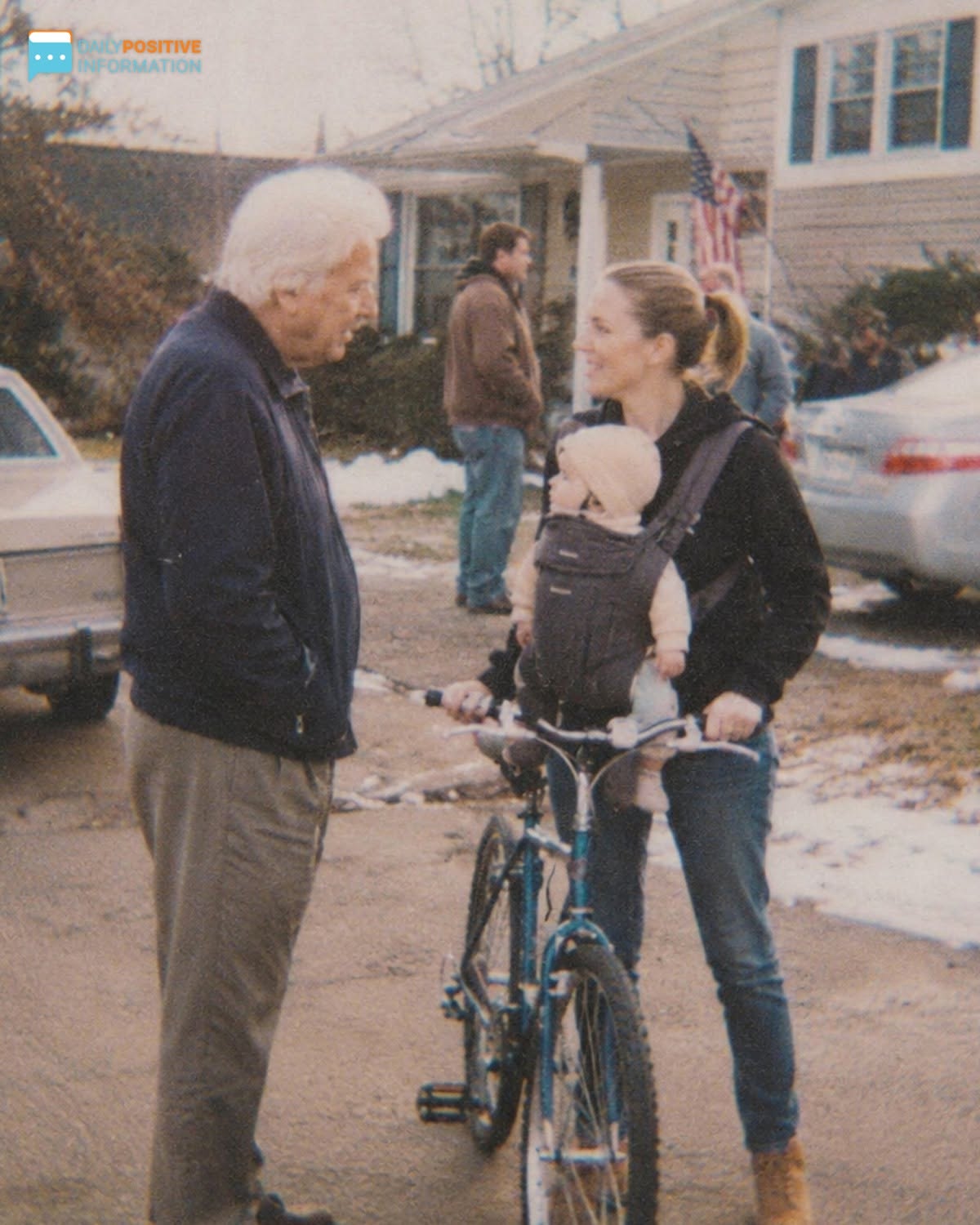
A freezing January wind swept down the Portland sidewalk as I stood beside an old bicycle with a completely flat tire. My four-month-old son, Noah, was strapped securely against my chest beneath layers of blankets and winter clothing. We were nearly out of formula, and I had no choice but to make the trip despite the bitter cold.
A black sedan pulled to the curb beside me.
The rear window lowered slowly.
Inside sat my grandfather, Charles.
His eyes moved from my face to Noah, then to the bicycle.
A long silence followed.
Finally, he repeated himself.
“Madison, where’s the Cadillac?”
Most people believed I was fortunate.
With my husband Daniel deployed overseas, I was supposedly surrounded by support. The official story was simple: while he served abroad, I would stay with my parents and younger sister Lauren in their Portland home. A young mother living with family sounded practical, even comforting.
But the reality inside that house was very different.
Nothing happened without scrutiny.
Every decision I made for Noah was questioned. Every parenting choice became a debate. Advice arrived disguised as orders, and disagreement was treated like disrespect. My mother constantly inserted herself into decisions that belonged to me. My father rarely challenged her, which only reinforced her authority.
Lauren had her own way of taking control. Growing up, she treated anything that belonged to me as something she was entitled to use. As children, it was annoying. As adults, it became something far more serious.
Two years earlier, at my wedding, my grandfather had given Daniel and me an extraordinary gift.
A silver Cadillac.
Reliable, safe, and fully registered in my name.
He knew military deployments would leave me carrying much of life’s responsibility alone. He wanted to make sure transportation was one thing I never had to worry about.
But shortly after Noah was born, my mother insisted I wasn’t ready to drive.
“You’re still recovering,” she told me.
Lauren would use the car “temporarily.”
Temporary quietly turned into permanent.
Lauren drove the Cadillac everywhere.
To work.
To restaurants.
To social events.
To weekend trips.
Meanwhile, I was left with an aging bicycle that barely functioned.
That bicycle finally failed completely on the coldest day of the month.
Which is exactly where my grandfather found me.
Inside his warm sedan, I sat silently for several minutes while Noah slept against my chest.
Charles never pressured people to speak before they were ready.
Eventually he looked at me and said softly, “This isn’t really about the car, is it?”
Something inside me cracked.
For months I had been told I was emotional.
Overwhelmed.
Overreacting.
Every concern I raised was explained away until I began questioning my own judgment.
But sitting across from my grandfather, I saw something different.
Belief.
He believed me before I even spoke.
“No,” I finally said. “It isn’t about the car.”
And then everything came pouring out.
The intercepted mail.
The financial accounts I could no longer access easily.
The bank card my mother had taken after Noah’s birth “to help manage expenses.”
The money disappearing without explanation.
The questions that never received answers.
The growing feeling that my life was being managed without my consent.
Charles listened quietly.
When I finished, he reached for my hand.
Then he gave an instruction to the driver.
“Take us to the police station.”
I stared at him.
“Grandpa…”
He squeezed my hand gently.
“People who love you do not use family as a weapon. From this moment forward, you and Noah are not facing this alone.”
For the first time in months, I felt safe.
At the police station, what initially sounded like a family dispute quickly became something far more serious.
The officer taking our report listened carefully as I described the missing money and restricted access to my accounts.
Then my grandfather revealed something I never knew existed.
A trust.
One he had created for Noah and me shortly after my son was born.
A trust I had never received access to.
A trust containing funds intended specifically to support us during Daniel’s deployment.
The room became very quiet.
The officer’s questions changed immediately.
This was no longer a disagreement between relatives.
It was a financial investigation.
Over the next several months, investigators uncovered far more than I had suspected.
Bank records showed significant amounts of money being withdrawn and redirected.
The funds intended for Noah and me had not been used for childcare, necessities, or household support.
Instead, they had financed vacations, purchases, home upgrades, and personal spending.
While I worried about buying formula and transportation, money meant for my child was being spent elsewhere.
The discovery hurt.
But it also brought clarity.
For months I had doubted my instincts.
Now the evidence confirmed what I had felt all along.
I had not imagined any of it.
The court process lasted nearly eight months.
Documents were reviewed.
Financial records were examined.
Explanations were tested against evidence.
In the end, the facts spoke for themselves.
The judge ordered full restitution.
Protective measures were granted.
Financial control was restored.
And the Cadillac was officially returned to me.
The following morning, accompanied by legal representatives and law enforcement officers, I returned to the house to collect it.
The silver Cadillac sat in the driveway exactly where it had always been.
My mother watched from inside but never stepped outside.
An officer handed me the keys.
My hands trembled as I opened the driver’s door.
Not from fear.
Not from anger.
From relief.
For the first time, I sat behind the wheel of a vehicle that had always belonged to me.
I adjusted the mirrors.
Checked on Noah in his car seat.
Placed both hands on the steering wheel.
And simply sat there.
My grandfather had given me that car because he understood something I hadn’t yet recognized myself.
Independence matters.
Security matters.
Having people who truly protect you matters.
The months that followed were not easy.
Some family relationships ended permanently.
Others changed forever.
The illusion of who I thought certain people were disappeared.
That loss was real.
But so was what I gained.
A safe home.
A healthy son.
A husband who eventually returned from deployment.
And the confidence that comes from knowing I no longer needed anyone’s permission to live my own life.
When Daniel finally came home and I told him everything, he listened without interruption.
After a long silence, he said, “I wish I had been there.”
I smiled.
“You weren’t,” I replied. “But someone was.”
Outside our apartment, the silver Cadillac sat in its parking space.
Registered to me.
Driven by me.
Belonging to me.
And for the first time in a very long while, I wasn’t waiting for someone else to decide what happened next.
I was finally moving forward.