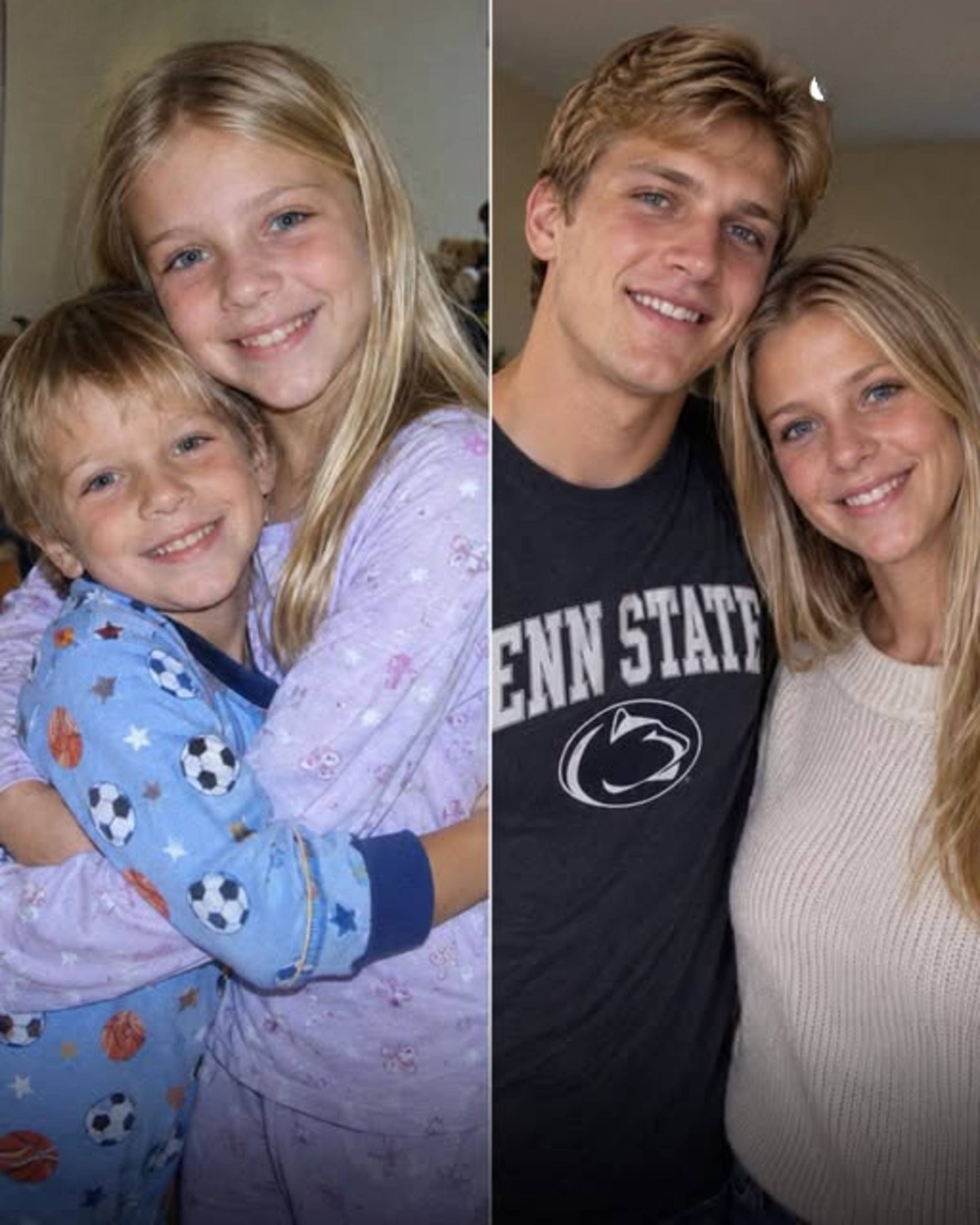
When I was eleven, my dad chose his new girlfriend over my five-year-old brother and me.
I remember the exact moment I realized it.
Not because he said, “I don’t want to be your father anymore.”
He never actually said those words.
Instead, he said something much quieter.
Something that sounded almost reasonable.
And somehow, that made it hurt even more.
Fifteen years later, after my brother and I had built a life without him, my father showed up at my front door asking for help.
I was eleven when my dad decided he did not want to be our father anymore.
My brother Jamie was five.
Our mom had died two years earlier, and after that, Jamie started sleeping with the hallway light on.
He said he was scared Mom would come home and not know which room was his.
I didn’t know how to explain death to a five-year-old.
I barely understood it myself.
So I told him Mom knew.
“She knows where your room is,” I’d whisper.
“How?”
“Because she’s your mom.”
That seemed to satisfy him.
For a while.
But Jamie still left the hallway light on every night.
Sometimes I’d wake up and find him standing in the doorway of my bedroom.
“Are you awake?”
“Yeah.”
“Can I stay here?”
“Of course.”
He’d climb into bed beside me, and I’d pull the blanket over both of us.
I was eleven years old.
I shouldn’t have been the person making another child feel safe.
But Dad never knew any of that.
He was rarely home.
At first, I thought he was working more because money was tight.
After Mom died, everything seemed harder.
Bills came late.
The refrigerator was often half empty.
Dad looked tired all the time.
I understood.
Or at least, I thought I did.
Then I met Claire.
Claire was tall, pretty, always perfectly dressed, and somehow annoyed by everything Jamie and I did.
She wore expensive perfume that lingered in the hallway long after she’d left a room.
She kept her shoes lined up perfectly by the door.
She didn’t like fingerprints on the windows.
She didn’t like toys in the living room.
And she definitely didn’t like children being children.
If Jamie left a cup beside the sink, she sighed.
Not a normal sigh.
A long, dramatic sigh that made him look at the floor.
If I asked Dad for lunch money, she stared at him.
If either of us interrupted a movie, she acted like we had kicked in the front door.
One night, Jamie dropped a spoon during dinner.
It hit the floor with a tiny clatter.
Claire closed her eyes.
“Can we please have one meal without something happening?”
Jamie immediately went quiet.
I looked at Dad.
He kept eating.
That was the first time I felt angry with him.
Not because Claire had said something rude.
Because he had heard it.
And he said nothing.
Before she moved in, Dad often left us with our neighbor, Mrs. Parker.
“I’ll be back by ten,” he’d say.
Mrs. Parker would raise an eyebrow.
“That’s what you said last time.”
Dad would grin.
“I mean it this time.”
He rarely did.
Jamie loved staying there because Mrs. Parker made grilled cheese and let him sleep in her spare room when Dad came home too late.
She never complained about us.
She never acted like we were inconvenient.
She would tuck Jamie into bed and then sit with me at the kitchen table.
“You okay, sweetheart?”
I’d shrug.
“Yeah.”
She always knew I was lying.
“You don’t have to be the grown-up.”
I’d stare at my hands.
“Somebody has to be.”
Mrs. Parker would sigh.
Then she’d squeeze my shoulder.
“You have a father.”
“I know.”
“Let him be one.”
I wanted to believe her.
I really did.
I knew Dad was seeing Claire, but I still thought we were a family.
I thought he was grieving.
I thought he was lonely.
I thought Claire was temporary.
I thought eventually Dad would figure out how much Jamie and I needed him.
Then she moved in.
The first thing she did was remove Mom’s photographs from the living room.
I came downstairs one morning and noticed the walls looked strangely empty.
“Where are Mom’s pictures?”
Claire was standing on a chair, replacing one of them with a large piece of abstract artwork.
“They’re in a box.”
“Why?”
“Because this is a home now.”
I didn’t understand.
“It was already a home.”
She looked at me.
“Things change.”
I went to find Dad.
“Where are Mom’s pictures?”
He was drinking coffee.
“Claire put them away.”
“Why?”
He shrugged.
“She wants to redecorate.”
“But those are Mom.”
“I know.”
“Can we put them back?”
Dad looked uncomfortable.
“Not right now.”
“Why?”
He sighed.
“Halle, don’t make everything difficult.”
I remember that sentence.
Don’t make everything difficult.
I was eleven.
I had just lost my mother.
My little brother was still afraid to sleep without the hallway light.
And somehow, asking where my mother’s pictures had gone was making *everything difficult.*
A few weeks later, Claire began talking about moving.
Not just redecorating.
Moving.
She wanted a bigger house.
A quieter neighborhood.
A place without “all this baggage.”
I heard her say it one night.
I was standing halfway down the stairs.
“David, I can’t live like this forever.”
Dad said something too quietly for me to hear.
Claire answered.
“I’m not asking you to forget them.”
Then a pause.
“I’m asking you to choose what kind of life you want.”
I froze.
What kind of life?
We were his life.
Weren’t we?
The next morning, I asked Dad if we were moving.
He looked at me.
“Maybe.”
“With Claire?”
“Yes.”
“And Jamie?”
Dad didn’t answer immediately.
That silence frightened me.
“Of course Jamie is coming,” he finally said.
But he didn’t sound certain.
A few days later, Dad sat Jamie and me down.
I remember Jamie was holding a toy truck.
I was sitting beside him on the couch.
Dad didn’t look at either of us.
“I need you kids to understand something.”
My stomach tightened.
“What?”
“Things are going to change.”
Jamie looked at him.
“Are we moving?”
“Not exactly.”
Dad rubbed his hands together.
“Claire and I need some space.”
I stared at him.
“From us?”
He looked at me.
“It’s not like that.”
It sounded exactly like that.
Then he said the sentence that changed everything.
“We’ve decided that Jamie and you would be better staying with Mrs. Parker for a while.”
Jamie dropped his toy.
“For how long?”
Dad didn’t answer.
I asked again.
“How long?”
“A few weeks.”
Claire had told him that.
I knew it.
A few weeks became a month.
Then two.
Then three.
Dad visited less.
At first, he called every night.
Then every few days.
Then once a week.
Then sometimes not at all.
Jamie stopped asking when Dad was coming.
That was the part that broke me.
One night, I found him sitting on the edge of his bed.
“Are you waiting for Dad?”
He shook his head.
“No.”
“You are.”
“No.”
“Jamie.”
He looked at me.
“Does Dad still love us?”
I sat beside him.
“Of course.”
“Then why doesn’t he come?”
I didn’t have an answer.
So I hugged him.
I was eleven years old.
And I promised my five-year-old brother something I had no idea how I would keep.
“I won’t leave you.”
He looked at me.
“Promise?”
“Promise.”
Years passed.
Mrs. Parker became our safe place.
She helped me with school.
She made sure Jamie had clean clothes.
She came to parent meetings when Dad didn’t.
She remembered birthdays.
She showed up.
Eventually, I stopped expecting Dad to.
By the time I was sixteen, I had stopped talking about him.
By eighteen, I stopped calling.
Jamie did too.
We built our lives around the people who actually stayed.
I went to college.
Jamie grew into a quiet, thoughtful teenager.
We still lived near Mrs. Parker, and whenever things got difficult, we called each other first.
Dad became a name in old paperwork.
A face in photographs.
A person we used to know.
Fifteen years passed.
Then one rainy Tuesday evening, someone knocked on my front door.
I was twenty-six.
Jamie was twenty.
We had our own lives by then.
I’d recently bought a small house.
It wasn’t fancy, but it was mine.
I had a job I loved.
I had photographs on the walls.
And one of those photographs was of Mom.
I opened the door.
And there he was.
My father.
Older.
Thinner.
Gray-haired.
Standing on my porch with a worn duffel bag at his feet.
For several seconds, neither of us spoke.
Then he said my name.
“Halle.”
I gripped the edge of the door.
“Dad?”
He nodded.
I hadn’t called him that in years.
He looked at me.
“I need your help.”
I stared at him.
Fifteen years.
Fifteen years of silence.
Fifteen years of birthdays he missed.
Christmases.
Graduations.
Illnesses.
Everything.
And the first thing he said when he came back was that he needed something from me.
I didn’t move.
“What happened?”
He looked over his shoulder toward the street.
Then back at me.
“It’s Claire.”
My stomach tightened.
“What about her?”
He swallowed.
“She left.”
I almost laughed.
Not because it was funny.
Because the universe had a cruel sense of timing.
The woman he’d chosen over us had finally left him.
And now he was standing at the door of the children he’d abandoned.
“Why are you here?”
He looked down.
“I have nowhere else to go.”
I stared at him.
Then I thought about Jamie at five years old, asking whether Dad still loved us.
I thought about the hallway light.
The empty living room walls.
Mom’s photographs packed into a box.
Mrs. Parker sitting beside me at the kitchen table.
All the years we had learned how to live without him.
My father looked at me again.
“I know I don’t deserve to ask.”
“No,” I said quietly.
“You don’t.”
He nodded.
“I know.”
For the first time, he didn’t make excuses.
He didn’t blame Claire.
He didn’t say he had been confused.
He didn’t say he had been doing his best.
He simply stood there.
Waiting.
I looked at the man who had once been my entire world.
Then I remembered the promise I’d made to Jamie fifteen years earlier.
*I won’t leave you.*
That promise had taught me something.
Love wasn’t always about who you were related to.
Sometimes family was simply the people who stayed.
And now my father was asking me to decide whether someone who had walked away from us deserved a place in the life we’d built without him.
I opened the door a little wider.
But I didn’t step aside.
“Before you come in,” I said, “you’re going to tell me the truth.”
He looked at me.
“All of it.”
His face changed.
And after fifteen years of silence, my father finally began telling me why he had really left.