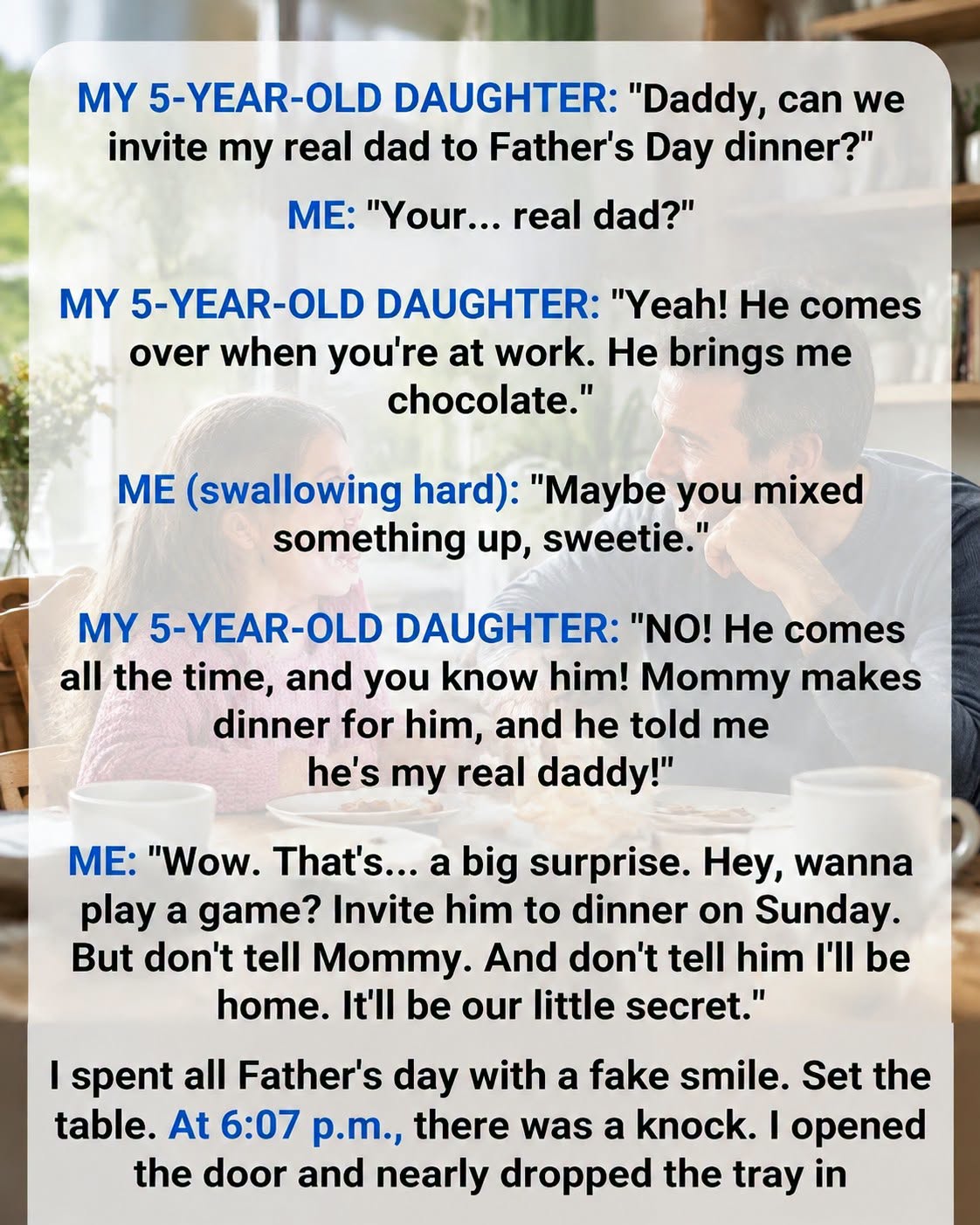
Adam’s arrival forced Jess to explain what had been happening without my knowledge. The truth came out in fragments, each one more difficult to absorb than the last. Jess and Adam had arranged secret visits with Lily and had allowed her to believe that Adam was her biological father. They had made decisions about her identity and our family without giving me the chance to understand what was happening.
Jess said she had been afraid that I would abandon our daughter if I discovered the truth. Whatever fears had led her to keep the secret, the consequences were now standing directly in front of us. Years of trust had been shaken, and I was suddenly being asked to separate questions of biology from the relationship I had built with a child who had always known me as her father.
As they spoke, Lily smiled, completely unaware of what their admissions meant. She was too young to understand the complicated history unfolding around her. To her, I was simply the person who had been there: the one who cared for her, comforted her, helped her through ordinary childhood struggles, and shared the countless routines that make a parent-child bond real.
I asked both adults to leave, then knelt beside Lily.
Whatever questions remained about biology, she needed one thing made absolutely clear. I was her daddy, and that wasn’t changing.
The next morning, I filed for divorce and blocked Adam. The decision was not made because every question had already been answered. It was made because the trust within my marriage had been fundamentally damaged, and I needed to establish some boundaries while everything else was being sorted out.
Paternity testing would follow. There would be legal questions, difficult conversations, and painful truths that still needed to be confronted. A test could establish biological information, but it could not rewrite the years that had already passed.
No result could erase the scraped knees I had cleaned, the bedtime routines I had shared, the birthdays I had celebrated, or the sleepless nights when Lily needed someone beside her. Biology could answer one question, but it could not erase a lifetime of being present.
That distinction became especially important as I tried to think about what Lily needed most. She did not create the secrecy surrounding her. She did not ask to be placed in the middle of an adult conflict. Whatever happened between the adults, she deserved stability and reassurance.
Later, tucked beneath her blankets, she asked whether I would still be there for her next birthday.
It was such a simple question, yet it carried the weight of everything that had changed.
I promised her every birthday.
I couldn’t promise that the adults around her would never disagree again, or that the coming months would be easy. I couldn’t promise that questions about her biological father would disappear. But I could promise that my love for her would not depend on the results of a test.
Our family’s future was uncertain. The marriage I thought I understood was already coming to an end, and there were difficult decisions ahead. But one thing remained clear to me: whatever the paperwork, biology, or painful revelations might say, I intended to keep showing up for Lily.
Because being her father had never been about a name on a test.
It had been about being there—and continuing to be there when she needed me most.