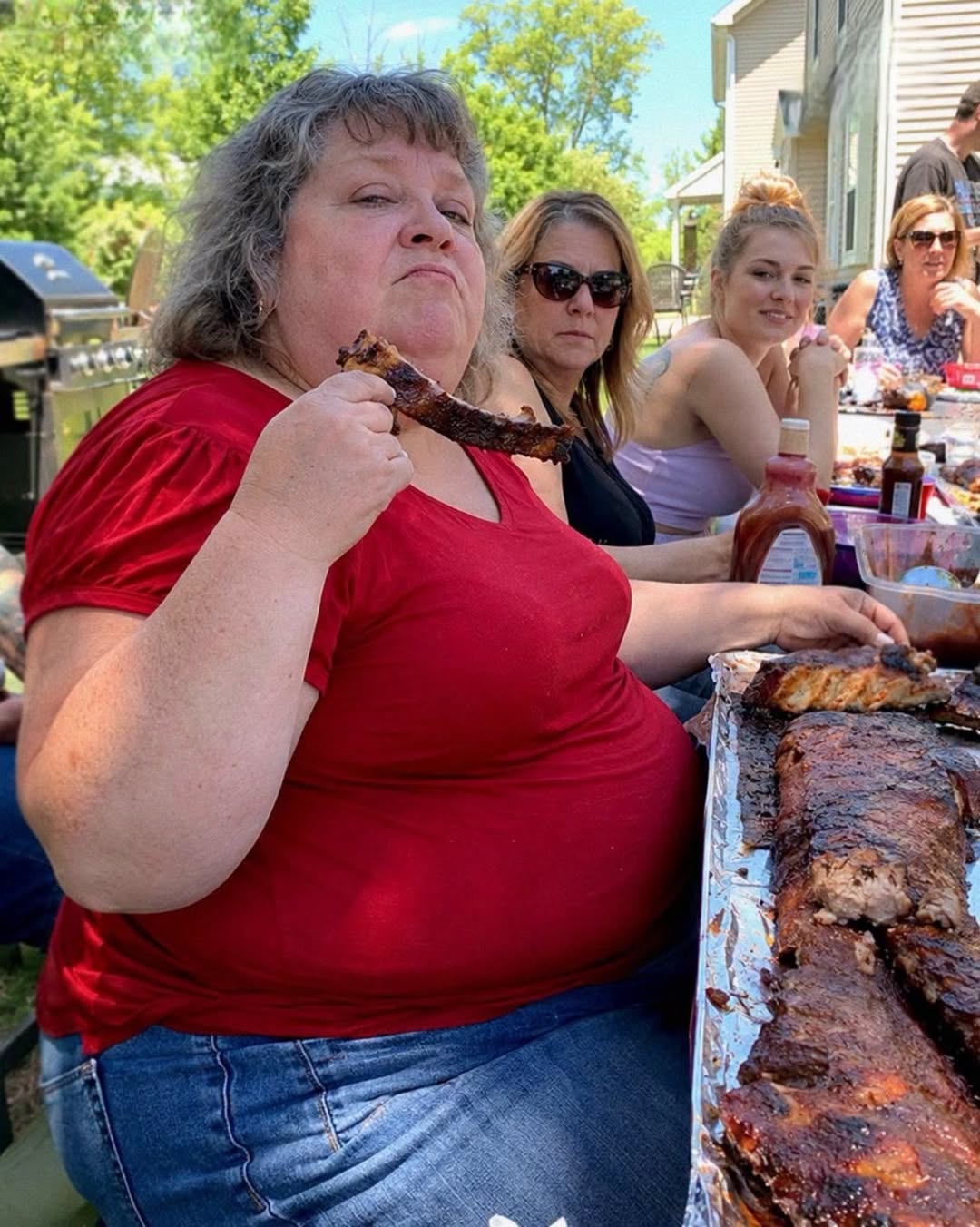
MIL Kept Showing Up with Her Whole Clan for Free BBQ at Our House — When They Came Empty-Handed Again on the 4th, I Served Them a Lesson Instead
I used to believe that family gatherings were supposed to bring people closer together. I loved the smell of barbecue drifting through the backyard, the sound of relatives laughing around the table, and the feeling of having a house full of people who were happy to spend time together.
But after months of hosting my mother-in-law and her entire family, I began to realize that some people don’t come over because they enjoy your company.
They come because they know you’ll pay for everything.
And when my mother-in-law showed up at our house for the fourth time with her whole clan, carrying absolutely nothing and expecting another free barbecue, I finally decided that things were going to change.
What happened that afternoon taught everyone a lesson they weren’t expecting.
It Started With One Innocent Invitation
The first barbecue had been my idea.
My husband and I had recently finished fixing up our backyard. We had bought a new grill, arranged some outdoor furniture, and created a space where we could relax on weekends.
I suggested inviting his mother over for a casual Sunday lunch.
“Why don’t we have a barbecue?” I told him. “We can invite your mom, cook some burgers, and enjoy the afternoon.”
He loved the idea.
His mother, whom I’ll call Linda, arrived with a smile and immediately started talking about how wonderful everything smelled. She complimented the backyard, praised the food, and told us how much she enjoyed spending time with us.
It was a lovely afternoon.
Or at least, that’s what I thought.
A few days later, Linda called my husband.
“Everyone had such a good time at your place,” she told him. “We should do it again soon. The whole family would love another barbecue.”
My husband, who has always been close to his mother, happily agreed.
I didn’t object. Family gatherings were supposed to be fun, and I genuinely wanted to build a good relationship with his relatives.
So we planned another one.
That was my first mistake: assuming that everyone understood a family invitation was an occasional gesture, not a standing offer to provide free food for an unlimited number of guests.
The Second Barbecue: Something Felt Different
The second gathering was larger.
Linda arrived with her sister, two adult nephews, a cousin, and several other relatives. They walked into our backyard as though they had been invited weeks in advance.
I smiled, welcomed everyone, and began preparing the food.
But as I looked around, I noticed something.
Nobody had brought anything.
Not a salad. Not a bag of chips. Not even a bottle of soda.
I told myself not to be petty. We had invited them, after all, and perhaps they simply hadn’t thought about bringing something.
I spent most of the afternoon at the grill while my husband chatted with his relatives. Every time I sat down, someone seemed to need another plate, another drink, or another serving of food.
Linda, meanwhile, had made herself comfortable in the best chair in the backyard.
“This is wonderful,” she announced, reaching for another piece of barbecue. “You really know how to host people.”
I smiled politely.
Inside, however, I was beginning to feel less like a host and more like an unpaid caterer.
When everyone finally left, the backyard was a disaster. Dirty plates covered the table, cups were scattered everywhere, and the kitchen looked as though a small restaurant had closed after its busiest night.
My husband helped me clean up, but I couldn’t stop thinking about how easily everyone had enjoyed themselves while leaving the work to us.
“Maybe next time,” I said, “we should ask everyone to bring something.”
He shrugged.
“They’re family. It’s not a big deal.”
I let it go.
I shouldn’t have.
The Third Visit Was the Moment I Knew
By the third barbecue, the pattern had become impossible to ignore.
Linda called on a Friday evening.
“We’re thinking of coming over tomorrow,” she announced. “The weather looks perfect for a cookout.”
I paused.
“Who is we?”
“Oh, just the family,” she replied casually. “Probably ten or twelve people.”
Ten or twelve people.
At our house.
Again.
I glanced toward the kitchen, where I was preparing our grocery list for the week. We had already planned meals and set aside money for household expenses. Another large barbecue would mean another trip to the store, another expensive grocery bill, and hours of preparation.
“Linda, that’s a lot of people,” I said carefully. “Could everyone bring something this time?”
There was a brief silence.
Then she laughed.
“Oh, sweetheart, don’t worry about it. You always make plenty!”
That sentence stayed with me.
She hadn’t misunderstood my request. She had simply decided that my concern didn’t matter.
When I told my husband what she’d said, he looked uncomfortable.
“She’s just excited to see everyone,” he explained. “Let’s not turn this into a problem.”
I wanted to tell him that it already was a problem. But instead, I agreed to host one more time.
The next day, I cooked, served, cleaned, and smiled through the entire afternoon.
And once again, the guests arrived empty-handed.
When Linda left, she patted my shoulder.
“Same time next month?” she asked.
I stared at her.
She was completely serious.
That evening, after the last plate had been washed, I sat down beside my husband.
“We need to talk,” I said.
This time, I wasn’t going to let the conversation end with a shrug.
The Fourth Barbecue: They Arrived Like They Owned the Place
The fourth gathering was supposed to happen on the Fourth of July.
Linda had announced the plan in the family group chat, telling everyone that our backyard would be the perfect place for a holiday barbecue.
I hadn’t agreed to host.
In fact, I hadn’t even been asked.
I discovered the plan when my phone started filling with messages.
“Can’t wait for the barbecue!”
“Should we come around noon?”
“Save us some ribs!”
One relative even asked whether we would have enough food for the children.
I read the messages twice, hoping I had missed something.
No one had asked if we were available. No one had offered to contribute. Everyone simply assumed that our home, our grill, our money, and our time were available whenever Linda decided to organize a gathering.
I showed my husband the messages.
He rubbed his forehead.
“I’ll talk to her,” he promised.
But by the next morning, nothing had changed.
Linda sent another message confirming that everyone would arrive around lunchtime.
That was when I made my decision.
I wasn’t going to scream. I wasn’t going to insult anyone. And I wasn’t going to spend another holiday exhausted while a dozen people treated me like their personal catering service.
If everyone wanted a barbecue so badly, they could finally learn what it meant to participate in one.
My Plan Was Simple
I didn’t cancel the barbecue.
Instead, I changed the rules.
I bought enough food for my husband and myself, along with a little extra for any guest who genuinely wanted to share the work and expenses.
I prepared a small bowl of potato salad, marinated a modest amount of chicken, and stocked the refrigerator with drinks for our household.
Then I cleaned the backyard, arranged the chairs, and waited.
There was no elaborate scheme. No hidden ingredients. No embarrassing surprise waiting in the kitchen.
I simply decided that I would no longer pretend to be comfortable with an arrangement that had become unfair.
At eleven-thirty, my husband walked outside and found me setting the table.
“Are you sure about this?” he asked.
“Absolutely,” I replied.
“What if my mom gets upset?”
I looked at him.
“Then she can be upset. But I am not spending another holiday paying for everyone while they act as though I owe them something.”
He was quiet for a moment.
Finally, he nodded.
For the first time, I felt that we were approaching the situation as a team.
The Family Arrived Empty-Handed—Again
At noon, the first cars pulled into the driveway.
Linda stepped out wearing a bright summer dress and carrying her handbag. Behind her came the familiar parade of relatives, all smiling and chatting as though they were arriving at a restaurant where a table had been reserved for them.
“Happy Fourth of July!” Linda called.
She looked toward the grill.
Then she looked at the table.
Her smile faltered.
“Where’s everything?” she asked.
I stood beside the grill, calmly turning the chicken we had prepared for ourselves.
“What do you mean?” I asked.
“The food!” she exclaimed. “The ribs, the burgers, the sausages. Where’s the rest of it?”
I put down my tongs.
“That’s the food we’re having today.”
She stared at me as though I had started speaking another language.
“But everyone is here!”
I glanced at the relatives gathering behind her.
“Yes. I can see that.”
One of her nephews laughed awkwardly, apparently assuming I was joking.
“So, when are we eating?” he asked.
I smiled.
“Whenever the people who are eating have brought something to share.”
The laughter stopped.
Linda’s face changed immediately.
“What do you mean, brought something?” she demanded.
I kept my voice calm.
“I mean that I never agreed to provide food for everyone today. I didn’t organize this gathering, and I wasn’t asked whether I wanted to host it.”
For several seconds, nobody spoke.
Then Linda turned toward my husband.
“Are you going to let her talk to your family like this?”
My husband took a breath.
“Mom, she isn’t wrong. We didn’t agree to host a family barbecue today. You organized this without asking us.”
That was the moment the entire atmosphere changed.
For the first time, Linda realized that her son wasn’t going to automatically take her side.
The Conversation Nobody Wanted to Have
Linda folded her arms.
“So now we’re not welcome in your house?”
“That’s not what I said,” I replied. “You’re welcome when we’re invited and when we agree on the arrangements. But being family doesn’t mean you can decide that we’ll feed everyone whenever you want.”
Her sister stepped forward.
“We thought this was a family tradition.”
“It became a tradition because I kept paying for it,” I said. “But traditions can change.”
One of the younger relatives looked down at his phone. Another quietly admitted that he had assumed someone else would bring food.
That comment made me laugh—not because it was funny, but because it explained everything.
Everyone had assumed someone else would contribute.
And that someone had always been me.
I continued, keeping my voice steady.
“I enjoy spending time with all of you. I really do. But buying the groceries, preparing everything, cooking for hours, and cleaning up afterward takes time and money. I can’t keep doing it alone, especially when nobody even asks whether we’re willing to host.”
Linda shook her head.
“You could have told me this earlier.”
I looked directly at her.
“I did. I asked everyone to bring something last time, and you told me not to worry because I always made plenty.”
She opened her mouth, then closed it again.
My husband stepped beside me.
“We should have talked about this sooner,” he said. “But from now on, we’re not hosting large gatherings unless we’ve agreed on the plans together.”
His words meant more to me than he probably realized.
This wasn’t about winning an argument with his mother. It was about knowing that my home and my effort mattered to him, too.
Then Something Unexpected Happened
For a moment, I thought the entire family would turn around and leave.
Instead, Linda’s sister quietly spoke up.
“Well, I have some food in the car,” she admitted. “I thought Linda had arranged everything, but I brought a few things just in case.”
She returned with a container of homemade pasta salad and a bag of rolls.
One of the nephews offered to run to the store for drinks. Another asked whether he could help prepare the vegetables.
Within minutes, the mood began to shift.
The relatives who genuinely wanted to spend the afternoon together started contributing. Some helped set the table, while others brought out chairs and prepared the side dishes.
Nobody was forced to do anything. They simply began participating once it became clear that I wasn’t going to do all the work for them.
Linda remained quiet for a while.
Eventually, she approached me near the grill.
“You really could have made this easier,” she muttered.
I looked at her.
“I tried to make it easier for three barbecues,” I replied. “I just didn’t make it clear enough that I couldn’t keep doing everything.”
She didn’t apologize immediately, and I didn’t demand that she do so.
For the first time, we were having an honest conversation about a problem that had been building for months.
The Lesson Was Bigger Than a Barbecue
The afternoon eventually turned into a pleasant gathering.
There was enough food, people shared what they had brought, and the guests who wanted to help found ways to contribute. My husband spent time with his relatives, and I finally had the opportunity to sit down and enjoy the holiday instead of spending the entire afternoon serving everyone else.
More importantly, the expectations had changed.
Before leaving, Linda approached us and said that next time, she would ask before inviting the entire family.
It wasn’t the grand apology I might once have imagined, but it was a start.
Over the following weeks, the family group chat became noticeably different. People began suggesting potluck dinners, offering to bring drinks, and asking whether we were available before making plans.
Not everyone was thrilled with the new arrangement. A few relatives seemed disappointed that our backyard was no longer an automatic destination for free food.
But that was no longer my responsibility to fix.
I had learned that being generous doesn’t mean allowing people to take your generosity for granted.
And setting boundaries doesn’t mean you don’t love your family.
Sometimes, it means you want the relationship to survive without resentment slowly destroying it.
What I Learned From the Fourth of July
Looking back, I wish I had spoken more clearly after the second barbecue instead of hoping everyone would eventually notice how much work I was doing.
I also wish my husband and I had established expectations together before the situation became so frustrating.
But I don’t regret the decision I made that Fourth of July.
I didn’t humiliate anyone, throw anyone out, or deliberately ruin the holiday. I simply stopped providing something I had never agreed to provide indefinitely.
The family still had the opportunity to gather. The grill was available, the backyard was open to those who had been invited, and everyone could enjoy the afternoon by contributing to it.
The difference was that I was no longer expected to carry the entire burden alone.
And perhaps that was the real lesson Linda and the others needed to learn.
A home is not a restaurant. Hospitality is a gift, not an obligation. And being related to someone doesn’t give you unlimited access to their time, money, or energy.
When my mother-in-law arrived with her entire family for the fourth free barbecue, she expected another afternoon of being served. Instead, she discovered that the woman who had quietly done everything for months had finally learned to say no.
And the most surprising part?
Once everyone understood the new rules, the gatherings became more enjoyable than they had ever been before.
Because a family barbecue should be about sharing food, laughter, and memories—not about one person doing all the work while everyone else takes a seat.