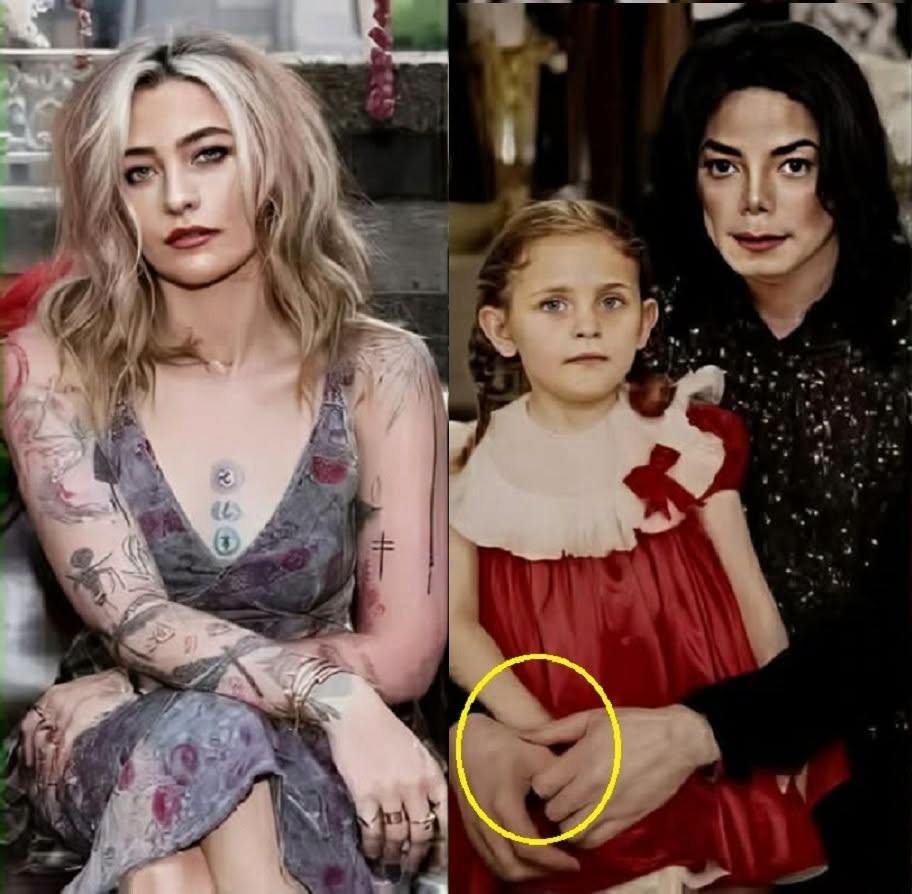
Paris Jackson has spent much of her life carrying a surname recognized almost everywhere in the world.
As the daughter of Michael Jackson, expectations followed her long before she had the opportunity to decide who she wanted to become.
Many people assumed she would eventually follow directly in her father’s musical footsteps.
Instead, Paris chose something far more personal.
She began creating an identity that belonged to her rather than attempting to reproduce Michael’s extraordinary career.
Her tattoos, alternative fashion, modeling work, acting roles, and deeply personal music became pieces of that independence.
Rather than chasing her father’s unmistakable pop sound, Paris gravitated toward folk, rock, and alternative influences.
Her voice carries a rougher and more intimate quality.
The difference appears intentional.
Michael Jackson already created his own musical universe, and Paris has never needed to recreate it.
Her path hasn’t always been easy.
Growing up under extraordinary public attention meant experiencing grief while millions of strangers watched and commented.
After losing her father while still young, she had to navigate adolescence alongside worldwide fascination with her family.
She has also spoken publicly about difficult periods involving her mental health, trauma, and recovery.
Those experiences eventually became part of her creative expression.
Rather than presenting herself as an untouchable celebrity, Paris has often chosen vulnerability.
Her tattoos aren’t hidden.
Neither are the imperfections that come with being human.
That openness has helped separate her public identity from the carefully manufactured perfection traditionally associated with celebrity culture.
Modeling became another avenue for self-expression.
Acting followed.
Then music gave her perhaps the clearest opportunity to tell her own story.
Through all those changes, however, Paris hasn’t attempted to erase her father from her identity.
She has spoken about her love for him and carries reminders of him in deeply personal ways.
But honoring Michael doesn’t require becoming Michael.
That’s perhaps the most important distinction in her journey.
A famous parent’s legacy can become either a foundation or a cage.
Paris appears determined to make it the former.
She can acknowledge where she came from while deciding where she goes next.
She can love her father’s music without copying it.
She can protect his memory without allowing that memory to consume her identity.
And she can carry the Jackson name without letting strangers dictate what someone with that name is supposed to become.
That may ultimately be the most meaningful rebellion of her career.
Paris Jackson isn’t trying to become the next Michael Jackson.
She’s trying to become the first Paris Jackson.