The conditions uncovered inside a rural Ohio farmhouse left even veteran investigators struggling to process what they had seen. Sixteen children, many unable to communicate normally after years of isolation, were discovered living in circumstances authorities described as unimaginable. Medical personnel, law enforcement officers, and local residents were left deeply disturbed. Yet amid the public outrage, one question asked by the children’s mother from inside her jail cell introduced another layer to an already heartbreaking story.
The investigation in Vinton County has drawn national attention, becoming one of the most shocking child neglect cases in recent memory. According to authorities, sixteen siblings were removed from a home where they had allegedly spent years living in severe neglect and unsanitary conditions. Officials described the residence as being in worse condition than many animal shelters, with children suffering from serious physical and developmental challenges.
Several of the children required immediate medical treatment after being rescued. Some were transported to specialized trauma centers, while at least one child was placed in intensive care and required life-support measures. Investigators reported that many of the siblings showed significant developmental delays, with some having difficulty speaking or interacting socially after spending much of their lives isolated from the outside world.
Ohio Attorney General Dave Yost publicly described the case as one of the most disturbing investigations he had encountered, calling the conditions inside the home “pure evil” and emphasizing the lasting impact such neglect could have on the children involved.
As the investigation continued, the focus remained largely on the allegations and the criminal charges facing the adults connected to the home.
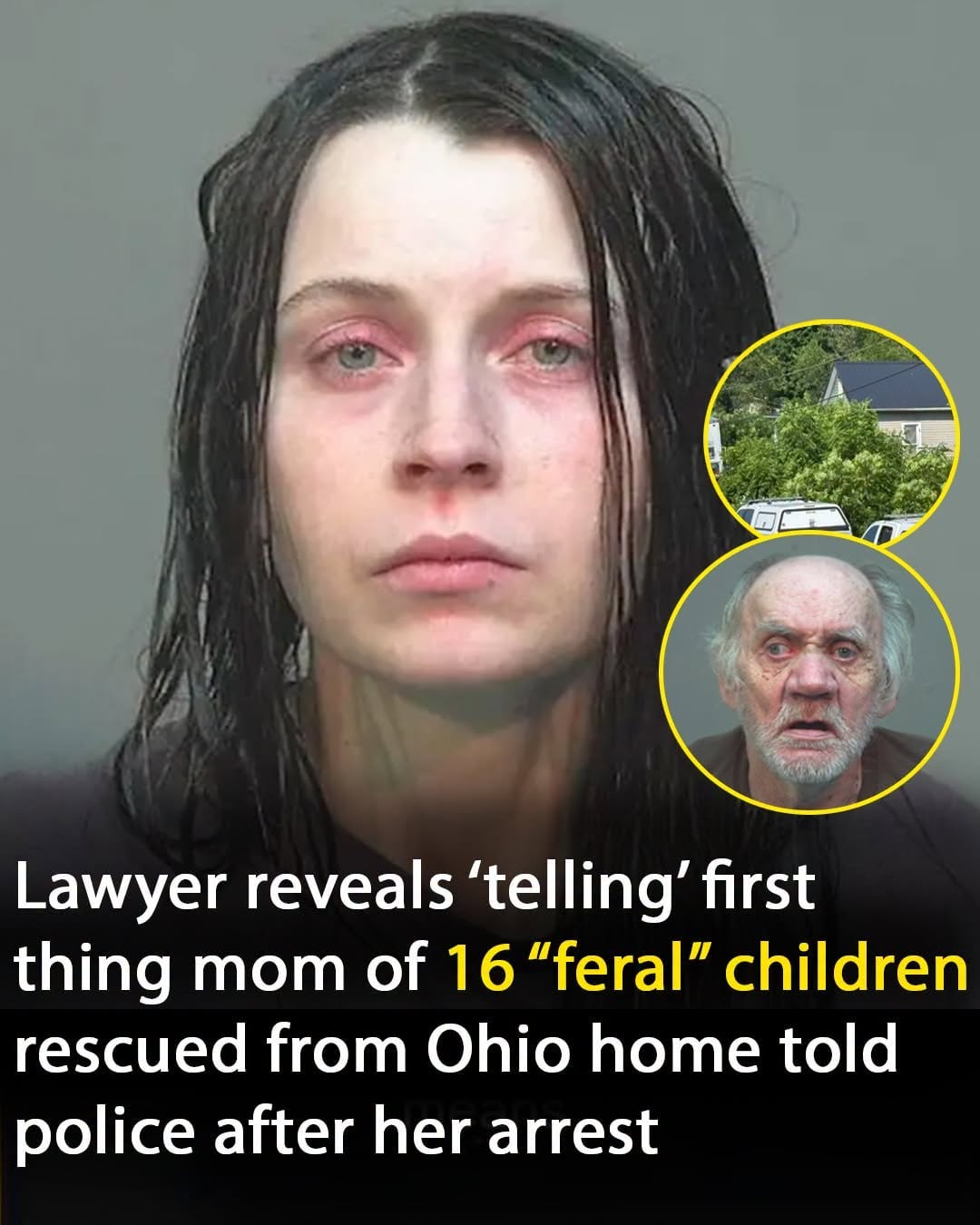
However, according to the mother’s attorney, events inside the jail painted a more complicated emotional picture.
He said that after her arrest, the woman was found crying and emotionally exhausted. Rather than asking about her bond, the criminal charges against her, or what punishment she might face, he claimed her first concerns centered on her children. According to the attorney, she repeatedly asked whether they were safe and when she might be allowed to see them again.
Her lawyer has argued that this detail should not be ignored, even while acknowledging the seriousness of the allegations.
He maintains that the case cannot simply be reduced to a story of deliberate cruelty without considering the environment in which his client herself was raised. According to his account, she entered marriage at just fifteen years old after growing up under circumstances marked by isolation and control, leaving her with little opportunity to develop the life skills or independence many people take for granted.
The defense argues that generations of dysfunction, isolation, and limited exposure to the outside world may have shaped decisions that ultimately led to the conditions now under investigation.
Prosecutors, meanwhile, continue to pursue the case based on the evidence gathered during the investigation, arguing that the children’s welfare was severely compromised over an extended period and that those responsible must be held accountable under the law.
Ultimately, determining criminal responsibility will be the role of the courts.
For the public, however, the case raises broader and more difficult questions that extend beyond the courtroom. It prompts discussion about generational trauma, chronic isolation, access to education and social services, and whether warning signs might have been overlooked long before authorities intervened.
While legal proceedings will determine guilt or innocence, the tragedy has already become a painful reminder of the importance of protecting vulnerable children and identifying families in crisis before neglect reaches such devastating levels.
As the children begin receiving medical care, counseling, and support, many hope they will finally have the opportunity to experience the safety, education, and stability they were allegedly denied for so many years. Their recovery is expected to be a long process, but for the first time, it can begin outside the isolation that defined so much of their early lives.