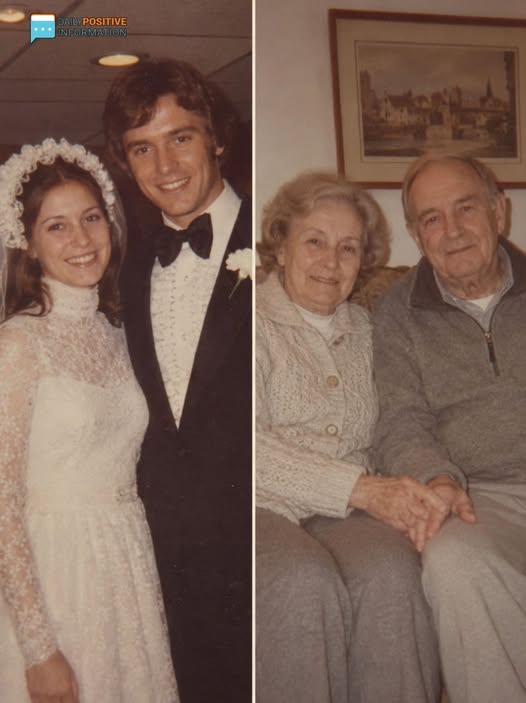
Every single year on her birthday, Helen returns to the same worn vinyl booth at Marigold’s Diner, the little place where the most important chapter of her life first began and where, for nearly fifty years, she has faithfully honored a promise made to the love of her life. The routine never changes. Same diner. Same booth. Same hour. But this year, something is different. Sitting in Peter’s seat is a stranger with nervous eyes and an envelope in his trembling hands — an envelope with Helen’s name written across it in handwriting she would recognize even after a lifetime apart. In one impossible moment, the grief she thought she had finally learned to live beside quietly opens again, and the past she believed was long buried reaches out to touch her one more time.
When Helen was younger, she used to secretly mock people who claimed birthdays made them sad. Back then, she thought melancholy birthdays were just another form of unnecessary dramatics, like people sighing too loudly in restaurants or pretending ordinary disappointments were tragedies. To her younger self, birthdays meant celebration. They meant laughter, chocolate cake, warm kitchens, candles glowing against happy faces, and the comforting illusion that life stretched endlessly ahead.
But age changes the meaning of things.
Now, birthdays arrive carrying a completely different weight.
It isn’t simply the growing number of candles or the aching joints that protest every staircase. It isn’t even the silence waiting inside her apartment at the end of the day. It’s the awareness that comes with surviving long enough to lose people who once felt permanent. The terrible understanding that no matter how deeply someone shaped your life, time can still take them away.
Today, Helen is eighty-five years old.
And just like every year since Peter died nearly twenty years earlier, she wakes before sunrise and carefully prepares herself for the ritual she refuses to abandon. She brushes her thinning silver hair into a soft twist, smooths on the same wine-colored lipstick she’s worn for years, and buttons her navy blue coat carefully all the way to her chin. Always to the chin. Always the same coat. The fabric has aged, the seams have softened, but the ritual remains untouched.
Because this is no longer nostalgia.
It is devotion.
The walk to Marigold’s Diner takes her nearly fifteen minutes now, though she remembers when she could make it in less than half that time. Every year the journey feels slightly longer. Past the pharmacy. Past the little bookstore that smells faintly of old carpet and dust. Past the corners where memories still seem to linger invisibly beside her. Yet no matter how difficult the walk becomes, Helen always arrives at exactly noon.
Never earlier.
Never later.
That was the hour she first met Peter.
It happened decades ago on an ordinary Thursday afternoon when she missed her bus and ducked into Marigold’s simply to escape the cold. Peter sat alone in the corner booth by the window, fumbling awkwardly with a newspaper and spilling coffee across the sports section. The moment she accidentally made eye contact, he introduced himself with the kind of strange honesty only certain people can pull off.
“I’m Peter,” he told her. “Clumsy, awkward, and slightly embarrassing in public.”
Helen should have walked away.
Instead, she sat down.
Something about his smile made the choice for her.
Before she left that afternoon, Peter told her she had “the kind of face people used to write letters about.” She laughed and informed him it was the worst pickup line she had ever heard in her life.
But Peter only smiled wider.
“Even if you leave here and never speak to me again,” he said seriously, “I’ll still find you somehow.”
And strangely enough, Helen believed him.
They married the following year.
Over time, Marigold’s became theirs. Not just a diner, but a living container for their marriage itself. Every birthday they returned to the same booth together. Through promotions and arguments, through ordinary years and difficult ones, through sickness and finally the cancer that slowly stole Peter piece by piece. Even near the end, when he barely had strength to finish half a muffin, he still insisted on taking her there.
So after he died, Helen kept going alone.
Because inside that diner, it still felt possible he might walk through the door smiling crookedly at her one more time.
But this birthday changes everything.
The moment Helen enters Marigold’s, she notices something wrong immediately. Sitting in Peter’s seat is a young man she has never seen before. He looks nervous, glancing repeatedly toward the clock while gripping a worn envelope in careful hands.
Then he sees her.
“Are you Helen?” he asks softly.
The sound of her name from a stranger’s mouth unsettles her immediately.
When he steps forward and offers her the envelope, Helen notices the handwriting instantly.
Peter’s.
The young man explains quietly that his grandfather told him to deliver it specifically today, specifically here, specifically at noon.
“My grandfather’s name was Peter,” he says.
The world seems to stop moving.
Helen takes the envelope with trembling fingers and leaves the diner without another word. Back inside her apartment, she places the envelope on the kitchen table and simply stares at it for hours, almost afraid to open it. The paper is yellowed slightly with age, the edges softened from careful handling. It looks less like an ordinary letter and more like something preserved deliberately across time.
Finally, after sunset, she opens it.
Inside are three things:
A photograph.
A wrapped package.
And a handwritten letter from Peter himself.
The letter changes everything Helen thought she understood about her marriage.
Peter explains that before meeting her, he had a son named Thomas — a son he never told her about. He reconnects with him years after marrying Helen but keeps it secret, convincing himself he’ll eventually explain everything when the time feels right. But time, as Peter writes, is cruel and unpredictable.
Thomas eventually has a son of his own.
Michael.
The young man who delivered the letter.
Peter explains that he arranged for Michael to find Helen specifically on her eighty-fifth birthday because he believed that age represented something important. An age where people either close themselves off forever or finally learn how to let go of what they’ve been carrying.
Then Helen unwraps the package.
Inside is a beautiful ring Peter purchased years earlier for the fiftieth anniversary they would never reach together.
The letter ends with words that leave Helen shattered and comforted all at once:
“If grief is love with nowhere to go, then maybe this letter gives it a place to rest.”
Helen spends the night rereading every line again and again.
She studies the old photograph next — Peter sitting in bright grass holding a little boy tightly against his chest. Thomas. A son she never knew existed. Yet looking at the picture, Helen cannot feel anger. Only sadness for all the years Peter carried that secret alone.
The next day she returns to Marigold’s.
Michael is waiting.
And slowly, something extraordinary begins to happen.
What starts as awkward conversation gradually becomes connection. Michael tells Helen about Thomas, about his own lonely childhood, about the journals Peter left behind filled with stories about the woman he loved more than anyone else in the world. Helen tells Michael about Peter too — the terrible singing, the ridiculous jokes, the way he hummed in the shower completely off-key.
Over time, the meetings become weekly.
Then essential.
Michael becomes the grandson Helen never had, while Helen becomes a bridge to the grandfather Michael barely knew but always longed to understand. Together, they quietly build something neither expected: family born not through obligation, but through grief, memory, and love carried across generations.
And gradually, Helen realizes Peter’s final gift was never just the ring or the letter.
It was continuation.
Peter understood that grief can harden people over time, trapping them inside silence and loneliness. So from beyond death, he created a way for Helen to reconnect with life again. He waited until the exact moment he believed she would be ready — old enough to understand the complicated truth, but still open enough to let someone new into her heart.
That is what makes his final gesture so powerful.
He didn’t leave Helen closure.
He left her company.
Purpose.
Family.
A future she didn’t know she still needed.
Now every Tuesday afternoon, Helen walks back to Marigold’s Diner. But she no longer walks there to sit alone beside memories. She walks there to meet Michael, to share stories, coffee, laughter, and pieces of Peter still alive inside both of them.
Sometimes Michael even brings his guitar and plays old songs Peter loved.
And when Helen closes her eyes, she can almost hear Peter humming terribly along in the background again.
Because love, she finally realizes, does not disappear when someone dies.
It simply changes shape.
Sometimes it becomes a letter hidden for decades.
Sometimes it becomes a grandson waiting patiently in a diner booth.
And sometimes, if you are very lucky, it finds its way back to you exactly when you need it most.