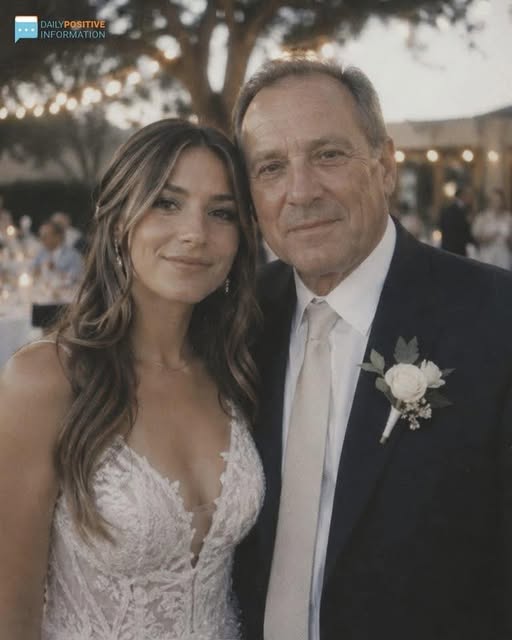
I am thirty years old. I have two children from my marriage to Sean, who is thirty-three. My son Jonathan is seven, and my daughter Lila is five. After the divorce, they became the only part of my life that remained steady, clear, and unquestionably mine.
When Sean and I first built our life together, he spoke in promises that sounded solid and reassuring at the time. He said he would provide for us. He said that staying home with the children was what a real family should look like, and that if I left my job, I would never regret it because he would take care of everything. I believed him. For a while, everything felt right — the kind of rightness that exists before the consequences begin to show themselves.
But things didn’t change all at once. They shifted slowly, almost quietly, the way they do when someone is carefully removing you from your own life rather than pushing you out all at once. Conversations became shorter. Decisions stopped including me. I went from being a partner to someone who simply existed in the same space without having a say in what happened within it.
By the end, Sean didn’t bother hiding it anymore.
“You have nothing without me,” he said one evening in the kitchen, leaning casually against the counter like he had already calculated everything. “No job. No savings. I can take the kids and make it so they don’t even remember you.”
“I’m not leaving my children,” I said.
He shrugged. “We’ll see.”
That was the moment I understood this wasn’t something I could fix. It was something I had to survive.
Sean’s father, Peter, was different. Quiet, steady — a widower in his late sixties who had spent more time being present for his grandchildren than his own son ever had. He showed up to birthdays Sean missed. He sat with Jonathan and Lila and listened to them in a way that made them feel heard.
Years earlier, when I had been hospitalized, Sean visited once. Peter came every single day. He took care of the kids while I couldn’t, and he did it without expecting recognition or gratitude. Somewhere along the way, without ever discussing it, he became the only person I could rely on.
So when everything finally collapsed — when Sean brought another woman into our home and told me to leave — I didn’t have anywhere else to go. I had no parents, no siblings, no extended family. I packed what I could carry in one trip and went straight to Peter’s house without warning.
He opened the door, looked at me and the kids, and stepped aside.
He didn’t ask questions. He didn’t set conditions.
That night, after the children fell asleep, I sat at his kitchen table trying to think about what came next.
“I don’t have anything,” I said. “Sean made sure of that.”
“You have your children,” Peter replied.
“That’s exactly what he’s trying to take.”
He stayed quiet for a moment before saying something I never expected.
“If you want to protect yourself and them, you should marry me.”
I stared at him. “That’s not funny.”
“I’m not joking.”
“It doesn’t make sense.”
“Legally, it does. I can adopt them. Your position becomes stronger in court if you have a stable household and a co-petitioner.”
“Peter… you’re sixty-seven.”
“And you’re their mother. That’s what matters.”
The divorce moved quickly — as it often does when one person has already made sure the other has nothing left to fight with.
Nine years of marriage. Two children. And at the end, almost nothing except what the court allowed: that the children could remain where I was living — in Peter’s house. It wasn’t everything I wanted, but it was enough to hold on to.
When we got back from court, I looked at Jonathan and Lila and understood that this arrangement was only temporary stability. Sean still had joint custody. And I knew he had been planning things long before I realized it.
That same evening, I told Peter yes.
Sean found out within days. He showed up furious while Peter was out and I was alone with the kids upstairs.
I went down when I heard the banging on the door. It wasn’t really knocking.
When I opened it, he looked at me with that same expression — the one that meant everything was already decided.
“You think this will work?”
“I’m not doing this with you,” I said, trying to close the door. He blocked it with his foot.
“Marrying my father?” he said with a short laugh. “This isn’t over.”
Then he left.
He didn’t come to the wedding. I didn’t expect him to. The ceremony was small and quick. I didn’t feel like a bride — I felt like someone signing something that would shape the future in ways I couldn’t fully see yet.
Jonathan held my hand. Lila kept asking when we were going home.
When we got back, the kids ran inside. The door closed behind us, and for the first time, Peter and I stood alone as husband and wife.
He looked at me and said, “Now I can tell you the real reason I asked you to do this.”
“All right,” I said.
“You asked me for something years ago.”
I didn’t understand at first.
Then I remembered.
Jonathan was three. Lila was still a baby. Sean had disappeared for two days without explanation. I had been sitting outside that night, overwhelmed, unsure what my life had become.
I had called Peter.
“If this falls apart,” I told him, “I don’t want my kids to think I disappeared. If something happens… promise me you won’t let that happen.”
“I won’t,” he had said.
Now, years later, standing in his house, he looked at me and said, “I remember that night.”
“And that’s why you married me?”
“That’s where it started. Not where it ended.”
Then he told me something that changed everything.
Sean hadn’t been waiting for things to fall apart — he had been making sure they would.
The next morning, I went to the garage and started opening boxes.
What I found wasn’t one shocking discovery, but many small ones — missed messages, school notices I never received, bills I didn’t recognize, emails I had never seen.
I sat on the floor surrounded by proof that I hadn’t been careless — I had been deliberately kept out.
When Peter came back, I asked him why he hadn’t told me sooner.
“I tried,” he said. “You weren’t ready to hear it.”
That stayed with me.
Later, I met Kelly — Sean’s former assistant. She confirmed everything. Sean had spoken as if the outcome was already decided. As if I would eventually disappear and the children would be his.
That’s when something shifted in me.
I started doing things differently.
I picked up the kids myself. I spoke directly to their teachers. I organized documents. I asked questions. I stopped assuming and started verifying.
Sean noticed.
“You’re overthinking,” he told me.
But I wasn’t.
And when he tried to extend his time with the kids without asking, I pushed back.
For the first time, he backed down.
That night, Peter said something else.
“When you’re ready, you don’t have to stay married to me. I won’t make it difficult.”
“Then what was this for?” I asked.
“To get you here,” he said.
Later, I stood outside watching my children play.
And for the first time in years, I felt steady.
Not relieved. Not emotional. Just grounded.
Peter hadn’t saved me. He had kept a promise.
Everything else — I had done myself.
I wasn’t being pushed out anymore.
I was standing in my place.
And no one could take that from me again.