I kept a secret that most people would consider important on the morning I married Nolan Pierce.
Not a disgraceful one. Not the kind that erodes a relationship from the inside out or manifests itself in the worst way at the worst time. It was just a modest, thoughtful bit of knowledge that I had decided to keep to myself until I knew exactly who I was dealing with.
Over the course of more than 40 years, my father, Theodore Hart, transformed Hart Industrial Systems from a rented warehouse on the outskirts of Erie, Pennsylvania, into one of the most reputable supply companies in the area. The company employed more than 600 people, served hospitals, municipal infrastructure, and transport networks throughout five states, and included my name in its succession plan.
All of that was unknown to the Pierce family.
To them, I was Evelyn Hart, a calm project coordinator from Erie who drove a decent car, lived in a modest apartment, and exuded a quiet demeanor that some perceived as straightforward but others, if they paid closer attention, perceived as intentional.
I was brought up to be the second type of person by my father. He would often repeat, “Never hide your character,” as he reviewed quarterly reports at the kitchen table with his reading spectacles halfway down his nose. “However, you should never promote your leverage.”
I had lived my entire life by that advice. I had no intention of straying from it the morning I stood in the bridal suite at St. Matthew’s in Pittsburgh as two women I hardly knew pinned my veil in place.
The Reason I Said Nothing About the Man I Married
Before I describe the series of events that transpired, I would like to be clear about something: I didn’t trust Nolan, therefore I didn’t keep my family’s company a secret from him.
I hadn’t had enough time to be sure, so I kept it to myself.
Nolan Pierce was a self-employed architect who was mildly successful. He worked out of a brownstone in Sewickley, had a drafting station in the spare bedroom, and had an unflashy disposition. His weary green eyes appeared to have witnessed more than he had discussed. He laughed softly and slowly. Everything else in the room seemed momentarily insignificant because of the way he listened to you—actually listening, not waiting for his turn to talk.
For reasons that should be clear to anyone who has seen how money can alter people’s perceptions of you, I had been wary of partnerships my whole adult life. In Erie, my family’s firm wasn’t a mystery; the Hart name appeared on enough contracts and buildings that anyone who paid attention knew what it represented. In my twenties, I discovered that some people’s interest in me coincided with their knowledge of that name. Once joined, it was nearly impossible to separate the two.
I had therefore followed my father’s instructions with Nolan. I held out. I observed. Without the complicating factor of a sizable legacy in my name, I allowed the relationship to grow.
Nolan was aware that my dad owned a local supply business. That was accurate, but it wasn’t finished. He never asked for specifics. Titles, financial architecture, or anything else that tends to indicate what someone is truly searching for never appeared to pique his interest. I trusted him because of his lack of curiosity.
But his mother was a very other story.
When I first met Claudia Pierce and what she unintentionally revealed
Claudia Pierce was the type of lady who used grace as a weapon. She had the smooth social fluency of someone who had been pretending to be warm for so long that it was actually hard to tell the difference between the two until you saw the calculating behind it.
At the rehearsal dinner, I caught it.
She looked at me with the unique warmth of someone who has already formed an opinion and is directing the display of it, and she grasped both of my hands in hers—a gesture that seems loving but is actually a means to manage a handshake.
She remarked, “You’re such a lovely surprise.” “Nolan was always in need of someone grounded and straightforward.”
Easy.
The word was spoken while grinning. Additionally, it was provided with purpose. We both pretended that it was just two women getting along well at a family gathering when I put it away and responded politely.
She had inquired about my precise rental location, whether my “people” were traveling from out of town, and whether my father intended to “do something helpful” for the newlyweds at the front desk. Every question came in the kind of lovely, conversational packaging that is purposefully made to sound different from what it is.
In reality, it was a financial evaluation. She was doing real-time calculations on me, and the results she was getting were modest.
At one point, Nolan noticed my expression and leaned near. He whispered, “She gets like this around weddings.” “Don’t take it personally.”
I replied I wouldn’t, grinning. I also jotted down a mental note that clarified a lot of why Nolan had never seemed to realize the price of maintaining harmony.
The Typical Marriage for Six Weeks Before Everything Changed
These were important weeks, and I want to give them the credit they deserve.
relocating to the Sewickley brownstone. Discovering the unique rhythm of another person’s everyday life: Nolan made great coffee but was unable to cook anything that required timing; he checked his email as soon as he woke up and then whined about it for the remainder of the morning; he left cabinet doors open when he was thinking deeply about something. He discovered that I read real literature before bed, that I couldn’t go asleep until every outside door had been inspected twice, and that I had strong beliefs about how to properly stack a dishwasher that I was prepared to defend for a long time.
His sister joined us for dinner. We once had a serious disagreement about who was responsible for what around the house, which resulted in a protracted debate regarding the plumber. We began hesitantly sketching the contours of a future, the way you do when you’re sufficiently fresh to something that commitment still feels more like a decision you’re making in the moment than a framework you’ve already established.
It was enjoyable. Really excellent.
Then, unexpectedly, Claudia showed up on a gloomy Thursday morning in November.
She wasn’t by herself.
The man behind her had a leather portfolio and was dressed in a charcoal suit. He had the expression of someone who frequently has to make awkward situations appear formal as part of his profession. He identified himself as Gregory Sloat, a lawyer. He was licensed to practice in Pennsylvania, and it didn’t seem to bother him in the slightest to show up at a private home and put pressure on a woman he had never met.
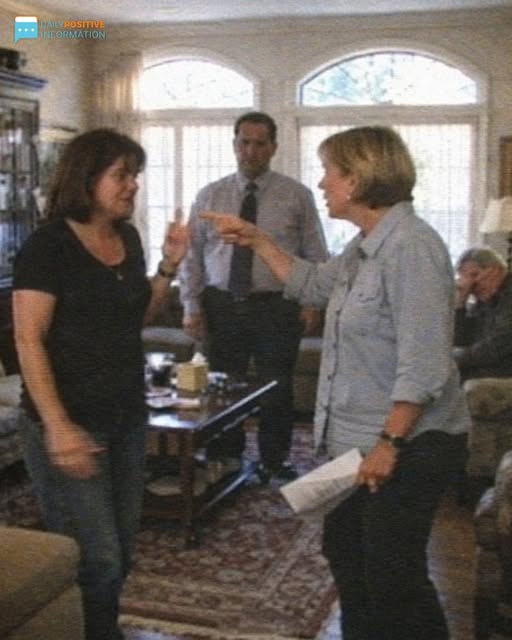
My mother-in-law entered my house in the morning with a lawyer and a false document.
When they came, I was in the lobby with a cup of coffee. With the look of a man who had not been informed of any of this, Nolan came downstairs.
With the unhurried, deliberate grace of a lady who knows that sometimes all it takes to rule a room is to take your time, Claudia took off her gloves.
She apologized for the turmoil, but her tone gave the impression that she wasn’t at all remorseful. “However, this is a family safety issue.”
Gregory Sloat put a packet of papers on our entry table and opened his portfolio.
Claudia focused on me with the accuracy of someone who had practiced this.
“My son needs a postnuptial agreement before this marriage proceeds further,” she stated. In the past, I’ve witnessed ladies with no actual background attach themselves to promising men. The Pierce family’s property will be safeguarded by these documents.
The room fell silent.
Nolan gazed at his mother as if he were witnessing her from a fresh perspective that he was still having trouble understanding.
I examined the bundle. Then at her.
And when I overcame the annoyance and the insult, I experienced something unexpected: relief. Witnessing someone expose their true self before your life has grown more intertwined with theirs is a deep and enlightening relief.
She saw a lady who had married above her level when she looked at me. A woman to be controlled. Someone who posed a particular, familiar kind of threat despite her seeming lack of affluence.
On all counts, she was mistaken. She had come to my house with the intention of making those incorrect presumptions legally enforceable.
For the second time in six weeks, I felt incredibly thankful that I had kept quiet.
When he didn’t approach the documents, she added, “Nolan, this is prudence.” anything you’ve never had.
Gregory Sloat cleared his throat in the methodical manner of a man who has grown accustomed to awkward silences in the workplace. “This is a typical postnuptial structure intended to safeguard premarital and future family interests. It’s preferable to deal with these issues as soon as possible to avoid costly misconceptions.
I almost chuckled. Not because it was humorous. The entire performance was almost theatrical because of the enormous difference between what she thought she was preserving and what actually existed.
Practically speaking, “future family interests” meant Nolan’s brownstone, a variable-income design firm, and an investment account that Claudia had probably been inflating in her mind into something far larger than its actual balance.
She regarded me as though I were a woman in sensible heels who had recognized a chance and acted quickly.
What I Told the Attorney That Changed Claudia’s Expression
Nolan shoved the documents aside. “You accused my wife of marrying me for money by bringing a lawyer to my house.”
Claudia’s mouth constricted. “Men are unreliable due to emotions, so I brought a lawyer.”
This was Gregory Sloat’s cue. “Respectfully, Mr. Pierce, your wife shouldn’t object to signing if she has nothing to gain.”
I placed my coffee cup next to his folder on the foyer table.
“Are you licensed in Pennsylvania, Mr. Sloat?” I asked.
He gave a blink. “Yes.”
“Then you are aware that it takes some creative framing, which I would expect you to be better at, to present a legal document under these circumstances—unannounced, without prior notice, six weeks into a marriage—as anything other than coercion.”
He parted his lips.
“You unexpectedly showed up at a private residence with a tool intended to coerce one party into giving up rights she hasn’t tried to assert,” I went on. Prudence isn’t that. That’s a paperwork-based performance.
Claudia’s face changed. Just a little. However, I noticed the slight adjustment of a woman who had in expecting respect and was now getting something she wasn’t ready for.
Nolan moved to the front. “I’m not signing any documents. Evelyn isn’t either. And I need you both to go.
“Nolan—”
“Now, Mom.”
She departed. Gregory Sloat assembled his portfolio with the particular annoyance of a man whose time has been squandered in a way that he is unable to bill for without feeling ashamed.
The door shut.
In the unexpected silence, Nolan and I stood in our home’s foyer. I could see him processing what had just transpired; it wasn’t mistrust of me or greed, but rather the unique perplexity of witnessing his wife demolish a lawyer’s case with the ease of someone who had spent time in settings where legalese was the primary language.
I said, “I owe you an explanation.”
He gave me a long look. “Only if you’d like to donate one.”
That was the moment I realized I had married the right person, not the wedding, not the first morning we shared a home, not any of the previous occasions I had marked as crucial.
I then sat down with him and told him everything.
Revealing to My Spouse the Information I Had Been Withholding Since the Start
I started by telling him about the working foundation of my grandfather’s generation, which comes from the unique stubbornness of individuals who think that if you do anything well enough for long enough, it becomes something real, rather than from wealth.
I explained to him how my father had founded Hart Industrial Systems in 1986 using a rented warehouse, a single forklift, three clients, and a legal paper business plan. While I was coloring the backs of shipping invoices, I told him about my mother doing the company payroll at our kitchen table. I informed him that the business currently provided municipal infrastructure, hospitals, and transportation centers in five states. I informed him that it had over 600 employees. I explained to him that my father had been rotating me through procurement, operations, labor relations, and compliance for the past few years because, as a man who had started from nothing, he firmly believed that taking over a company without having a thorough understanding of it was just a slow way to destroy it.
I informed him that I would become the primary owner of Hart Industrial Systems in two years, subject to a formal succession plan that my father had been meticulously crafting with the family’s legal and financial teams.
Halfway through, Nolan took a seat. Not dramatically, but the calm lowering of someone who needs a moment to let things settle since their knowledge of something has changed substantially.
He let out a slow breath when I was done.
He remarked, “You really thought I’d care.” An comment, not a question.
I answered, “I assumed your mother would.”
He chuckled briefly and without humor. “It seems that was Pennsylvania’s safest wager.”
Then he gave me a look that I couldn’t quite put into words: a mix of love and astonishment, as well as the slight embarrassment of someone who has just realized they are a part of a story they didn’t know they were in.
He questioned, “Why didn’t you tell me?”
I explained, “Because I needed to know who loved me before they knew what came with me.”
He grasped my hand. held it for a while.
“And now?” he inquired.
“I want to know if this makes a difference.”
He gave my fingers a squeeze. “Just one thing. I would want five minutes’ warning the next time my mother brings a lawyer to the house so I don’t have to worry about my wife being more prepared than the rest of us put together.
I chuckled. I laughed for the first time all morning.
But I also knew that Claudia Pierce was not done, with the assurance of someone who had grown up seeing her father balance what people wanted and what they said.
Eight days later, the second move and what it revealed about her true nature
After a loss, women like Claudia don’t back down. They rearrange. They reinterpret. They return with a different approach and a different plan, and they do so with enough poise that the new effort doesn’t appear to be a continuation of the previous one.
She texted Nolan exactly eight days after the altercation in the foyer, requesting lunch. “Clearing up the unfortunate misunderstanding” was her goal. She recommended the Duquesne Club, a venue choice that conveys a message in and of itself.
Nolan wanted to say no on my behalf. I promised to leave.
Not alone—Miriam Kessler, my father’s general lawyer, stayed close by and made herself available in case the discussion took on legal ramifications. However, I went. Because when you have a clear grasp of power, you don’t fear it—even when it is used against you.
When I got there, Claudia was already seated. blouse made of ivory silk. ideal posture. The way a woman has categorized a loss as a teaching moment.
“Thank you for coming, Evelyn,” she remarked kindly. “I believe we started off incorrectly.”
I sat down and remarked, “We got off with a lawyer and a document in my foyer.” “It wasn’t just a wrong foot.”
Her grin persisted. “That’s fair enough.”
For the following ten minutes, she skillfully performed regret. impulses for protection. old customs. embarrassment by the visit’s suddenness. She was worried about her son, which could have led to incorrect actions. It was a slick performance. I paid it the proper attention, but I didn’t believe a word of it.
Then she turned around.
“Now that your family is… at ease,” she remarked.
cozy. The word choice was a tiny work of understatement in and of itself.
She easily went on, “That changes the practical conversation.” “Nolan has always had talent, but he doesn’t have the proper support. With the right funding, his company could expand dramatically. Naturally, it makes sense to consider how two families might strategically support one another when they come together.
It was there.
She had come to my house eight days prior, thinking I was after the Pierce family’s possessions. Recalibrated with fresh knowledge, she was now vying for the Hart family’s possessions. The objective had changed. The fundamental strategy of leveraging financial access through family had not altered in the slightest.
The initial effort was predicated on the notion that I desired something from Nolan.
The second was predicated on the idea that she could now focus on getting what she desired from me.
I carefully set my napkin next to my plate after folding it.
“You were prepared to force me to sign away hypothetical claims against a brownstone and a small design practice eight days ago,” I replied.
“That was prior to my comprehension of the complete picture.”
“That’s right,” I replied. Yes, it was. The only thing that has changed since the wedding is your awareness of it, not the entire image. This implies that you were never really concerned about the whole picture.
She gave me the calm evaluation of a woman who has just realized she’s in a different kind of conversation than she had anticipated.
“Families help one another,” she stated. That isn’t a tactic. That’s the way things operate.
“Healthy families do,” I replied. “Yes.”
I thanked her for a meal that I had no intention of finishing, got up, and strolled out into the November air on Fifth Avenue with the calm, collected demeanor of someone who had entered the room knowing exactly what was going to happen and had been correct.
What Nolan Did After I Told Him and Why It Was More Important Than Everything Else
I told him everything that night. The rewording. the turning point. the seamless shift from a protecting mother to a strategic ally. He sat silently at our kitchen table, staring at his hands for some time.
He declared, “I’m ashamed of her.”
I said, “You’re not accountable for her decisions.” “You are solely accountable for your own.”
“I am aware,” he replied. “That’s precisely the issue.”
Over the course of the following month, quiet but important things happened. Nolan started taking actions that he ought to have taken years before. He took his mother off any advisory documents related to his practice. He took away her access to his financial accounts, which I suspected had continued more out of shame and habit than any real necessity. He started to cease viewing her presumptions as something that needed to be managed rather than as boundaries, in tiny but steady steps.
Claudia did not take this well. She sobbed. I turned her son against her, she said. She said that Nolan had changed in ways she was unaware of and that I was manipulative and domineering. She never brought up the lawyer she had brought to our foyer six weeks into our marriage in any of these exchanges.
My father, who has spent forty years witnessing individuals expose their true priorities under duress, watched the entire scene with the patient, slightly amused expression of a man.
My father called me aside one Sunday after Nolan had spent an afternoon at the family’s lake cottage helping him mend a warped gate. This type of afternoon reveals more about a person’s character than any formal event.
He remarked, “Your husband isn’t a weak man.” From an early age, he was taught to maintain harmony at his own cost. That is not the same. It can also be unlearned.
He was correct. Nolan unlearned it, and I observed.
The Year the Truth Became Something Sturdy
The next spring, my father announced his succession. a private meeting with family, important employees, and board members at the company’s headquarters. He discussed Hart Industrial Systems’ history in the same manner that he always did when discussing it in a formal setting: not exactly with pride, but with the unique gravity of someone discussing something that has been significant enough to endure.
Nolan was in the front row when he announced me as the new chief executive.
He cheered like a proud guy; he wasn’t possessive, he wasn’t pretending, and he wasn’t silently figuring out how this would affect his own standing. Simply said, he is truly proud of his wife in a way that is quite uncommon and should never be taken for granted.
I wanted the air, so we drove home that night with the windows down despite the April cold, and we discussed topics unrelated to company succession, inheritance, or any of the preceding year’s events. We debated whether to find a new home or enlarge the brownstone. We discussed a vacation to Portugal that we had been tentatively organizing for eight months but had not yet made reservations for. We discussed commonplace topics in the leisurely manner of two individuals who recognize that commonplace things, accumulated over time, are what truly make up a life.
Regarding Claudia, the actual conclusion of that section of the narrative did not involve a confrontation, a court case, or any other type of official reckoning.
Time had come.
Distance diminished her effect in the same way that it usually does when the person you are separated from no longer receives the attention that sustains their conduct. A health issue and an unexpectedly lonely holiday season about two years after the foyer morning caused her to reach out in a way she had never done before. No plan. No placement. I sent you a message asking if we could get together.
She arrived without an agenda or a lawyer, which was a step forward in and of itself.
Her apologies wasn’t flawless. Seldom are genuine apologies; instead, they are typically a little erratic and hesitant, just like when someone is acting sincerely for the first time. However, it was already enough genuine. I didn’t get close to her right away. I didn’t reintegrate her into my life as if the morning in the foyer hadn’t occurred. As it should be, real repair takes time.
However, I allowed a more intimate, smaller version of our relationship to develop.
Ultimately, there was the human aspect of the entire situation.
What I Discovered During a Morning That Was Intended to Diminish Me
Over the course of forty years, my father established Hart Industrial Systems, overcoming supply chain issues, labor disputes, market fluctuations, recessions, and all the other challenges that a long-running company inevitably faces. He made it through all of it by grasping the distinction between what something looks to be and what it actually is, which may seem straightforward but is actually very challenging to practice regularly.
He provided me with more than just a business. He taught me to put foundations to the test before putting my trust in them.
My mother-in-law entered my house six weeks into our marriage with a lawyer and a document based on an inaccurate portrayal of me. She saw me as a low-income lady who had committed herself to a promising man. She perceived someone who needed to be controlled, restrained, and redirected.
She hadn’t given it enough attention. Her questions had been inappropriate. Her presumptions were incorrect, and she had relied on them rather than the evidence.
The document she brought was meaningless; it was strategically flawed, legally dubious, and based on an inaccurate picture of reality. However, what it showed was not insignificant. It gave me a clear indication of the type of relationship I would have to manage at a young enough age to be significant. It provided me with information that, had she been more patient, I would have eventually obtained at a larger expense.
Nolan also gained insight into the type of tranquility he had been maintaining and the costs associated with it over time.
After that morning, our marriage was founded on a more complete truth. It was because secrecy left the debate, not because wealth entered it. He knew why I had been wary. I realized that trust eventually necessitates being known—that withholding information, no matter how prudently done, has an expiration date. If I had maintained the silence that initially shielded me, it would have ultimately come back to haunt me.
I hadn’t said anything because I wanted to find out who loved me before they realized what I had brought.
I discovered it.
I then told him everything.
That served as the cornerstone of what we created more than any formal statement, business succession plan, or legal instrument.
When character has already completed the task, paper is really meaningless.