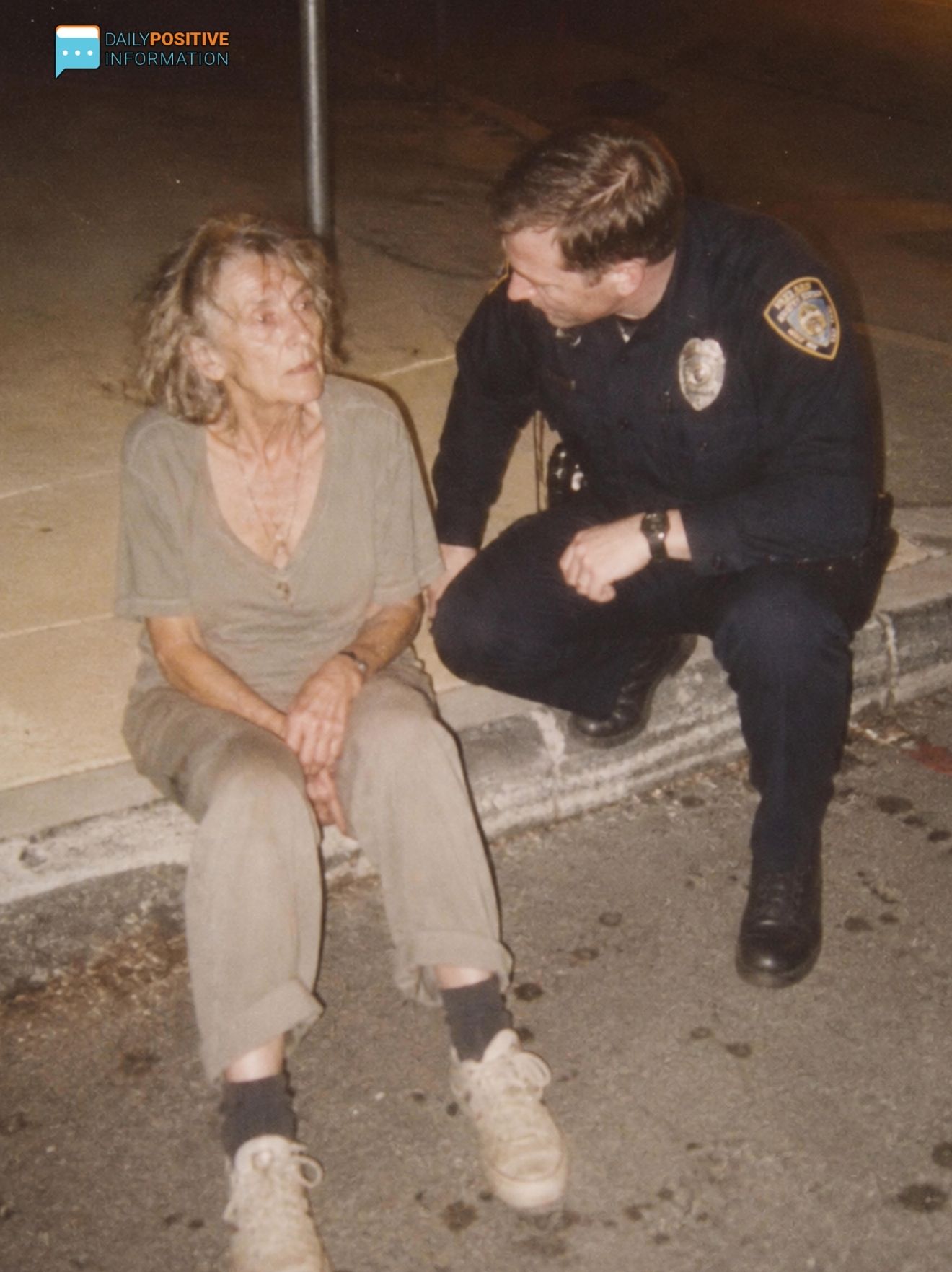
For twelve years as a patrol officer, I’d heard my shift commander refer to the hours between bar closing and sunrise as “the witching hour.” It’s that strange stretch of night when the streets belong only to police officers, bakers starting their day, and people making choices they’ll regret by morning. At 3 a.m., the city feels different. The noise fades into a low murmur, and every street seems to hold a secret. After spending most of my career working those hours, I knew every flickering streetlight and every alleyway by memory.
Most calls eventually blend together. Domestic disputes, loud neighbors, intoxicated drivers, and endless complaints become part of the routine. To survive in the job, you learn to build a layer of emotional protection around yourself. If you carried every tragedy home, you wouldn’t last long.
But one call changed everything.
It started as a report about a suspicious person wandering through a quiet neighborhood at three in the morning. By the time it ended, I was questioning everything I thought I knew about my own life.
I was adopted when I was young. It was never a secret, but it was never discussed much either. My biological parents existed only as vague shadows in my memory. I remembered fragments—a woman humming softly, the smell of cigarette smoke, a door slamming somewhere in the distance.
Before being adopted, I moved through several foster homes. Each house had different rules, different expectations, and different people. Stability was something I learned not to expect.
Everything changed when Mark and Lisa Miller adopted me when I was eight years old.
Mark taught me practical things—how to fix a tire, how to shave, how to stand confidently in front of another person. Lisa never missed a school event and always made me feel like I belonged. They never treated me as a charity case. They treated me like their son.
Because of them, I grew up safe.
Still, questions about my biological family remained unanswered. Every attempt to access my records led to dead ends. Agencies had closed, files had vanished, and bureaucrats always gave the same response: look forward, not backward.
Eventually, I stopped searching.
Years later, at thirty-seven, I was working another overnight patrol shift when dispatch reported a suspicious woman wandering through an upscale neighborhood.
Expecting a trespasser or someone under the influence, I arrived ready for the usual scenario.
Instead, I found an elderly woman standing barefoot beneath a streetlamp. She wore only a thin nightgown despite the cold temperature. Her gray hair blew wildly in the wind, and she looked terrified.
The moment my patrol lights illuminated her, she recoiled in fear.
I switched them off immediately and approached slowly.
“Please don’t take me,” she whispered. “I just wanted to see him.”
There was something heartbreaking in her voice.
I wrapped her in my jacket and sat beside her on the curb while we waited for medical assistance. She spoke in fragments, confusing past and present. She talked about an old green house, a husband who had likely been gone for decades, and a baby she couldn’t protect.
One name kept coming up.
“Cal.”
Again and again.
“Cal, I’m sorry.”
Eventually, I located emergency contact information on her medical bracelet and called her daughter, Tara.
When Tara arrived, relief flooded her face.
Her mother’s name was Evelyn. She suffered from dementia and had wandered away from home.
As paramedics prepared to take Evelyn for evaluation, she suddenly looked directly at me. For a brief second, her eyes became startlingly clear.
“Don’t let them take him again,” she told Tara while pointing at me.
Then the moment disappeared.
I couldn’t stop thinking about it.
The next morning, Tara showed up at my apartment carrying a shoebox full of old documents.
Inside were state records from 1988.
One file immediately caught my attention.
Mother: Evelyn Bennett.
Male Infant.
First Name: Caleb.
The birth date matched mine exactly.
I tried convincing myself it was a coincidence.
Then I found letters.
Dozens of letters written by Evelyn to a son named Caleb.
In every one, she insisted she had never willingly given him away. She described years of searching, fighting the system, and begging for information about the child she had lost.
The more I read, the harder it became to dismiss.
Eventually, Tara and I agreed to take DNA tests.
The wait felt endless.
When the results finally arrived, the answer was impossible to deny.
Tara Bennett — Sister.
Shared DNA: 48%.
Match Probability: 99.9%.
I wasn’t just David Miller.
I was Caleb.
The child Evelyn had spent decades searching for.
When I visited her later that day, she sat quietly in her recliner. Tara gently told her who I was.
Evelyn stared at me.
Then tears filled her eyes.
“Caleb?” she whispered.
I knelt beside her and took her hand.
“I’m here,” I told her.
She cried as she explained how she had fought to keep me, how agencies had told her she wasn’t fit to be a mother, and how she never stopped looking.
Then she began humming.
The same lullaby I remembered from the deepest corner of my childhood.
The melody I thought I had imagined.
It had been hers all along.
The months afterward weren’t perfect. Dementia didn’t disappear. Lost years couldn’t be recovered.
But something important changed.
The grief Evelyn carried for decades finally had somewhere to go.
Tara and I learned how to be siblings.
Mark and Lisa met Evelyn and Tara, and instead of conflict, there was understanding. They had raised me with love, never knowing the truth behind my adoption.
I wasn’t replacing one family with another.
I had simply discovered that my life belonged to both.
Today, when I respond to calls about suspicious people wandering alone in the middle of the night, I remember Evelyn.
I remember that not every lost person is dangerous.
Sometimes they’re just searching for something they’ve spent a lifetime trying to find.
And sometimes, without realizing it, they lead you to the missing piece of your own story.