The first blink felt strange.
The second filled her with unease.
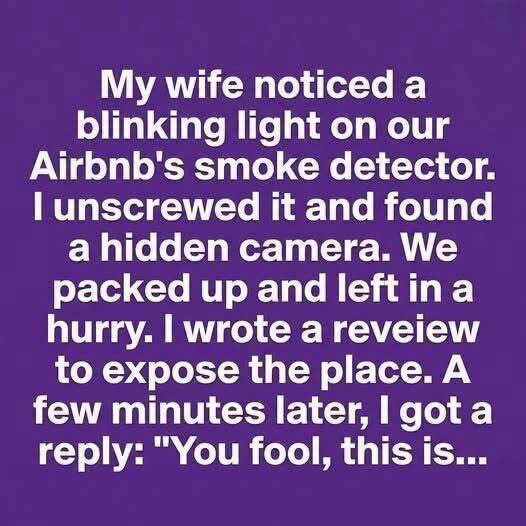
By the third, every sense of comfort they had felt since arriving disappeared. What they had believed was an ordinary smoke detector mounted to the ceiling concealed something far more disturbing. A hidden lens. A host who offered an unsettling warning instead of an explanation. A faint red laser dot that only became visible in photographs they had nearly erased. Piece by piece, the truth emerged, leaving them with the horrifying realization that what they had discovered wasn’t an accident or faulty equipment—it appeared to be part of something far more deliberate.
He waited until they had packed the car and were already miles away before telling her what he had found. The silence inside the vehicle was broken only by the sound of tires rolling over the empty back roads as the headlights carved through the darkness ahead. Finally, he admitted that curiosity had gotten the better of him before they left the rental. The plastic cover attached to what looked like a smoke detector had detached with almost no effort. Inside, nothing resembled the components of an actual fire alarm. There were no sensors designed to detect smoke, no alarm mechanism, and no wiring that suggested it served any safety purpose. Instead, a small glass lens stared directly toward the bed, perfectly positioned to capture everything happening inside the room. His hands had trembled as he quietly snapped the cover back into place, pretending he had never touched it.
Neither of them spoke much during the drive. Every passing mile only intensified the questions racing through their minds. How long had it been there? Had previous guests noticed it? Was anyone watching in real time, or had everything simply been recorded? Every reassuring thought they tried to cling to was quickly replaced by another unsettling possibility. What had begun as a relaxing getaway had transformed into an experience neither of them could stop replaying.
Eventually they stopped at a roadside diner, hoping the bright fluorescent lights and the presence of other people would provide a sense of safety. Sitting inside a crowded restaurant somehow felt more secure than the quiet vacation home they had just fled. Between cups of coffee, anger gradually replaced shock. Determined to warn others, he opened his phone and posted a detailed review describing exactly what they believed they had discovered. The words came out rushed, emotional, and disorganized, but the fear behind them was unmistakable. He wasn’t interested in revenge. He simply didn’t want another traveler to experience the same terror.
The response from the property host arrived surprisingly quickly.
Instead of expressing concern or promising to investigate, the reply dismissed the object as nothing more than a damaged “transmitter.” The explanation raised more questions than it answered. Then came a single sentence that immediately made both of them stop reading.
*”They’ll come looking for it.”*
Neither of them could understand who “they” were.
Maintenance workers?
A technician?
Or someone else entirely?
The vague response only deepened their anxiety.
Later that evening, while scrolling through photographs from what should have been a memorable vacation, he noticed something neither of them had seen before. In several pictures, a tiny red dot appeared near the edge of the curtain. At first it seemed like a camera glitch or an unusual reflection. But image after image showed the same pinpoint of light positioned in nearly the exact same location. Its angle appeared to align directly with the doorway leading into the bedroom, as though something had been aimed toward the room all along. What had first seemed insignificant suddenly felt impossible to ignore.
Unable to dismiss their concerns, they contacted law enforcement and provided every detail they could remember. Officers documented their statements, collected the photographs, and recorded information about the rental property and the suspicious device. Whether the object would ultimately be confirmed as a hidden camera or something else remained part of the official investigation. Even so, the emotional damage had already been done. The uncertainty alone was enough to leave lasting scars.
In the days that followed, friends asked whether they had received a refund or whether the booking platform had apologized. Those questions no longer seemed important. Money could reimburse a vacation, but it couldn’t restore the sense of security they had lost. An apology could acknowledge their fear, but it couldn’t erase the lingering thought that someone might have invaded the privacy of one of the most intimate spaces imaginable.
Before that trip, they believed a locked door, positive reviews, and a highly rated rental offered peace of mind. Afterward, those assumptions no longer felt certain. Every unfamiliar room, every smoke detector mounted to a ceiling, and every hidden corner now attracted a second glance. Whether or not the investigation ultimately answered every question, one truth remained impossible to ignore: once trust has been broken inside a place meant to feel safe, rebuilding that sense of security becomes far more difficult than checking out of a vacation rental and driving away.