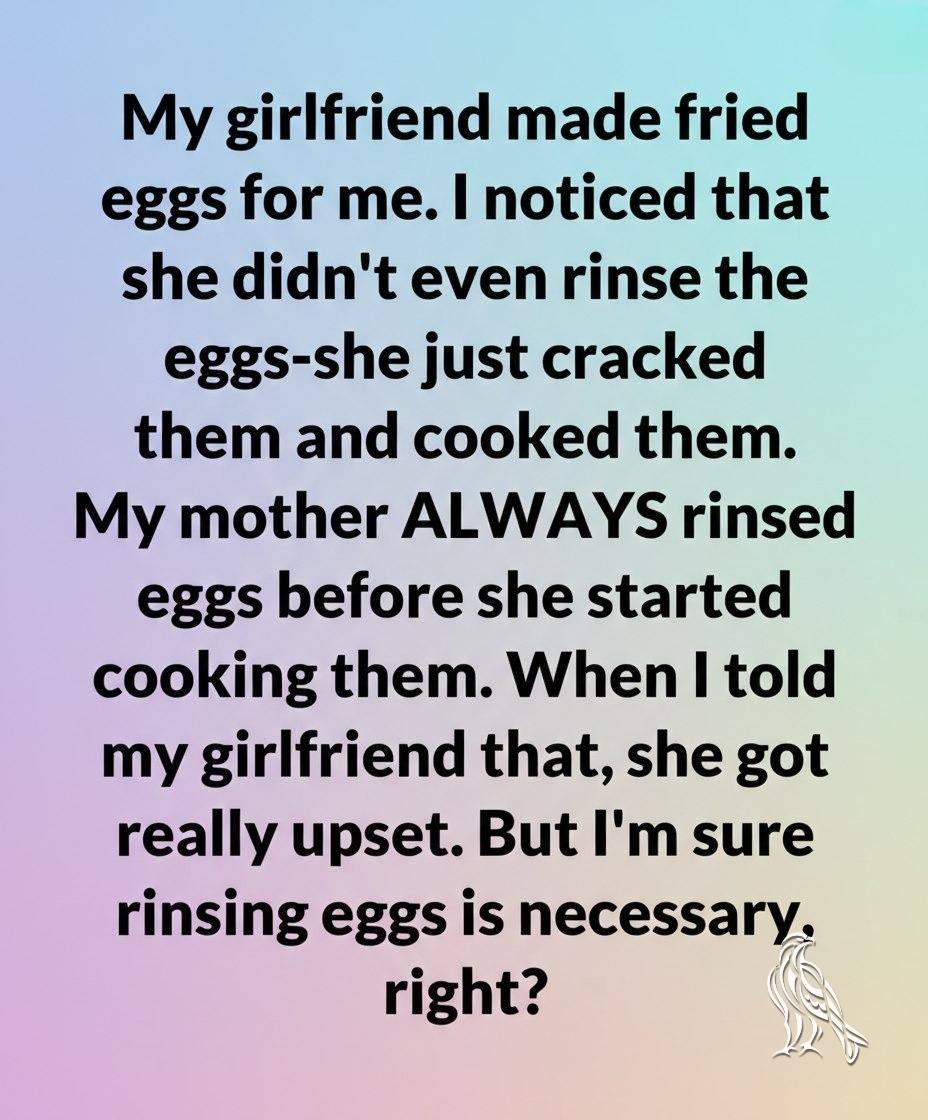
Mira only wanted to make him breakfast.
It was supposed to be one of those quiet, ordinary mornings that disappear into the rhythm of married life without anyone remembering them later. The apartment still carried the softness of early light. Coffee brewed slowly in the background. Mira stood barefoot in the kitchen, humming to herself while she cracked eggs into a pan, trying to do something simple and caring before the workday swallowed them both whole.
Then Evan walked in and casually said, “My mom used to cook them differently.”
That was it.
Not yelling. Not criticism sharpened into cruelty. Just one small sentence spoken without much thought. But the air between them changed almost instantly, like a window had been opened in winter.
Mira smiled at first, pretending the comment hadn’t landed somewhere sensitive. “Oh?” she asked lightly.
“She added milk before whisking them,” he replied, reaching for a mug. “Makes them softer.”
He didn’t even notice her shoulders tense.
Because the problem wasn’t really the eggs.
It was the feeling underneath the words — the quiet implication that somewhere in his memory existed a version of home she could never quite compete with. A woman she had never met but somehow kept getting compared to in invisible ways. Mira suddenly became painfully aware of every small effort she made that went unnoticed: folding his laundry the way he liked, remembering which tea helped when he couldn’t sleep, learning the recipes his family loved during holidays. None of it felt dramatic enough to mention aloud, yet all of it lived quietly inside her, waiting for acknowledgment that rarely came.
So when he mentioned his mother’s eggs, her mind heard something larger:
Not like this.
Not like home.
Not quite right.
Evan, meanwhile, stood completely unaware of the storm building across from him. To him, the comment was harmless nostalgia, the kind people make automatically when childhood memories surface unexpectedly. He wasn’t asking Mira to become his mother. He wasn’t even thinking that deeply. But memory has strange power. Sometimes people carry their upbringing into marriage so naturally they don’t realize it’s happening.
Two people stood in that kitchen, but three histories occupied the room: Mira’s, Evan’s, and the fragile new history they were trying to build together.
Mira grew up in a home where love was often measured through effort. Her mother rarely said “I’m proud of you,” but she showed affection through exhausted acts of care — warm meals, ironed clothes, silent sacrifices no one acknowledged properly. Appreciation mattered deeply to Mira because she spent much of her childhood searching for it. When she cooked for Evan, she wasn’t simply making breakfast. She was offering tenderness in the language she understood best.
Evan came from a different kind of home. His mother filled the house with routines that became sacred without anyone naming them that way. Sunday pancakes, specific holiday dishes, eggs whisked with milk every morning before school. Those rituals became woven into his idea of comfort and belonging. He never questioned them because they felt natural, almost invisible. And like many people, he carried them unconsciously into adulthood.
That’s how marriages often crack open — not through enormous betrayals at first, but through tiny collisions of memory and meaning. A sentence about dishes. A disagreement over towels. A holiday tradition. Beneath the surface, people aren’t arguing about objects or routines. They’re asking quieter, more vulnerable questions:
Do you see me?
Do I matter here?
Is there room for both of us in this life?
Mira turned the stove off harder than necessary. “Maybe you should’ve married someone who cooks like your mom then,” she muttered.
Evan blinked in confusion. “What? That’s not what I meant.”
But now they were no longer discussing breakfast. They were standing inside years of unspoken emotional inheritance neither fully understood.
The silence that followed felt heavier than the conversation itself.
For a long moment, neither moved. Then something shifted. Maybe it was exhaustion. Maybe love simply interrupted pride before the moment hardened into permanent resentment. Evan looked at her more carefully this time, really seeing her expression instead of defending his intention.
“You know that wasn’t about the eggs, right?” she said quietly.
And suddenly he did.
He saw all the invisible comparisons he never realized he carried into their marriage. The small comments. The unconscious references to “how things were done at home.” He understood that Mira wasn’t angry because she cooked breakfast wrong. She was hurt because she feared she was constantly being measured against memories she could never compete with.
At the same time, Mira began recognizing something too: Evan wasn’t trying to diminish her. He was still emotionally tied to rituals that once made him feel safe, loved, and known. Childhood had planted those reflexes long before he met her.
Neither of them chose those instincts.
But they could choose what happened next.
So instead of continuing the argument, they finally named the real pain underneath it. Mira admitted how deeply she longed to feel appreciated without having to ask for it. Evan admitted he had never examined how often he used his childhood as the invisible standard for comfort.
And once the truth entered the room, the tension softened.
Eventually, Mira laughed first. “Fine,” she sighed, grabbing the bowl again. “Show me the legendary eggs.”
Evan smiled sheepishly and stepped beside her. Together they whisked milk into the mixture, both of them suddenly aware of how absurd and human the entire argument had been.
But something important had changed.
The moment stopped being about breakfast and became about awareness — about noticing when the past quietly enters the present disguised as habit. Marriage, they realized, wasn’t about perfectly blending two lives together without friction. It was about learning which traditions deserved to stay, which ones needed reshaping, and how to create new rituals that belonged to both people equally.
By the time they sat down to eat, the kitchen no longer felt crowded with ghosts.
It felt like theirs.