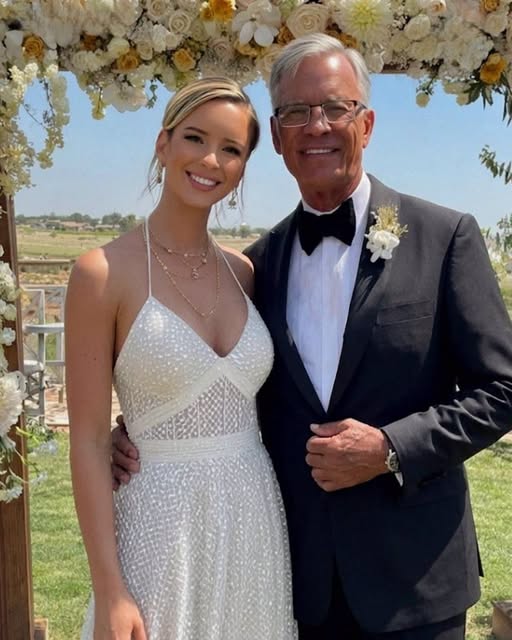
I married a dying man for security. At least, that’s what everyone thought. They whispered behind my back, judged every decision I made, called me a gold digger, an opportunist, and even a traitor. People who had once smiled at me suddenly looked at me as though they knew exactly what kind of woman I was. Even my best friend walked away, convinced I had traded whatever dignity I had left for money. But none of them knew what he confessed to me on our wedding night. They didn’t know why he had chosen me, what he was protecting, or how quickly his own children would try to destroy me. And when the will was finally read, every secret we had been carrying threatened to come crashing into the open.
He never promised me some sweeping romance or a perfect future. He promised me only honesty, and somehow that felt more valuable than anything else he could have offered. On our wedding night, after the guests disappeared and the noise finally faded, he told me the truth: he was dying. My world tilted beneath me, but not from grief alone. Suddenly, every strange conversation and hurried decision leading up to our marriage made sense. He had known exactly how little time he had left, and he had been preparing for what would happen when he was no longer there to control the empire he had spent his life building.
Then came the confession that frightened me even more. He trusted me more than he trusted his own blood. His children had already begun treating his illness like the opening bell of an inheritance battle, calculating what they might receive before their father had even taken his final breath. He believed that once he was gone, they would tear apart everything he had created simply to claim their individual pieces. He wanted someone standing between them and the destruction he believed was coming. For reasons I barely understood at the time, that person was me.
I said yes to the responsibility, but not because I imagined myself as some noble savior. I was scared too. I knew exactly what it felt like to have nothing, to count every dollar, to wonder how quickly security could disappear. Part of me accepted because I was terrified of returning to that life. I wanted stability, and pretending otherwise would have been another kind of lie. But somewhere between his confession and the promises we made privately, survival became tangled with loyalty.
His death didn’t bring peace. Grief barely had time to enter the house before his children began circling everything he had left behind. They questioned my marriage, my motives, my rights, and eventually almost every decision I made. To them, I was still the quiet outsider who had appeared at exactly the right moment and somehow placed herself between them and what they believed belonged to them.
What they didn’t understand was that being quiet had never meant being weak. They underestimated the girl who used to disappear into the background of classrooms, the woman who had spent years surviving by observing before speaking. They sneered, plotted, threatened, and waited for me to collapse under the pressure. Instead, I learned. I read everything placed in front of me. I asked questions they assumed I was too intimidated to ask. And one calculated move at a time, their certainty began to unravel.
The reading of the will finally exposed just how carefully he had prepared for the battle he knew would come. The room that day was filled with anger before anyone had even finished speaking. Every provision seemed to reveal another piece of a plan his children had never expected, and every revelation made their resentment toward me stronger. But the truth was becoming impossible to ignore: I hadn’t manipulated a dying man into handing me his life. He had made deliberate choices while fully aware of what would happen after his death.
Then Violet returned, carrying proof that changed something even more personal. He had been helping her all along in ways neither of us had fully understood, quietly arranging pieces behind the scenes while our friendship was falling apart. When she finally saw what had really happened, her apology didn’t erase the pain of being abandoned when I needed her most. But it allowed us to close that chapter differently. The reconciliation felt less like throwing open a door and more like gently closing one that had been banging in the wind for far too long.
Looking back, I can admit something I once felt ashamed to say aloud: I stepped into that marriage partly because I wanted to survive. Security mattered to me. Fear mattered. But that wasn’t where the story ended. I walked out of the experience knowing that survival and greed were not the same thing, and that other people’s judgment didn’t have to become my identity.
I had entered his world as the woman everyone assumed would eventually be exposed. Instead, every secret, accusation, and battle forced me to discover a version of myself I had spent years keeping hidden. By the time it was over, I wasn’t the frightened woman asking whether she deserved a place at the table. I had learned to protect myself, make difficult decisions, and stand inside a room full of people who hated me without shrinking. I married him looking for security. I walked away owning something far more important: my power, my voice, and the knowledge that I no longer needed anyone’s permission to exist.