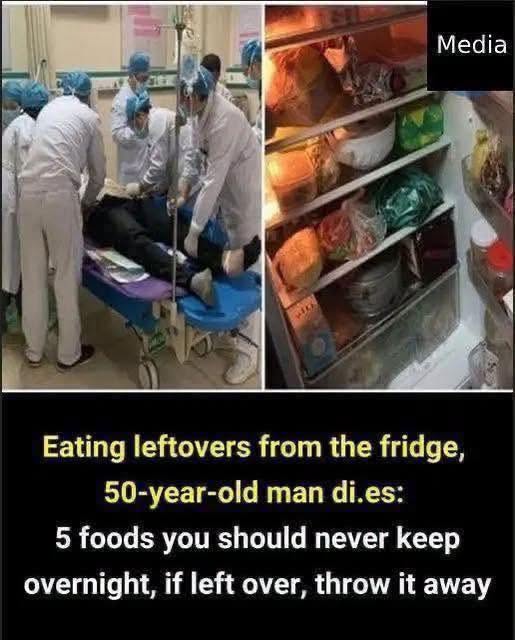
The danger may not be the food itself. Sometimes, the real problem is what happens when leftovers are stored, handled, and reheated incorrectly.
Every day, millions of people cook more food than they need and place the rest in the refrigerator for another meal. It is practical, economical, and usually perfectly safe when leftovers are handled properly.
But food safety depends heavily on what happens after cooking.
Temperature, storage time, cooling speed, and reheating practices can all affect whether leftovers remain safe to eat.
Some foods have developed a reputation for being especially dangerous when reheated, including mushrooms, leafy greens, and certain vegetable dishes. However, the bigger concern is generally not that these foods suddenly become poisonous after one night in the refrigerator.
The real issue is improper storage.
Cooked food should not be left sitting at room temperature for extended periods. Bacteria can multiply rapidly when food remains in the temperature range where microorganisms grow most easily.
That means a healthy meal can become unsafe if it is left on the counter for hours before being refrigerated.
Mushrooms are a good example.
Fresh mushrooms can be nutritious and perfectly safe to eat when properly prepared and stored. Once cooked, however, they should be cooled and refrigerated promptly rather than being left out for long periods.
The same basic principle applies to other cooked foods.
Putting leftovers into the refrigerator relatively soon after a meal helps slow bacterial growth and preserves food quality.
Leafy greens also deserve careful handling.
Spinach, kale, bok choy, and similar vegetables naturally contain nitrates. Those compounds are not automatically harmful; they are naturally present in many vegetables and are part of a normal diet.
The problem is often exaggerated online, however.
Simply reheating spinach does not automatically transform it into a dangerous food.
Proper refrigeration and handling are much more important considerations.
Cooked vegetables should be refrigerated promptly and kept cold rather than being left at room temperature for long periods.
Repeatedly allowing food to warm up and cool down can create unnecessary opportunities for bacterial growth.
Another important factor is the way leftovers are reheated.
Food should be reheated thoroughly rather than warmed only slightly. If you’re reheating a large quantity, dividing it into smaller portions can help it heat more evenly.
Microwaves can create cold spots, so stirring food and allowing it to stand briefly can improve consistency.
Soups, sauces, and other liquid dishes should be heated thoroughly, with attention to the center of the food rather than only the surface.
One common mistake is reheating the entire container every time you want another serving.
A better approach is to remove only the portion you plan to eat and keep the remaining food refrigerated.
That reduces repeated temperature changes and can help preserve quality.
Leftovers also shouldn’t be stored indefinitely.
Even when food looks and smells normal, harmful bacteria may be present. You cannot always determine food safety simply by using your senses.
For that reason, refrigerated leftovers should generally be eaten within a few days rather than being kept for an extended period.
When you’re unsure how long something has been sitting in the refrigerator, the safest option is often to throw it away.
It can be frustrating to waste food, but the cost of replacing a meal is much smaller than the potential cost of foodborne illness.
Another useful habit is labeling containers.
Writing the date on leftovers takes only a few seconds and makes it much easier to remember when the food was prepared.
Without a date, it’s surprisingly easy for containers to remain in the back of the refrigerator until no one remembers when they were cooked.
Food safety also begins before the leftovers reach the refrigerator.
Wash your hands before handling food.
Use clean utensils.
Keep raw meat separate from cooked foods.
Avoid placing cooked food back onto plates or surfaces that held raw ingredients unless they have been properly washed.
These simple habits reduce the chance of cross-contamination.
Temperature is especially important.
A refrigerator should be kept cold enough to slow bacterial growth, and perishable foods should not spend long periods sitting out.
If you’re preparing a large amount of food, dividing it into shallow containers can help it cool more quickly than leaving it in one large, deep pot.
This is particularly useful for soups, stews, casseroles, and other dishes that retain heat for a long time.
There is also a common misconception that reheating food several times automatically makes it toxic.
The reality is more nuanced.
Repeated reheating can affect texture and quality, and repeatedly warming and cooling food can increase food-safety risks if it is not handled properly.
But the primary concern is usually bacterial growth caused by improper temperature control, not the food magically becoming poisonous.
That distinction matters because fear-based claims can make healthy foods seem dangerous when they aren’t.
Vegetables such as spinach, mushrooms, and bok choy can be part of a healthy diet.
The goal is not to avoid them.
The goal is to store and prepare them safely.
If you cook vegetables for dinner and have leftovers, refrigerate them promptly.
Keep them cold.
Use clean containers.
Eat them within an appropriate period.
And reheat only the portion you intend to consume.
Those simple steps go much further toward protecting you than avoiding an entire category of nutritious foods.
People who are pregnant, very young, older, or immunocompromised may face greater risks from foodborne illness and should be especially careful about food storage and handling.
For anyone who develops severe vomiting, persistent diarrhea, high fever, signs of dehydration, bloody stools, or other serious symptoms after eating questionable food, medical advice may be necessary.
The safest approach to leftovers is not fear.
It is awareness.
Cook your food properly.
Cool it promptly.
Refrigerate it.
Keep track of how long it has been stored.
Reheat it thoroughly.
And when something has been sitting out too long or you genuinely cannot remember how old it is, don’t take the chance.
Leftovers can be one of the smartest ways to save money and reduce food waste.
They don’t need to become a source of anxiety.
The real danger is usually not the vegetable on your plate.
It’s forgetting that cooked food still needs to be treated with care after the meal is over.