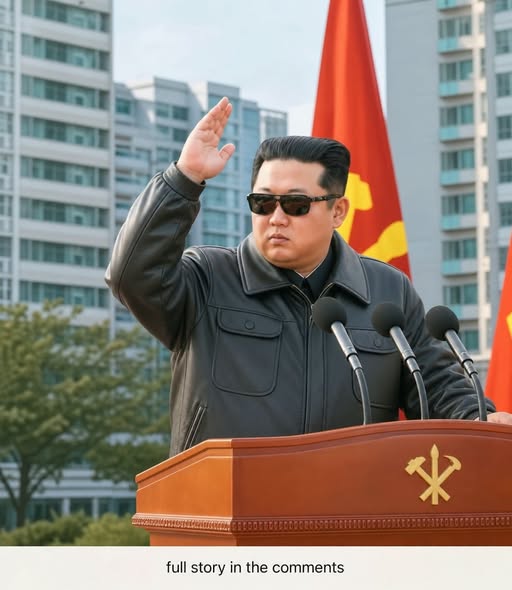
The internet exploded in fear.
Within hours, headlines screamed that Korea had ordered a military strike, and timelines filled with panic, anger, and grim predictions of war. What had begun as a single alarming claim suddenly appeared to be everywhere. Families worried about what might happen next. Veterans recognized the seriousness of anything involving military action. Comment sections turned into digital battlegrounds as people argued, speculated, and prepared themselves emotionally for a conflict that, according to the viral reports, had already begun.
But beneath all the noise, something critical was missing.
**Truth.**
The supposed “attack order” never existed.
What actually happened was not the beginning of a war, but a textbook example of how quickly misinformation can hijack public emotion. A single sensational claim—unsupported by any official statement or credible reporting—was repeated, copied, amplified, and eventually dressed up as breaking news. Each repost made the story appear more legitimate, even though repetition itself does not create evidence.
The headline became the evidence.
And that is where the danger begins.
When people see the same alarming claim appearing again and again across different accounts, it can create the illusion that everyone must know something important. The language becomes more dramatic with every repost. One person shares it as a question. Another shares it as a warning. Someone else removes the uncertainty completely and presents it as established fact.
Within hours, a rumor can look like history in the making.
In reality, South Korean officials confirmed that no attack order had been issued and reiterated their focus on diplomacy, stability, and public safety. There was no sudden military command matching the viral narrative, no official confirmation supporting the dramatic claims, and no legitimate basis for treating the rumor as the start of a war.
Yet by the time reality caught up, the emotional damage had already been done.
People had already reacted.
They had already argued.
They had already shared.
Some had already frightened friends and relatives with messages warning them about what was supposedly happening.
This is what makes misinformation about military action especially dangerous. A false celebrity rumor may cause embarrassment or temporary outrage. A fabricated military order can create something much more serious: fear.
Words such as “attack,” “strike,” “missile,” and “war” carry enormous emotional weight. They trigger instincts that operate faster than careful reasoning. People don’t necessarily stop to ask who published the claim, where the information originated, or whether an official source has confirmed it.
They simply react.
And once fear takes over, verification often becomes an afterthought.
This episode is therefore about more than one false headline. It is a warning about how fragile our sense of security can become when we trust virality over verification.
A trending topic is not proof.
A screenshot is not proof.
Thousands of comments are not proof.
And the fact that a story appears on multiple accounts does not automatically mean those accounts have independent evidence. Sometimes they are all repeating the same original mistake.
False reports about military actions don’t just mislead individual readers. They can raise anxiety, distort perceptions between countries, create unnecessary tension, and make ordinary people fear events that are not actually happening. Worse, repeated false alarms can gradually erode trust in legitimate alerts.
That may be the most serious consequence of all.
When people are exposed to enough fabricated emergencies, they can become numb. The next time a genuine warning appears, they may hesitate because they’ve already seen too many false ones.
Trust is difficult to build.
Misinformation can destroy it in minutes.
The responsibility now lies with each of us.
Pause before sharing.
Check before reacting.
Look for the original source.
Ask whether credible institutions are reporting the same thing.
And if the claim involves something as serious as military action or the possibility of war, demand a much higher standard of evidence before believing it.
The internet rewards speed.
Truth often requires patience.
That difference matters.
We don’t have to become investigators every time we open our phones, but we do need to recognize when a headline is designed to trigger emotion before thought. If something makes you instantly terrified, furious, or certain that the world is collapsing, that may be exactly when you should slow down.
Take a breath.
Read beyond the headline.
Look for confirmation.
And remember that a dramatic claim is still only a claim until evidence supports it.
The supposed attack order never existed.
But the fear it created was very real.
And that is the lesson worth remembering: in an anxious world, careful attention to sources is not merely good digital hygiene.
Sometimes, it is its own quiet act of peace.