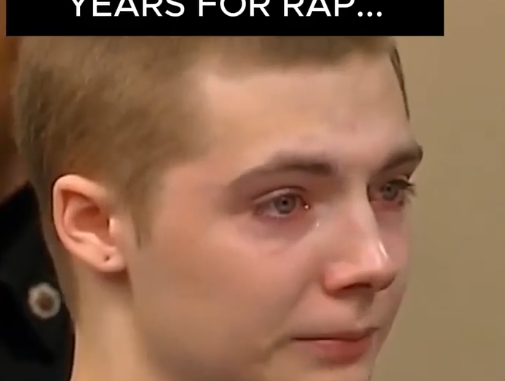
## Introduction to Youth Sentencing and Its Challenges
Youth involvement in the criminal justice system frequently prompts widespread discussion, concern, and reflection. When young individuals become involved in serious offenses and face significant legal consequences, society is forced to confront difficult questions about how justice should be administered to people who are still developing emotionally, psychologically, and socially. These cases can become especially complicated when the alleged conduct causes severe harm, leaving courts to weigh the age of the offender against the seriousness of the offense and the impact on victims.
High-profile cases involving teenagers receiving extremely lengthy prison sentences have brought these questions into public view. Such cases often generate strong and conflicting reactions. Some people see lengthy sentences as necessary expressions of accountability and public protection, particularly when multiple victims or serious acts of violence are involved. Others question whether sentencing a teenager to spend effectively the remainder of life in prison sufficiently recognizes the capacity for growth, maturity, and rehabilitation.
At the center of the debate is a difficult question: how should a justice system hold a young person accountable for serious behavior while still recognizing that adolescence is fundamentally different from adulthood?
## Understanding Adolescent Development and Decision-Making
Scientific research has demonstrated that the adolescent brain continues developing well into young adulthood. Areas involved in impulse control, emotional regulation, risk assessment, and long-term planning are still maturing during the teenage years. This means adolescents may process consequences differently from fully mature adults, particularly during emotionally intense or rapidly developing situations.
Teenagers can also be more susceptible to peer pressure and immediate rewards. The desire for social acceptance, fear of rejection, anger, excitement, or a sense of loyalty to friends can influence decisions that may seem irrational when viewed later from a calmer perspective.
This developmental reality does not mean young people are incapable of understanding right from wrong, nor does it automatically remove responsibility for harmful actions. Instead, it provides important context for understanding why adolescent behavior can sometimes be impulsive, inconsistent, or heavily influenced by circumstances.
Legal systems therefore face the challenge of considering both responsibility and development. A teenager may have caused very real harm requiring serious consequences, while still possessing a capacity for psychological and behavioral change that may be greater than that of an older adult.
Recognizing both realities simultaneously is one of the most difficult aspects of juvenile justice.
## The Nature of Lengthy Sentences in Juvenile Cases
Sentences spanning decades or even multiple centuries naturally attract public attention because the numbers can appear almost impossible to comprehend. A sentence of hundreds of years obviously extends far beyond an ordinary human lifespan, raising questions about why courts impose such enormous totals.
In many cases, these sentences result from multiple criminal counts rather than a single offense. Each charge may carry its own sentence, and courts can sometimes order those sentences to run consecutively rather than concurrently. When numerous serious offenses are involved, the combined total can therefore reach extraordinarily high numbers.
From one perspective, these sentences communicate the severity of the conduct. Each offense and each victim may be represented individually within the final sentence rather than being absorbed into a single penalty. Supporters argue that this structure recognizes the separate harm associated with each criminal act.
However, extremely long sentences also generate significant debate when the person being sentenced is young. Critics ask whether a sentence that offers virtually no realistic possibility of release leaves meaningful room for rehabilitation.
If a teenager changes profoundly after twenty, thirty, or forty years, should the justice system ever reconsider the original punishment?
Others respond that rehabilitation cannot be the only consideration. The seriousness of the offense, the suffering of victims, and the need to protect society may justify lengthy confinement even when an offender was young at the time of the crime.
The disagreement reflects a broader philosophical debate about what imprisonment is ultimately intended to accomplish.
## Balancing Accountability and Rehabilitation
The criminal justice system generally attempts to serve several purposes simultaneously. It seeks to protect the public, hold offenders accountable, deter harmful behavior, recognize the suffering of victims, and, where possible, create opportunities for rehabilitation.
These objectives do not always point toward the same outcome.
Youth cases make the conflict particularly visible.
Advocates of rehabilitation emphasize that adolescence is a period of enormous personal development. A teenager’s personality, emotional regulation, social environment, and decision-making abilities can change significantly over time. A person at 35 may bear little psychological resemblance to the impulsive 16- or 17-year-old who committed a serious offense.
Rehabilitation-focused approaches may include education, therapy, vocational training, substance-use treatment where appropriate, behavioral programs, mentoring, and opportunities to develop healthier decision-making skills.
Supporters argue that these interventions can reduce future offending and potentially allow some young offenders to eventually return to society as productive adults.
On the other side of the debate, victims and their families may understandably focus on the permanence of the harm caused. Rehabilitation for the offender cannot reverse a death, erase trauma, or restore years taken from another person’s life.
For them, accountability may require consequences proportionate to the seriousness of what occurred.
Finding a balance between those perspectives is extraordinarily difficult because justice must consider both the possibility of human change and the reality of irreversible harm.
## Emotional Dimensions Within Legal Proceedings
Courtrooms dealing with serious youth cases often become places of extraordinary emotional intensity.
For victims’ families, sentencing may represent the culmination of months or years of grief, anger, uncertainty, and legal proceedings. They may have listened to evidence describing the worst moment of their lives repeatedly and in painful detail.
Some seek the strongest possible punishment.
Others may feel conflicted.
No sentence can truly restore what was lost, and even a conviction may not provide the emotional closure people expect.
The family of the young offender experiences a different but equally complicated reality. Parents may struggle to reconcile the child they raised with the person described by prosecutors. Siblings may face shame, confusion, anger, or grief. Families can simultaneously recognize the seriousness of what occurred while still loving the person responsible.
The young defendant may also be confronting consequences that were impossible to imagine during the moment when the offense occurred.
A courtroom therefore contains far more than statutes, evidence, attorneys, and sentencing guidelines.
It contains grief.
Regret.
Anger.
Fear.
And sometimes hope.
These emotional realities do not replace legal principles, but they are important for understanding why sentencing decisions can affect entire