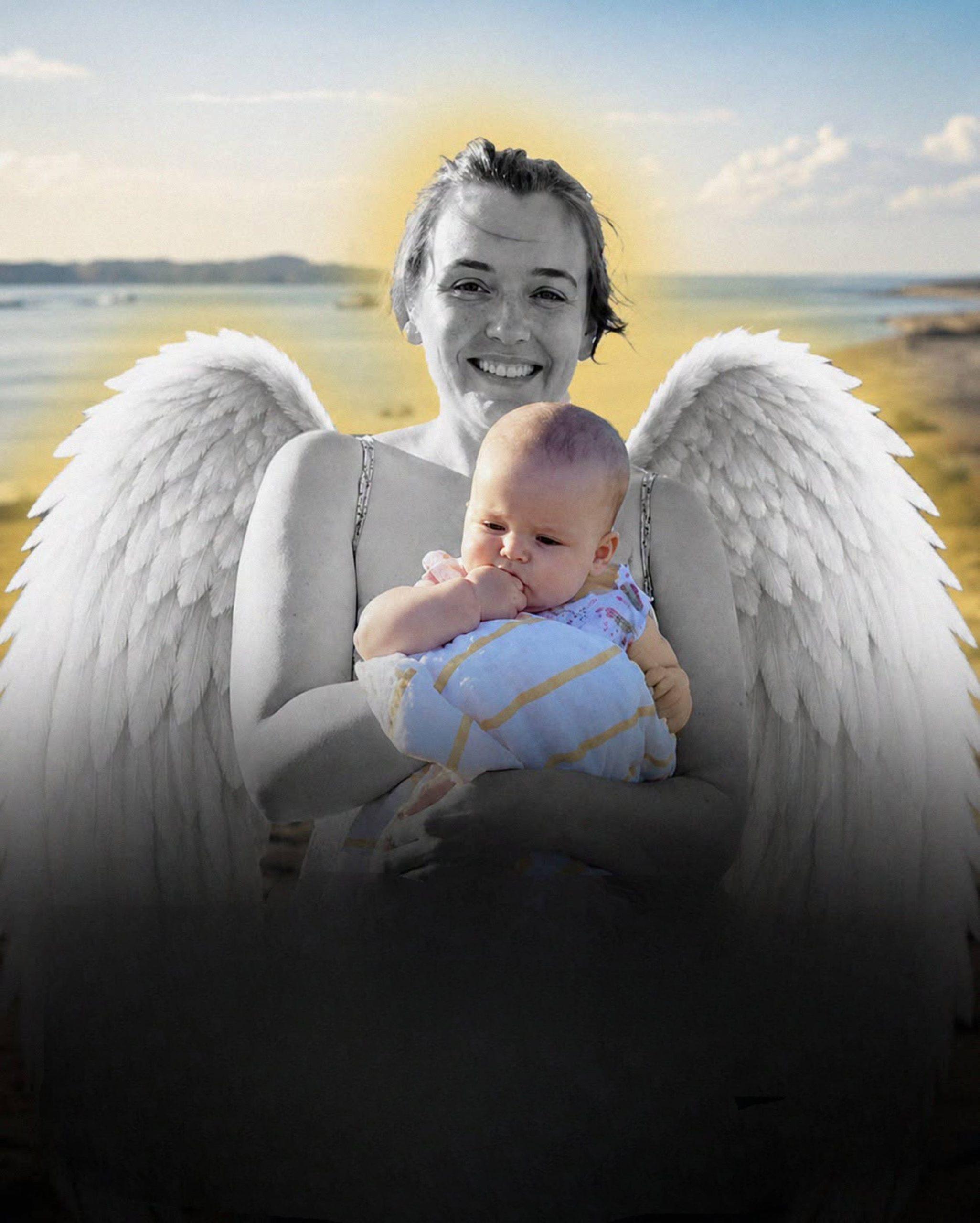
The young mother had spent five precious months holding the daughter she had always wanted, learning every little sound, every expression, and every routine that came with being Madison’s mother. She had waited so long for that life, and for a brief five months, she had it. Then, on her first day back at work, everything changed in a matter of moments. Erin was gone, and the future she had carefully imagined for her baby suddenly disappeared with her. Yet strangers who had never met Erin refused to let her daughter’s future disappear with her.
Erin Piacenti, 32, was heading home through Times Square in Manhattan on Monday, August 31, 2026, when she was fatally attacked. What should have been an ordinary commute home became the final moments of a young mother’s life. Her death left behind her husband, Frank Piacenti, and their 5-month-old daughter, Madison, without the woman at the center of their newly built family.
In the days that followed, the tragedy reached far beyond the people who had personally known Erin. A **deeply personal appeal** was shared with thousands of strangers, asking for support for the little girl who had lost her mother before she could even understand what had happened. What followed was an extraordinary response. People who had never heard Erin’s voice, met Madison, or sat beside the family decided that they could still do something to help.
Erin had paused near a street vendor selling sunglasses and baseball caps on West 41st Street when a woman approached her and stabbed her in the abdomen. The attack happened with devastating speed, turning an ordinary moment in one of Manhattan’s busiest areas into a tragedy that would leave a young family permanently changed.
The Bank of America vice president was rushed to Bellevue Hospital, where doctors fought to save her, but she could not be saved. According to the **New York Times**, police identified the attacker as 49-year-old Pamela Cisneros. For Erin’s family, however, the name of the attacker could never explain the enormous emptiness left behind.
Erin’s death would have been **unbearable** on any day. But the timing made it especially cruel. She had only just completed five months of **maternity leave** and was returning to the career she had worked so hard to build. She had spent those months doing something millions of new mothers dream of doing—being present for the earliest days of her child’s life.
Only four days earlier, Erin had shared a photograph of herself holding Madison beside Frank. The image captured a young family enjoying a moment that seemed ordinary and full of promise. Erin wrote about how grateful she felt for those months at home, which had included Madison’s baptism and family trips to Rhode Island, Maine, and Long Beach Island, New Jersey.
Those memories became even more painful after her death. The trips, the baptism, the photographs, and the quiet days at home suddenly became pieces of a short chapter that Madison would one day have to learn about through pictures and stories told by others.
Motherhood was not simply another chapter in Erin’s life. It was something she **had longed for**. Madison’s arrival five months earlier had brought her the happiness she had imagined for years, and Erin had embraced the ordinary details of being a mother. The sleepless nights, the tiny milestones, the family photographs, and the simple joy of holding her daughter had all become part of the life she never expected to lose so soon.
The **young parents** had also celebrated their second wedding anniversary that summer. They had recently returned from a family road trip and were preparing for more firsts with Madison—more holidays, more photographs, more little discoveries, and all the moments parents assume they will have years to experience.
Instead, one ordinary commute shattered those plans.
Frank was suddenly forced to face a future no new father should ever have to contemplate. He would now have to raise a daughter while carrying the grief of losing the woman he had expected to share that journey with. Every milestone Madison reaches will bring both joy and another reminder of the mother who should have been there beside them.
Frank’s grandmother described Erin to the NYT as a “beautiful, beautiful girl” who had only just given birth. Behind those words was an unbearable reality: Madison was still only five months old. She was too young to form lasting memories of her mother’s voice, her arms, her smile, or the way Erin looked at her when she held her.
One day, Madison may know her mother mostly through photographs, videos, family stories, and the memories preserved by the people who loved Erin most. Every picture from those five months may become more valuable with time, offering Madison small windows into the life she was too young to remember for herself.
The family, however, did not want the **final violence** of Erin’s life to become the only thing strangers knew about her. She had been far more than the circumstances of her death. She was a loving wife, an accomplished professional, a cherished daughter and sister, and a new mother whose world had begun revolving around her baby.
Her life was filled with moments that had nothing to do with the tragedy that eventually ended it. She had traveled with her family, celebrated important milestones, built a career, and created a home filled with plans for the future. Those are the memories her family wants to preserve—not simply the image of a woman whose life was suddenly taken.
As Frank faced a future no new father should have to contemplate, the people closest to the family began searching for **a way to carry part of that burden**. They knew no amount of money could replace Erin or give Madison back the mother she had lost. But they also understood that financial security could help protect the future Erin had wanted for her daughter.
The appeal became a way for strangers to stand beside the family from a distance. People who had never met Erin began contributing, sharing the story, and helping in whatever way they could. Their response carried a simple message: Madison’s future did not have to be defined entirely by the tragedy that took her mother.
For Frank and the rest of Erin’s family, that support could never erase the pain. It could not bring Erin home or give Madison more time in her mother’s arms. But it could provide something Erin herself would have wanted—an opportunity for her daughter to grow up with stability, care, and the chance to experience the future her mother had once dreamed about.
In the end, the most powerful part of the response was not simply the amount strangers were willing to give. It was the fact that people who had never known Erin personally looked at the life she left behind and decided that her little girl deserved to be remembered, protected, and given every possible chance.
Erin’s time as a mother lasted only five months.
But the love she poured into those five months does not disappear with her.
It remains in Frank, in the family who will tell Madison who her mother was, in the photographs she left behind, and in the strangers who decided that even after Erin was gone, they would help carry her hopes for her daughter forward.