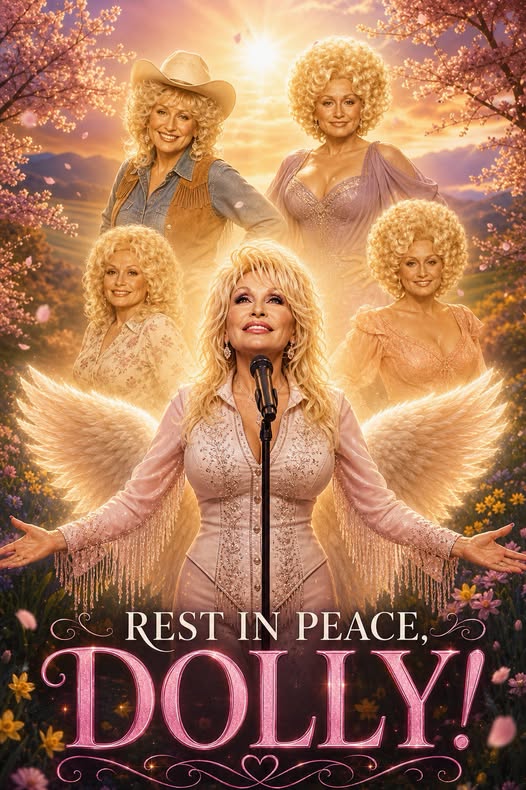
Her voice was fading, but her plans were not. In one heartbreaking video, Dolly Parton’s nephew delivered the news she had quietly prepared him to share years earlier. The promise had been made long before anyone imagined he would actually have to keep it. Just days before her death, Dolly had spoken to fans about the future, assuring them that she still had “so many things” left to do. Then, almost without warning, everything changed.
Dolly Parton’s death, announced by her nephew Brin Seaver in a solemn Instagram video, felt like the closing of a chapter that millions of people never wanted to see end. Seaver, who was not only part of her family but had also served for years as the head of her security, carried the extraordinary burden of telling the world that one of its most beloved entertainers was gone.
His message was filled with grief, but it was also shaped by Dolly’s faith. Rather than portraying her final moments only through sadness, he described her passing as a return to the light she had believed in throughout her life. He said Dolly had “lived in the light” and was now in the arms of Jesus, reunited with her beloved husband, Carl Dean, and with other family members she had lost over the years.
For the millions who had followed Dolly’s career, those words offered a different way to understand the loss. She had spent decades singing about heartbreak, faith, hope, love, and the possibility of something better beyond the pain of the present moment. In the end, her family chose to remember her through those same themes.
Her final chapter was especially difficult because Dolly never seemed like someone who was preparing to stop. She continued thinking about new projects, new songs, new ideas, and new ways to give back. Even as illness and grief entered her life, she kept looking forward rather than allowing hardship to completely define her.
That determination had been part of her character since childhood. Dolly came from humble beginnings in the mountains of Tennessee, growing up in a large family with very little money. Yet those circumstances never convinced her that her future had to remain limited. She transformed the stories of poverty, family, faith, and struggle into music that eventually reached virtually every corner of the world.
Her rise was extraordinary, but the way she handled success may have been even more remarkable. Fame did not erase her connection to where she came from. Instead, she carried those memories with her and used her success to help others. Through philanthropy, literacy programs, scholarships, and countless acts of generosity, she repeatedly demonstrated that success meant more when it could be shared.
Even during periods of personal loss, she continued to work. The death of Carl Dean brought a devastating loss to the woman who had spent nearly six decades married to him. Yet Dolly continued moving forward, finding ways to honor the past while still imagining the future.
That ability to keep creating through grief became one of the most recognizable parts of her personality. She understood that sadness and hope could exist at the same time. A person could mourn someone deeply and still wake up the next morning with something left to accomplish.
That may be why her final words and plans feel so poignant to fans. She had not mentally placed herself at the end of her story. She was still looking ahead. Still imagining. Still planning. Still believing there were things worth creating and people worth helping.
Now those unfinished plans have become part of the sadness surrounding her death. Fans are left wondering what songs she might have written, what projects she might have completed, what stories she might have told, and what other acts of generosity might have quietly emerged from her imagination.
But perhaps her greatest unfinished project was never a particular song or business venture. It was the example she spent an entire lifetime creating.
Dolly showed that you could come from poverty without being defined by it. You could become famous without losing your humanity. You could experience heartbreak without surrendering your capacity for love. You could grow older without giving up on dreams.
And perhaps most importantly, she showed that a meaningful life is not measured only by how long it lasts, but by how much of yourself you pour into the lives of others.
Her voice may have gone quiet, but everything she gave the world continues to speak. Her songs remain in the memories of generations. Her stories continue to make people laugh and cry. Her generosity continues through the people and causes she supported.
Dolly Parton spent her life turning pain into music, faith into comfort, and success into service. Even in death, that message remains unchanged: keep dreaming, keep giving, keep loving, and keep walking toward the light.
A life poured out in song, love, laughter, and service never truly leaves the stage. It simply becomes part of the audience forever.