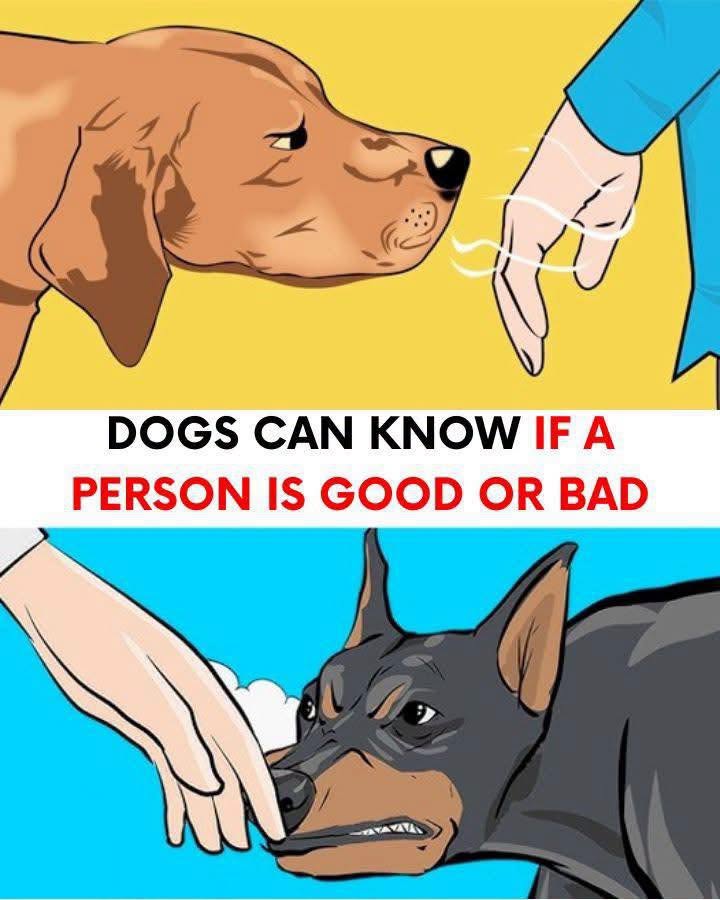
Dogs have lived beside humans for thousands of years, and during that extraordinary partnership they’ve become remarkably skilled at watching us.
They notice where we look.
They respond to our voices.
They study our gestures, expressions, routines, and behavior.
And research suggests their social intelligence may be more sophisticated than many people once assumed.
One fascinating example involves trust.
In experiments, researchers have shown dogs containers while signaling that food was hidden inside.
When the information was reliable, dogs readily followed the human’s cue.
But after repeatedly receiving misleading information, some dogs became less willing to follow that person’s directions.
In other words, dogs can learn something surprisingly important:
**This person isn’t always reliable.**
That doesn’t necessarily mean a dog understands “lying” in the complicated moral sense humans do.
But it does suggest that dogs remember whether someone’s signals have been useful and adjust their behavior accordingly.
Dogs also watch how humans interact with one another.
Experiments have explored whether dogs respond differently to people who cooperate with—or refuse to help—their owners.
Some findings suggest dogs can use these social interactions when deciding whom to approach.
That’s remarkable because the dog isn’t necessarily participating in the original exchange.
It’s watching.
Collecting information.
And then making its own decision.
Dogs are also extremely sensitive to emotional cues.
They can distinguish aspects of human facial expressions and vocal emotion, while combining information from our voices, posture, movements, and even scent.
That’s one reason your dog may behave differently when you’re frightened, excited, angry, or distressed.
You might say absolutely nothing.
Your dog still has information to work with.
Even human stress can leave chemical signals.
Research indicates dogs can detect changes in human odor associated with emotional states such as stress.
So when someone says, “My dog knew something was wrong before I said anything,” there may be a perfectly natural explanation.
The dog wasn’t reading their mind.
It was reading everything else.
Our breathing changes.
Our posture changes.
Our movements change.
Our voice changes.
Our scent can change.
And while humans frequently overlook those tiny signals, dogs live in a sensory world where many of them are difficult to hide.
Still, there’s an important limit.
A dog avoiding someone doesn’t prove that person is dangerous, dishonest, or secretly malicious.
Dogs can react negatively because of unfamiliar smells, unusual clothing, previous experiences, nervous body language, loud voices, or countless other factors.
They’re extraordinary observers—not supernatural judges of human morality.
But perhaps reality is interesting enough without giving them magical powers.
Your dog has spent years learning you.
It knows the sound of your footsteps.
It recognizes patterns in your day.
It notices when your behavior changes.
And it continuously learns which people and situations have historically been safe, rewarding, frightening, or unpredictable.
That’s why the human-dog bond can sometimes feel almost unsettlingly intimate.
Your dog doesn’t need to understand every word you speak.
It has something else:
thousands upon thousands of hours watching how you live.
So no, your dog probably can’t expose every liar who walks through your door.
But it may notice things you’ve missed.
And sometimes, while we’re busy listening to what people say, **our dogs are quietly watching what they do.**