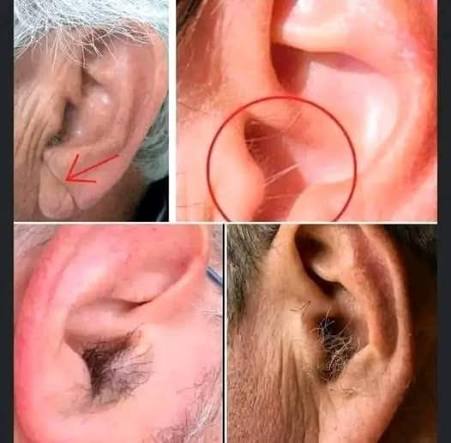
You catch your reflection one ordinary morning while getting ready for the day. At first, nothing seems unusual. Then something small immediately grabs your attention. There, growing from the edge of your ear, is a single dark, wiry strand of hair that you could swear wasn’t there yesterday. You lean closer to the mirror, tilting your head from side to side, wondering if you’re imagining it. A closer look reveals another tiny hair hiding nearby. Suddenly, a flood of questions races through your mind. Is this simply another sign that you’re getting older? Could it be caused by hormones? Is something wrong with your health? Or is it one of those strange changes no one ever warns you about?
For many people, discovering ear hair for the first time feels surprisingly emotional. It can seem like one of those unmistakable reminders that the body is changing in ways we cannot completely control. Unlike gray hair or wrinkles—changes we often expect—ear hair tends to arrive quietly and unexpectedly. Because it isn’t discussed very often, many people immediately assume something unusual or even unhealthy is happening. In reality, the explanation is far more fascinating and far less alarming than most imagine.
The story of ear hair actually begins long before you’re born. During early development in the womb, the human body becomes covered in a delicate layer of incredibly soft hair known as lanugo. This fine coat serves several important purposes while a baby is developing, helping regulate temperature and protecting the fragile skin. Lanugo covers nearly the entire body, including the face and ears. Although most of this soft hair naturally disappears before or shortly after birth, the tiny hair follicles that produced it remain permanently embedded beneath the skin, quietly waiting throughout life.
For many years, these follicles stay almost invisible. The hairs they produce are so fine, light, and short that most people never notice them at all. Then, as the body ages, biological changes gradually begin influencing how those follicles behave. Hormones, particularly androgens such as testosterone, play a major role in this transformation. As hormone levels and the body’s sensitivity to them change over time, some previously inactive follicles become more active, producing hairs that are thicker, darker, and easier to see.
This is especially common in men, although women may also notice changes as they grow older. Interestingly, it’s often not simply the amount of testosterone that matters, but rather how individual hair follicles respond to hormonal signals. Genetics also plays a significant role. Some people inherit follicles that remain nearly invisible throughout life, while others naturally develop more noticeable ear hair as part of the aging process. In other words, the appearance of ear hair often reflects inherited biology rather than anything a person has done or failed to do.
Because ear hair tends to become visible later in life, many people associate it with aging itself. That connection can make it feel embarrassing, especially in cultures that place enormous emphasis on youthful appearance. Some people worry others will interpret visible ear hair as poor grooming or inadequate hygiene. Fortunately, those assumptions are simply not true. Ear hair is not caused by being unclean, nor is it generally a sign of illness. For the overwhelming majority of healthy adults, it represents nothing more than a completely natural biological change.
In fact, ear hair continues serving important functions throughout life. The tiny hairs around the outer ear help trap dust, pollen, dirt, and other small particles before they travel deeper into the ear canal. Working together with earwax, these hairs form part of the body’s natural defense system, reducing the amount of debris that reaches delicate inner structures. This protective barrier helps keep the ears cleaner while lowering the risk of irritation from environmental particles.
Problems generally arise only when ear hair becomes unusually excessive or begins interfering with normal ear function. Long hairs inside or near the ear canal can sometimes trap larger amounts of earwax, allowing it to build up over time. In certain cases, excessive hair may also make it more difficult for hearing aids or earbuds to fit comfortably. Occasionally, trapped wax combined with dense hair can contribute to feelings of fullness or temporary hearing difficulties until the blockage is safely removed.
Fortunately, managing ear hair is usually simple and safe when done correctly. Many people choose to trim visible hairs using specially designed grooming scissors or electric ear-hair trimmers that are made for delicate areas. Others prefer professional waxing, which can provide longer-lasting results when performed by trained specialists. For those seeking a more permanent solution, laser hair removal may significantly reduce future growth after several treatment sessions.
However, experts generally advise against plucking hairs located deep inside the ear canal. Pulling hairs out by the root can irritate the sensitive skin, create tiny injuries, or increase the risk of infection. The ear canal contains delicate tissues that are easily damaged, making gentle trimming a much safer option than aggressive removal. Preserving some of the natural hair is also beneficial since it continues contributing to the ear’s protective defenses.
It’s also important to recognize when ear hair may warrant medical attention. While ordinary age-related growth is completely normal, sudden changes accompanied by pain, swelling, unusual discharge, hearing loss, or persistent irritation should be evaluated by a healthcare professional. In those situations, the symptoms are usually related to an underlying ear condition rather than the hair itself. Fortunately, such cases are far less common than routine age-related hair growth.
Ultimately, the appearance of ear hair is one of countless reminders that the human body is constantly changing. Like gray hair, laugh lines, or changes in vision, it reflects a lifetime of biology quietly unfolding rather than something to fear or hide. Understanding why these tiny strands appear can replace unnecessary embarrassment with knowledge and reassurance.
The next time you notice a stubborn little hair peeking from your ear in the mirror, remember that it isn’t your body betraying you. It’s simply another chapter in the remarkable story of how humans grow, adapt, and age. With a little understanding and gentle care, something that once felt awkward or even shameful becomes nothing more than a small, manageable detail of everyday life—proof that your body is continuing to do exactly what it was designed to do.