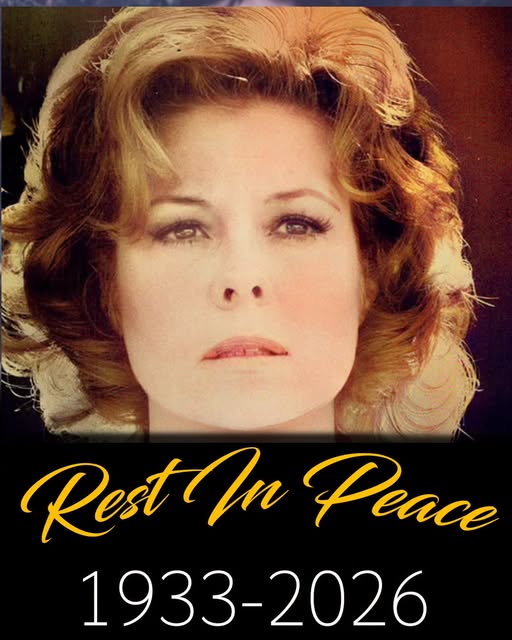
Dawn Greenhalgh, the gifted actress who brought warmth, grace, and personality to Queen Celeste in *Babar* and later appeared in beloved productions such as *Anne of Green Gables*, has died at the age of 93. Her passing marks the end of a remarkable life that stretched across continents, generations, and some of the most important chapters in Canadian theater and television. Although audiences often remember her for the gentle and reassuring characters she portrayed, the story of her own life was filled with extraordinary challenges, unexpected journeys, and a determination that carried her through periods of uncertainty and change.
Greenhalgh died at her home in Toronto on November 6, surrounded by family and friends. Her death brings to a close a career that helped shape Canada’s performing arts for decades. For many viewers, particularly those who grew up watching animated television and classic Canadian productions, her voice and performances became familiar parts of childhood. Yet behind the characters she brought to life was a woman whose personal history was far more dramatic than the calm, compassionate figures she often portrayed.
Born in Shanghai in 1933, Greenhalgh entered the world during a period of enormous political tension and uncertainty. Her childhood unfolded against the backdrop of war, and she experienced events that would permanently shape her understanding of life, security, and survival. The Japanese occupation of Shanghai brought fear and disruption to countless families, and Greenhalgh’s early years were marked by the instability that surrounded the city. She even spent time in an internment camp, an experience that placed extraordinary difficulties in the path of someone who was still very young.
For a child, such circumstances could have easily defined the rest of her life. Instead, Greenhalgh would eventually find a way to turn a difficult beginning into a story of resilience and reinvention. Her early experiences exposed her to the fragility of ordinary life and the uncertainty of living in a world where circumstances could change without warning. Those experiences would remain part of her personal history even as she moved toward a completely different future.
Another major turning point came in 1949. As Communist forces advanced toward Shanghai, Greenhalgh and her family faced another period of uncertainty. Leaving the city meant abandoning much of what was familiar. She fled with little more than a suitcase and a handful of records, carrying only a small collection of personal belongings into an unknown future. The decision to leave was not simply a change of address. It represented the beginning of another chapter in a life that had already been shaped by displacement and upheaval.
The journey away from Shanghai required courage and an ability to adapt. Everything familiar could be left behind in a matter of moments, and the future offered no guarantees. Yet Greenhalgh continued forward. She rebuilt her life first in Hong Kong and eventually in Montreal, where she began establishing the foundations of the career that would make her a respected figure in Canadian performing arts.
Montreal offered her an opportunity to pursue education, discover new interests, and develop her artistic abilities. It was there that she began finding her voice as a performer. The transition from a childhood shaped by war and displacement to a life devoted to theater was a remarkable transformation. Rather than allowing the uncertainty of her early years to limit her ambitions, she embraced a new environment and began working toward a future that she could shape for herself.
Her talent and dedication soon brought her into the world of professional theater. By the age of 19, she had become one of the founding members of the Stratford Festival’s acting company. This was a significant achievement for such a young performer and placed her among the artists involved in building what would become one of Canada’s most important theatrical institutions.
The Stratford Festival offered an environment where serious performers could explore demanding roles, develop their craft, and contribute to a growing theatrical tradition. For Greenhalgh, joining its early company was more than a professional opportunity. It was the beginning of a long relationship with Canadian theater, one that would help establish her reputation as an actress with intelligence, versatility, and a strong stage presence.
Over the years, she became known for her ability to move between different kinds of performances. Her work was not limited to one style or character type. She could bring emotional depth to dramatic roles, warmth to family-oriented productions, and personality to characters that audiences remembered long after a performance ended. Her career reflected the qualities of a performer who understood that acting was not simply about delivering lines, but about making characters feel believable and human.
Her appearances in television productions helped introduce her to audiences far beyond the theater. One of the projects associated with her career was *Anne of Green Gables*, a story that holds a special place in the hearts of many viewers. The production’s enduring appeal came from its emotional storytelling, memorable characters, and portrait of family, friendship, and belonging. Greenhalgh’s involvement connected her with a work that would continue to be appreciated by audiences across generations.
She also became widely recognized for her voice work in *Babar*, where she portrayed Queen Celeste. Animated characters often become especially meaningful to audiences because their voices are heard repeatedly throughout childhood. A familiar voice can create a sense of comfort and connection, even when viewers do not know the name of the performer behind it. Through Queen Celeste, Greenhalgh contributed to a world that introduced young audiences to imagination, kindness, family, and adventure.
For many people, discovering that an actress they remember from childhood has passed away brings back memories of an earlier time. A television program, a familiar character, or a voice heard years ago can suddenly become connected to a real person whose life extended far beyond the screen. Greenhalgh’s work offered that kind of connection. Her performances became part of the memories of people who may never have known the extraordinary journey she had experienced before becoming an actress.
What makes her story particularly moving is the contrast between the uncertainty of her early life and the stability she eventually created through her work and relationships. She experienced war, displacement, and the difficult process of beginning again in unfamiliar places. Yet she went on to build a career rooted in creativity, collaboration, and storytelling. Her life demonstrated that a person’s beginnings do not necessarily determine the limits of their future.
There is also something especially meaningful about the fact that Greenhalgh spent so much of her professional life helping bring stories to others. Theater and television allow audiences to experience emotions, relationships, and circumstances beyond their own lives. Through her performances, she helped create moments of laughter, reflection, and comfort for people she would never meet. Some viewers encountered her work in a theater, others through television, and many through the animated characters that became part of their childhood routines.
Her legacy is therefore larger than a list of roles or productions. It includes the contribution she made to Canadian cultural life, the generations of performers and colleagues who shared the stage with her, and the audiences who found something memorable in her work. Her career reflected the importance of artists who build their reputations through consistency, talent, and a genuine commitment to their craft rather than through constant public attention.
As news of her death reaches those who admired her, many will remember the warmth she brought to her characters. Others will reflect on her contribution to the Stratford Festival and the wider Canadian entertainment industry. But her personal journey deserves to be remembered just as much as her professional achievements.
Dawn Greenhalgh’s life began in a world marked by conflict and uncertainty. She left Shanghai with only a few belongings, rebuilt her future in new countries, and eventually became part of Canada’s theatrical history. From the stages of the Stratford Festival to television productions and the beloved voice of Queen Celeste, she created a body of work that reached audiences in different ways.
At 93, she leaves behind a legacy shaped by artistic dedication, personal courage, and the quiet strength of someone who repeatedly found the determination to begin again. Her story reminds us that behind every familiar face and voice is a life filled with experiences that audiences may never fully see. And although her voice will no longer bring new characters to life, the performances she left behind will continue to connect her with the people who remember her.