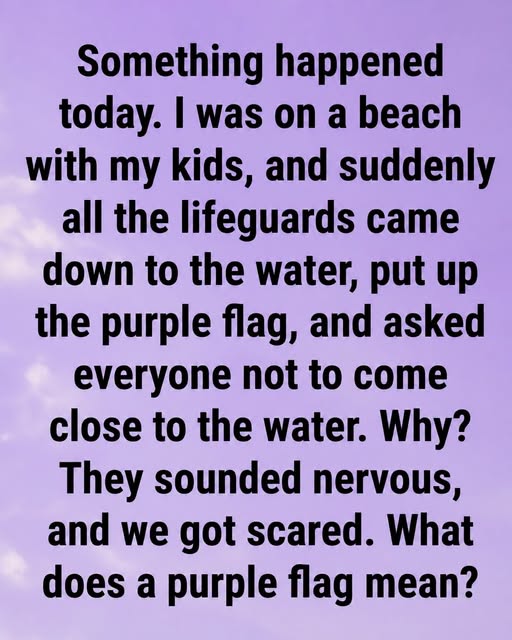
The sun is bright, the waves seem gentle, and the beach looks almost perfect—and yet the warning can be almost invisible. A single purple flag snapping in the wind may be the only obvious sign that something beneath that beautiful surface has changed. To someone arriving for a relaxing day by the water, it might look like nothing more than a piece of fabric moving in the breeze. But that small flag can carry a message that should never be ignored.
It can be the difference between an ordinary beach day and a trip to the emergency room.
You may not see the danger coming.
You may not hear it.
You may not smell it.
And in many cases, you may not feel anything until the moment contact happens.
That is what makes ocean hazards so unsettling. The water can look calm while conditions beneath the surface are anything but. There may be no dramatic waves, no dark clouds, and no obvious sign that anything is wrong. The shoreline can appear completely inviting while small, potentially dangerous creatures move silently through the shallows.
Beneath that calm surface, the shoreline can transform into a minefield of stings, venom, and unseen movement.
The purple flag is not theater. It is not simply a colorful decoration added to the familiar beach-warning system. It is a blunt admission that marine life or other hazardous conditions may be present in the water and that swimmers should exercise additional caution.
Jellyfish can drift silently into crowded shallows, carried by currents that are almost impossible to notice from the beach. Their presence may not be obvious until someone feels the sudden, painful contact of a tentacle. A swimmer can enter perfectly clear-looking water and encounter one without ever seeing it beforehand.
Then there are stingrays.
They can disappear beneath a thin layer of sand, becoming almost indistinguishable from the ocean floor. To someone walking through shallow water, the bottom may appear completely empty. But an animal can be resting only inches away, hidden beneath the surface and reacting defensively if stepped on.
Sea urchins present another kind of danger. Their spines can wait among rocks, reefs, or shallow areas where swimmers and beachgoers may place their feet without realizing what is underneath them. What looks like an ordinary patch of ocean floor can contain sharp hazards that are difficult to see until it is too late.
This is why you are not meant to “trust your eyes” on a day when a purple flag is flying.
The water does not have to look dangerous to be dangerous.
Instead, you are meant to trust the warning system—and the lifeguards who raised it.
Lifeguards are watching conditions from a perspective that beachgoers often don’t have. They may have seen marine life in the area, received reports from other swimmers, noticed changing currents, or been alerted to conditions that aren’t visible from the shoreline. A warning flag allows them to communicate that information quickly without needing every person on the beach to understand exactly what is happening beneath the surface.
Ignoring the flag because the ocean “looks fine” is therefore a dangerous gamble.
Respecting that signal doesn’t mean surrendering your beach day.
It means reshaping it.
Instead of immediately walking into the water, talk to the lifeguard. Ask what the flag means at that particular beach and what specific hazards have been reported. Learn where the risk appears to be highest and whether there are areas that are safer for swimming or wading.
If you do enter shallow water where it is permitted, take precautions.
Shuffle your feet rather than taking large steps. This can help reduce the chance of surprising a stingray resting beneath the sand. Consider covering exposed skin when jellyfish are a concern, and keep children close enough that you can react quickly if conditions change.
Most importantly, pay attention to changing instructions.
A beach can go from apparently calm to unsafe surprisingly quickly. Currents can shift, marine animals can move into the shallows, weather can change, and lifeguards may update their warnings as conditions develop.
The most important decision may sometimes be the simplest one:
Leave the water.
There is no shame in stepping back onto the sand when a warning is issued. The ocean will still be there another day. A few minutes of swimming are never worth turning a relaxing afternoon into an emergency.
And remember that a beautiful ocean can still be unpredictable.
The sunlight can sparkle across the water. Children can laugh along the shoreline. Waves can roll gently onto the sand. Everything can look peaceful while hazards remain almost completely invisible.
That is precisely why warning systems matter.
The flag is giving you information your senses may not be able to provide.
The ocean does not owe you safety.
It does not care whether you planned the beach trip for months, whether the weather is perfect, or whether you have traveled a long distance to reach the shoreline. Nature does not adjust its risks simply because the conditions look beautiful.
But you can adjust your behavior.
You can listen.
You can ask questions.
You can keep an eye on the water and respect the people whose job is to monitor it.
And if the warning says the ocean has changed, believe it—even when your eyes tell you everything looks normal.
Because the goal isn’t to be afraid of the sea.
It is to understand it.
A warning flag doesn’t have to ruin your beach day. It can simply change what that day looks like. Stay on the sand. Enjoy the view. Watch the waves. Spend time with your family. Or wait until conditions improve.
The important thing is making sure that when the day is over, you can walk away from the beach under your own power.
Carrying memories instead of scars.
Sometimes the most important safety signal on a beautiful beach is the one that seems easiest to ignore.