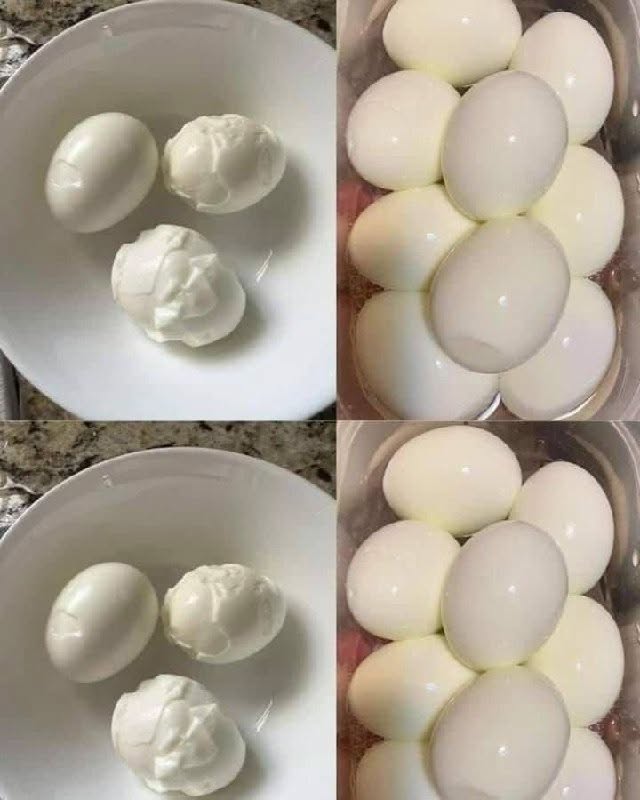
Cook’s Smart Trick for Easily Peeling Hard-Boiled Eggs
Peeling hard-boiled eggs can be surprisingly frustrating. Sometimes the shell comes off in large pieces, leaving a smooth egg behind, while other times it sticks stubbornly to the white, tearing the surface and making a simple kitchen task unnecessarily difficult.
Fortunately, experienced cooks have a few simple tricks that can make peeling hard-boiled eggs much easier. With the right cooking technique, proper cooling, and a little patience, you can enjoy neatly peeled eggs without struggling with tiny shell fragments.
The Secret Starts Before You Boil the Eggs
One of the most important factors in peeling eggs easily is how they are cooked and cooled. Although many people focus entirely on removing the shell, the process actually begins when the eggs go into the pot.
For consistent results, place the eggs in a saucepan and cover them with water. Bring the water to a boil, then reduce the heat or turn it off, depending on your preferred cooking method. Allow the eggs to cook until the yolks reach your desired level of firmness.
Once the eggs are cooked, the next step is especially important: cooling them quickly.
The Ice-Water Trick That Makes Peeling Easier
One popular method used by home cooks is to transfer the cooked eggs immediately into a bowl of ice water.
Here’s how to do it:
Prepare an ice bath. Fill a large bowl with cold water and several ice cubes.
Transfer the eggs. Once cooking is complete, carefully place the eggs into the bowl.
Let them cool. Leave them in the ice water for approximately 10–15 minutes.
Crack the shell gently. Tap the egg against a hard surface, then roll it lightly to create small cracks around the shell.
Peel under running water. Starting at the wider end, where an air pocket often forms, carefully remove the shell while allowing a little cool water to flow over the egg.
The rapid cooling helps stop the cooking process and can make the eggs more comfortable to handle. Peeling under water may also help loosen small pieces of shell and rinse them away.
Why Do Some Hard-Boiled Eggs Peel So Badly?
The freshness of the eggs can make a difference. Very fresh eggs are often more difficult to peel because the egg white tends to adhere more firmly to the inner shell membrane.
Eggs that have been refrigerated for a little longer may be easier to peel, although results can vary depending on storage and cooking conditions.
Another factor is the membrane beneath the shell. When it separates cleanly from the egg white, the shell often comes away in larger pieces. When it sticks, the white may tear as you peel.
That is why combining an appropriate cooking method with thorough cooling and careful peeling can produce better results than simply cracking the shell and pulling it away.
An Extra Trick: Start Peeling at the Wider End
If you often struggle to find a place to begin, try peeling from the wider end of the egg.
This end usually contains a small air pocket that can provide a convenient starting point. After gently cracking the shell, slip your finger beneath the membrane and work around the egg.
If the shell is particularly stubborn, try peeling it under a thin stream of cool water or submerging the egg in a bowl of water while removing the shell.
Avoid squeezing the egg too firmly, as this can damage the delicate white and leave you with an uneven surface.
Should You Add Salt or Vinegar to the Water?
Some cooks recommend adding salt or vinegar when boiling eggs. These ingredients may have uses in certain cooking situations, but neither is a guaranteed solution for easy peeling.
Vinegar can help egg whites coagulate more quickly if an egg cracks during cooking, while salt is commonly added as a traditional kitchen measure. However, the freshness of the egg, the cooking technique, and the cooling process are often more relevant to how easily the shell comes off.
If your goal is perfectly peeled eggs, it is worth experimenting with different methods to discover what works best with your cookware and the eggs you typically buy.
The Best Way to Store Hard-Boiled Eggs
If you prepare eggs ahead of time, food safety is just as important as easy peeling.
Refrigerate hard-boiled eggs within two hours of cooking, and keep them at 40°F (4°C) or below. According to standard food-safety guidance, hard-boiled eggs can generally be stored in the refrigerator for up to one week.
Keeping the eggs in their shells until you are ready to eat them can help protect them from contamination and prevent them from drying out.
A Simple Kitchen Trick Worth Remembering
You do not need expensive gadgets or complicated techniques to make peeling hard-boiled eggs easier. Start with a suitable cooking method, cool the eggs promptly in ice water, crack the shell gently, and begin peeling at the wider end.
These small adjustments can help you achieve smoother results when preparing eggs for salads, sandwiches, breakfast, or snacks.
The next time you boil eggs, try the ice-water method and peel them under cool running water. You may find that a task that once felt tedious becomes much quicker and easier.