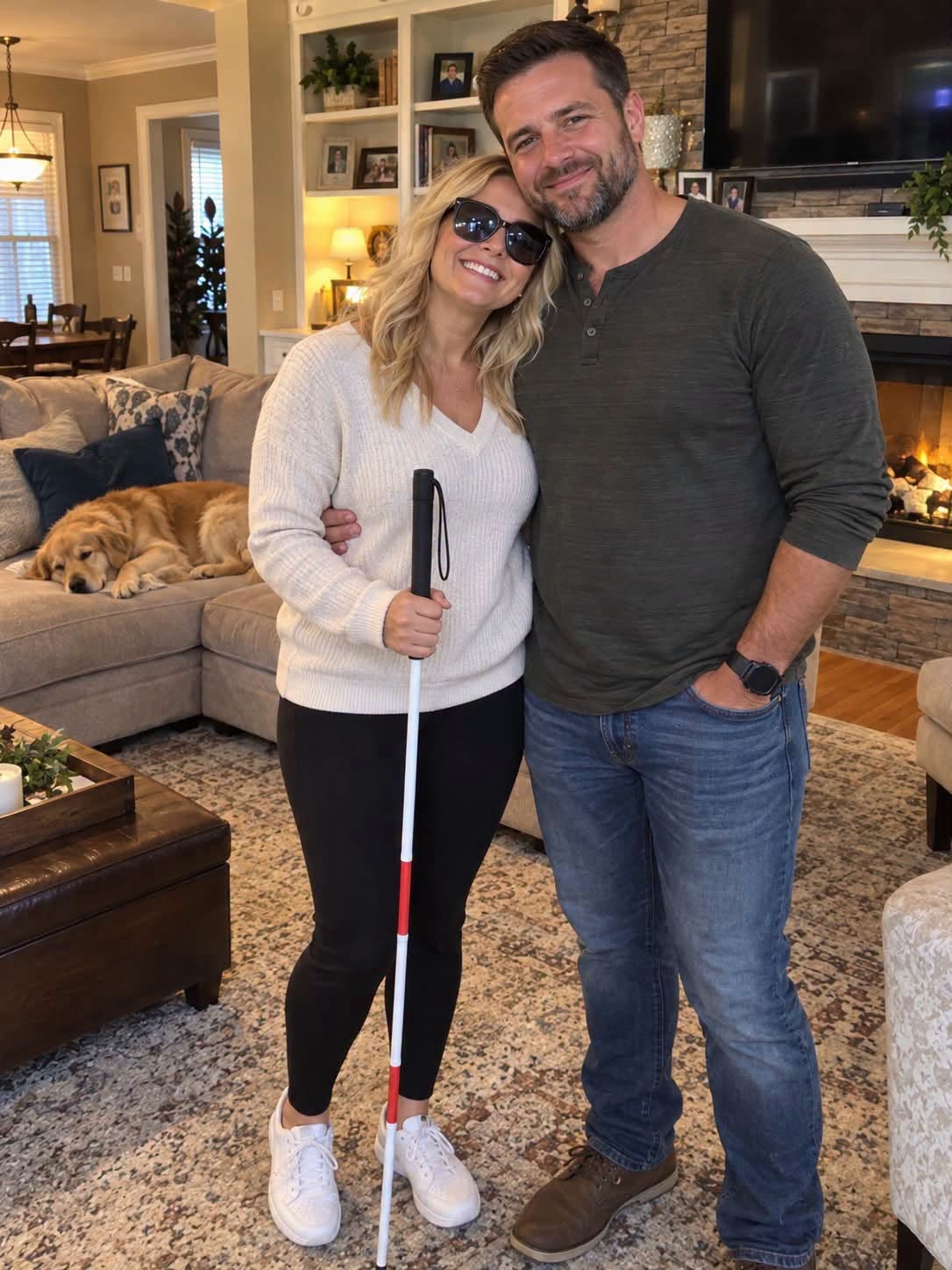
Ashton pulled the envelope away just as my fingernail caught on the raised label I had put there. The paper scraped across the kitchen table.
“That one goes in the account pile,” I said.
“I know.” He set it down farther from my hand.
At 7:10 on October 4, we had two piles of mail between us. I had sorted the envelopes by their labels, and Ashton was opening the ones I could not identify by touch.
“What was the return address?” I asked.
He picked up the envelope again. “An attorney.”
I held out my hand. “Why would an attorney write to us about the account?”
“It concerns our finances.” He tucked the envelope beneath another piece of mail.
“Which account?”
“The household account. Callie, let me finish sorting these.”
I ran my finger along the table until I found the edge and pulled my chair closer. I had labeled that envelope myself after asking him to read the address the week before. He had said we might need the account number handy.
“Did you call the attorney?” I asked.
“I spoke to someone, yes.”
“About what?”
He opened another envelope, and a sheet slid across the table. “The electric bill is due on the fifteenth. I can pay it Friday.”
“Ash, I asked about the attorney.”
“I am trying to work out what we can afford.”
His chair moved back. He went to the counter and poured coffee into my cup, then brought it to the place where I always kept it, to the right of my plate.
“Is the account short?” I asked.
“No. There is enough for the bills.”
“Then why do we need an attorney?”
He touched the envelope against the tabletop to square its edges. “I have to get ready for work. We can talk later.”
The label strip had a notch I had cut at one end, so I could tell it from the labels on the other envelopes. When I reached for it again, the paper was gone.
At eight, I heard Ashton checking the entry table. He set down his wallet, then his keys beside it.
“Badge, phone, lunch,” he said. He checked his coat pockets. “Badge.”
“You had it clipped to your shirt yesterday.”
“That shirt is in the laundry.”
“Did you check the kitchen counter?”
“Twice.”
I took my cane and followed the familiar path to the entry. The hall runner ended just before the table, and I used its edge to turn.
“Is your jacket on the hook?” I asked.
“Yes.”
“The blue one?”
“The blue one.”
I reached up until my hand found the sleeve, then followed it to the pocket. The badge was clipped inside, its cord caught on the lining.
Ashton let out a breath. “I checked that pocket.”
“You checked the outside of it.” I worked the clip free and handed it to him.
“Thank you. I would have spent ten minutes at the gate explaining myself.”
“You could tell them you have a wife who charges a finder’s fee.”
“How much?”
“Coffee on Saturday.”
“Done.” He slipped the badge over his head, then picked up his lunch bag.
I heard paper rustle near his wallet. “Is that the account envelope?”
“Yes. I need it today.”
“Will you bring it back?”
“Of course.”
“With whatever the attorney sent?”
He took a moment before answering. “I will bring back what I can.”
I stood with my hand on the hook after he left. A household account with enough in it for the bills did not seem to need an attorney. I called Marisol and asked whether her offer of a ride to the shop still stood.
At noon, she put a bucket on the counter at Bloom and Thistle and nudged the stems toward me. Water tapped against the metal as I lifted a handful out.
“Five dollars for the daisies,” Marisol said. “The carnations are four. I would use both for this order.”
“How many arrangements?”
“Six. The customer wants them small enough for a lunch table.”
I found the shears beside the bucket. Marisol had put a rubber band around one handle so I could tell them from the larger pair.
“The last time I made six arrangements for a lunch table,” I said, “someone asked me to take out every yellow flower.”
“Someone was me. You put in twelve.”