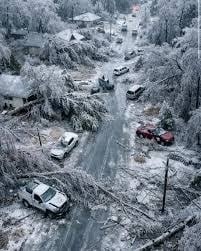
A powerful and rapidly intensifying ice storm has thrown Nashville and surrounding Middle Tennessee into turmoil, leaving over 288,000 households without power and pushing emergency services to the breaking point. What began as a steady winter drizzle quickly escalated into an unrelenting freeze, coating everything it touched in thick, dangerous layers of ice.
For hours, freezing rain fell continuously, turning roads into treacherous, glass-like surfaces and transforming entire neighborhoods into hazardous zones. Power lines sagged under the weight of the ice, some snapping entirely, while mature trees—some centuries old—split apart with deafening cracks, crashing down onto homes, vehicles, and streets below. Throughout the night, the sound of breaking tree limbs reverberated through the air, a chilling reminder of the worsening conditions.
Utility crews across Middle Tennessee reported widespread infrastructure failure. Transmission lines quickly iced over faster than they could be cleared, while substations struggled under the extreme conditions. Entire neighborhoods were plunged into darkness as outages spread, and homes grew colder by the hour. For families who relied on electric heating, the loss of power was not just inconvenient—it was life-threatening.
Road conditions deteriorated quickly, with major highways and residential streets alike becoming nearly impassable. Drivers found themselves trapped in stalled vehicles as authorities issued urgent warnings to stay off the roads. Emergency responders reported multiple delays as ambulances and fire trucks were rerouted due to icy intersections and fallen debris.
Local officials described the situation as dire.
“Conditions are extremely dangerous,” said one emergency management spokesperson, stressing that the combination of ice accumulation, power outages, and blocked roads created serious risks to both life and property. First responders were stretched thin, juggling vehicle accidents, medical emergencies, and fallen trees while battling the same hazardous conditions that plagued residents.
In residential areas, the weight of ice began threatening the very structures themselves. Roofs sagged under the pressure, gutters were torn away, and fences snapped. Many residents described hearing loud cracks during the night as trees split apart suddenly. In some neighborhoods, fallen limbs and downed power lines completely cut off entire sections from the outside world.
For those without power, the cold became an immediate and pressing concern. Shelters were set up across the region to provide warmth and essential services, but icy roads made it nearly impossible for some residents to reach them. Vulnerable groups, including the elderly, families with young children, and individuals who rely on medical equipment, faced the most critical challenges.
Hospitals and emergency facilities switched to backup generators, while officials worked to ensure fuel supplies remained stable. Utility companies warned that restoring power could take days in the worst-hit areas, as crews waited for safer conditions before they could access damaged lines. Unlike snowstorms, ice storms create unique dangers for repair crews, with falling limbs and unstable power poles making the work even more hazardous.
The storm also exposed the vulnerability of vehicles left outdoors. Cars parked beneath trees were crushed as branches collapsed, while others were encased in ice so thick that doors couldn’t be opened. Once the storm subsides, insurance claims are expected to surge as damage assessments begin.
The storm not only left physical destruction in its wake but also took a psychological toll on the community. Many residents spoke of feeling isolated, as daylight dwindled early and communication became increasingly unreliable. Cell service remained patchy in some areas, and internet outages compounded the sense of being cut off from the outside world. Social media filled with images of shattered trees, ice-covered landscapes, and desperate calls for help, painting a fragmented picture of a region under extreme duress.
State and local authorities, alongside emergency management teams, coordinated efforts to prioritize life-safety responses. The National Guard was placed on standby, and warming centers expanded their capacity as forecasts predicted that freezing temperatures would persist through the night. Residents were urged to conserve their phone batteries, check on neighbors when it was safe, and avoid unnecessary travel.
Meteorologists explained that the storm’s severity was a result of a narrow temperature range that kept the surface conditions below freezing while warmer air above caused rain to freeze instantly on contact. This created rapid ice accumulation, often faster than either crews or residents could react to.
As dawn broke, the full scale of the damage began to unfold. Streets glistened under thick ice, utility crews began the difficult task of untangling power lines, and homeowners cautiously ventured out to survey the devastation. The road to recovery would be long and arduous, with countless hours of cleanup and rebuilding ahead.
Despite the overwhelming challenges, signs of resilience began to emerge. Neighbors shared generators, offered shelter, and helped clear debris. First responders worked tirelessly, often for hours on end, and utility workers braced for more days of grueling restoration efforts.
Officials emphasized that while the storm itself would eventually pass, the recovery would take time. Power restoration, debris removal, and infrastructure repairs would require patience, coordination, and determination. Residents were reminded to stay vigilant, follow official updates, and prioritize safety above all else.
As Middle Tennessee faces one of its most severe ice storms in recent memory, the focus remains on protecting lives and assisting those most in need. While the freezing rain may cease, the true journey of recovery has only just begun.