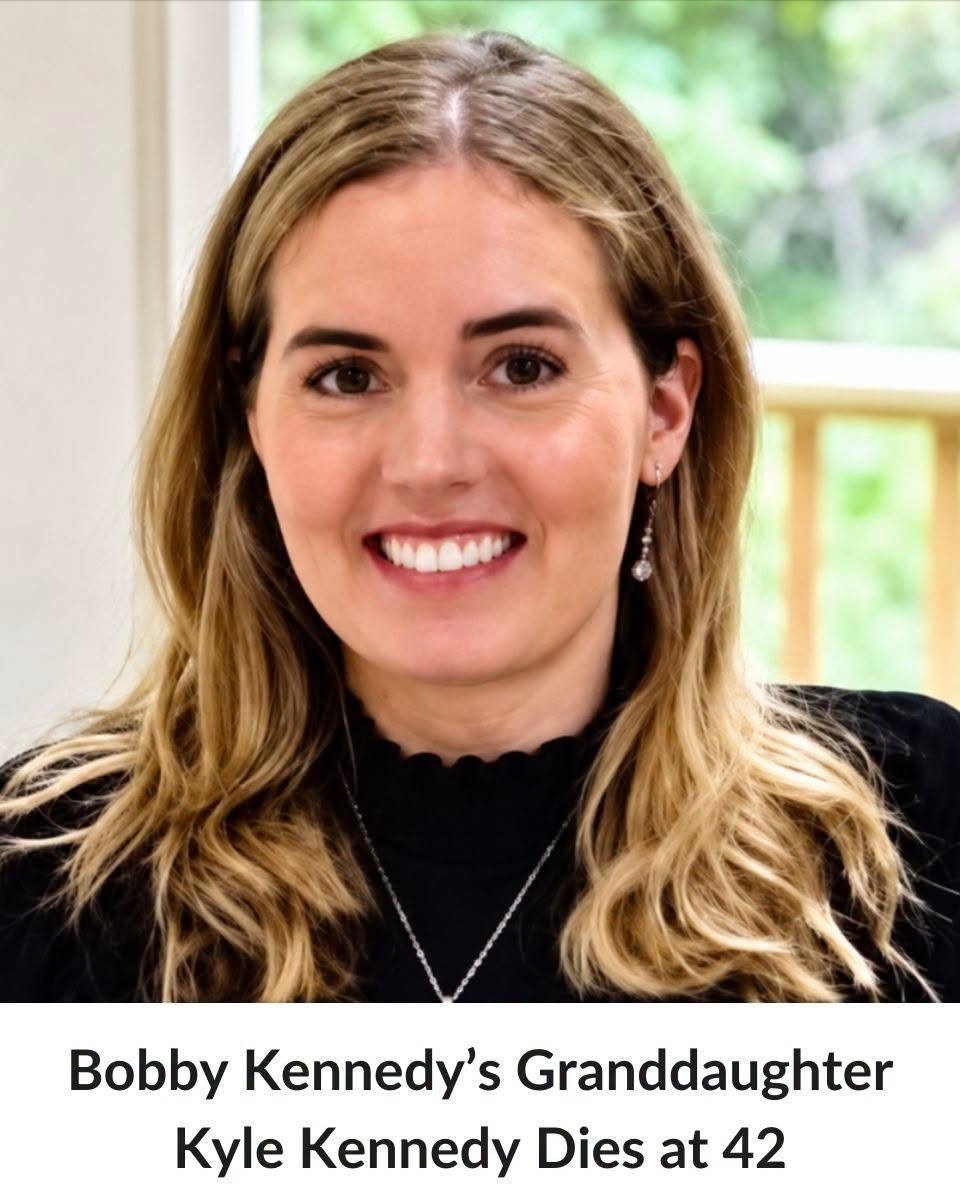
Two young sons are facing life without their mother. Kyle Kennedy, granddaughter of Robert F. Kennedy, has died at 42, leaving behind a life shaped by devastating loss and determined service to others. As her family mourns and officials await answers about her death, her story reveals a mother and advocate who kept fighting through unimaginable pain and hear
According to her obituary, Kyle died September 21 at her home in Westwood, Massachusetts. The town clerk told PEOPLE that her cause of death remains pending. The daughter of Michael Kennedy and Victoria Denise Gifford, she was 13 when her father died in a skiing accident. After graduating from Georgetown, she taught through Teach For America and earned graduate degrees at Pace and Harvard. Her career centered on expanding opportunities for children, particularly those from disadvantaged backgrounds, and people with disabilities.
A severe spinal cord injury in 2020 left Kyle with long-term paralysis. She subsequently spoke out against discrimination in medical care, including testimony at the Massachusetts State House. She also endured the death of her daughter, Josephine, shortly after birth. She is survived by sons Conor, 12, and Declan, 10, along with her mother, siblings and extended family. Her obituary honors a legacy grounded in education, advocacy and service to people facing barriers.
Kyle’s life, as remembered in the obituary, was not defined by one event. Her family history brought public attention, but the work described by those remembering her centered on education, access, and service. Teaching through Teach For America and pursuing further study reflected a sustained interest in opportunities for children. Those details place her professional commitments alongside the private losses her family endured.
Her later advocacy also gave personal experience a public purpose. Following the spinal cord injury that left her with long-term paralysis, she spoke about discrimination in medical care. The account of her testimony at the Massachusetts State House shows that her concerns extended beyond her own treatment. She used a public setting to draw attention to barriers affecting people with disabilities, continuing the emphasis on opportunity that had shaped her earlier work.
For her sons and wider family, the loss is also deeply ordinary in ways no public biography can fully describe. An obituary can list schools, work, relatives, and important dates, but it cannot capture every conversation or routine that makes a mother irreplaceable. Naming Conor and Declan reminds readers that the story belongs first to a family grieving someone they knew personally.
The pending cause of death is a separate question from the life being remembered. The account supplies no final determination, and uncertainty should remain uncertainty. Her experiences with injury and bereavement do not, by themselves, explain the circumstances of her death. Remembering those experiences respectfully means recognizing their importance without turning them into unsupported conclusions.
What remains clear in the family’s remembrance is a consistent commitment to others. Education, disability advocacy, and care for people facing obstacles form a thread through the different stages of her life. That work, together with the relationships she leaves behind, gives substance to the legacy her obituary describes.