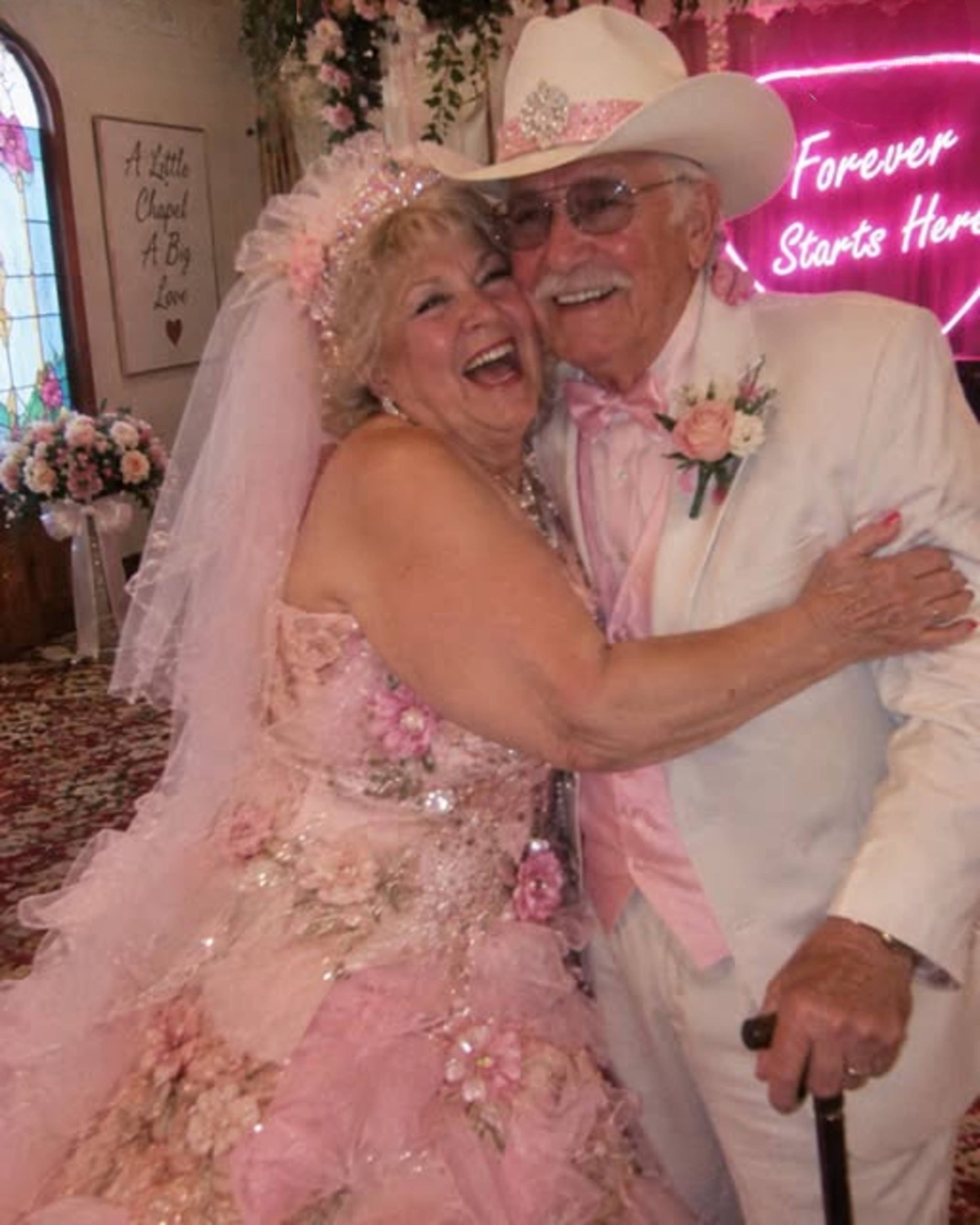
My children thought I was being manipulated when I agreed to marry the man who had abandoned me decades earlier. His family thought I wanted his money. To everyone around us, my decision looked impossible to understand. How could a woman who had spent more than half a century building another life suddenly return to the man who had broken her heart at eighteen?
The truth was hidden behind a brass key I did not receive until after we buried him.
When Thomas called me after 55 years, I was so shocked that for several seconds I couldn’t speak. He was the last person I expected to hear from, especially after all those decades of silence.
There was a pause after I answered, a soft breath on the line, and then he said my name.
“Eleanor.”
I recognized that voice immediately.
Age had changed it. Time had made it quieter and rougher around the edges. But beneath all of that, it was still him.
“Thomas?”
His laugh was weak and brief.
“So you remember me.”
I sat down.
I didn’t realize I had been standing until my knees suddenly felt unsteady.
Of course I remembered him.
There are some people life removes from your daily existence but never completely removes from your memory.
I looked toward the framed photograph of my late husband, George, on the shelf.
He had been gone four years by then.
We had shared 46 good years, three children, five grandchildren, arguments about money, vacations that went wrong, illnesses, birthdays, holidays, quiet mornings, difficult seasons, and countless ordinary days that eventually became the life I treasured.
George had been a good man.
He had loved me.
He had raised our children with me.
He had held my hand through the hardest years of our marriage, and I would never call our life second best.
It was simply the life I had lived.
But before George, there had been Thomas.
At 18, I had believed Thomas and I were going to grow old together.
Back then, the future seemed simple.
We had chosen names for children we did not have.
We had walked past houses and picked which one we would buy someday.
We talked about where we would live, what kind of garden we would have, and whether our children would inherit his stubbornness or my temper.
He had given me a thin gold ring and asked me to marry him under an oak tree behind my parents’ church.
I had said yes.
I had never imagined saying anything else.
Then, one month before the wedding, a letter arrived.
There was no warning.
No conversation.
No explanation.
Just a few lines on a sheet of paper.
*”Eleanor,”*
*”I have made my choice. I cannot marry you. Do not wait for me, and do not try to contact me.”*
*”Thomas.”*
That was all.
I read it so many times that eventually the words stopped looking real.
I waited for another letter.
There wasn’t one.
I waited for him to come back.
He didn’t.
He moved away within weeks.
There was no explanation or goodbye.
I replayed every conversation, every kiss, every promise.
I wondered whether there had been another woman or whether he had simply realized I was not enough.
I wondered what I had done wrong.
I asked myself whether I had misunderstood everything.
Eventually, I stopped asking.
Not because I had found an answer.
Because I had learned how to live without one.
I married George.
I raised our family.
I became a teacher, then a grandmother, and eventually a widow.
Life became full in ways I had never imagined when I was eighteen.
There were mornings when I completely forgot about Thomas.
Then, occasionally, something would bring him back.
A song.
A particular kind of rain.
An old photograph.
The smell of oak leaves in autumn.
But the memories became quieter with time.
Thomas became a sealed room in my memory.
I knew the room was there.
I simply stopped opening the door.
Until that phone call.
“Why are you calling me?” I finally asked.
There was a long silence.
“I owe you an explanation.”
I almost laughed.
“Fifty-five years is a long time to decide that.”
“I know.”
“Why now?”
His breathing changed.
“Because I’m running out of time.”
My fingers tightened around the phone.
“Are you sick?”
“I’m old, Eleanor.”
“So am I.”
He laughed softly.
“I suppose that’s true.”
Another silence followed.
Then he said something that made me sit completely still.
“I never stopped loving you.”
I closed my eyes.
For a moment, I was eighteen again.
Then I remembered the letter.
“Don’t say that.”
“It’s the truth.”
“No. The truth is that you left.”
“I know.”
“You didn’t explain.”
“I couldn’t.”
“Couldn’t?”
His voice cracked.
“I thought I was protecting you.”
That sentence stayed with me long after the call ended.
Over the next several weeks, Thomas and I spoke again.
Then again.
He told me about the years between us.
Some things were ordinary.
Some were painful.
Some were things I never would have guessed.
He told me why he had disappeared.
And for the first time, I heard the story behind the letter.
It wasn’t the story I had spent 55 years imagining.
But understanding his reasons didn’t erase what his decision had done.
I told him that.
He didn’t argue.
“I know I hurt you.”
“You did.”
“I’m sorry.”
I believed that he was.
But forgiveness and forgetting were two different things.
Then came the question that shocked my children almost as much as it shocked me.
Thomas asked me to marry him.
Not because we could somehow become eighteen again.
Not because we could erase George or pretend the last 55 years hadn’t happened.
He wanted to spend whatever time remained with the person he had once promised himself to.
When I told my children, they thought I had lost my mind.
My oldest daughter cried.
My son asked whether Thomas was manipulating me.
My youngest said his family must be after money.
They couldn’t understand why I would consider marrying a man who had abandoned me before our first wedding.
Thomas’s family wasn’t much kinder.
They assumed I wanted his money.
They watched me carefully.
They questioned my motives.
Everyone seemed to have an explanation for my decision except the one that was actually true.
I wasn’t marrying Thomas because of his money.
I wasn’t trying to replace George.
And I wasn’t trying to recover the life I had lost at eighteen.
I was simply choosing to answer a question that had remained unanswered for 55 years.
We married quietly.
There was no grand ceremony.
No attempt to recreate the wedding we never had.
Just two older people sitting together, holding hands, finally having the conversation we should have had half a century earlier.
For a short time, it felt peaceful.
Then Thomas died.
After the funeral, I returned home alone.
My children were helping me sort through paperwork when someone knocked at the door.
A man I didn’t recognize stood outside.
He handed me a small envelope.
“This was left for you.”
Inside was a brass key.
No note.
No explanation.
Just the key.
My son frowned.
“What does it open?”
I didn’t know.
Until I remembered something Thomas had once said during one of our final conversations.
“There is one thing I need you to find after I’m gone.”
I looked at the brass key in my palm.
And suddenly, after all those years, I realized that the letter he had written at eighteen had never been the whole story.
The real explanation had been waiting somewhere else.
And Thomas had made sure I would not receive the key until after we buried him.